
Diesel Engine Surging at Idle: 6 Common Causes & Fixes
03/31/2026
The DEF quality sensor delete represents a significant shift in diesel emissions control technology, with manufacturers moving away from direct DEF quality monitoring to relying primarily on downstream NOx sensors for emissions compliance. This regulatory change affects how modern diesel engines monitor and control their selective catalytic reduction (SCR) systems, with implications for both reliability and environmental performance.
The DEF quality sensor delete eliminates a common failure point in diesel emissions systems while maintaining emissions compliance through NOx sensor feedback, potentially improving long-term reliability for diesel owners.
What Is the DEF Quality Sensor and Why Was It Required?
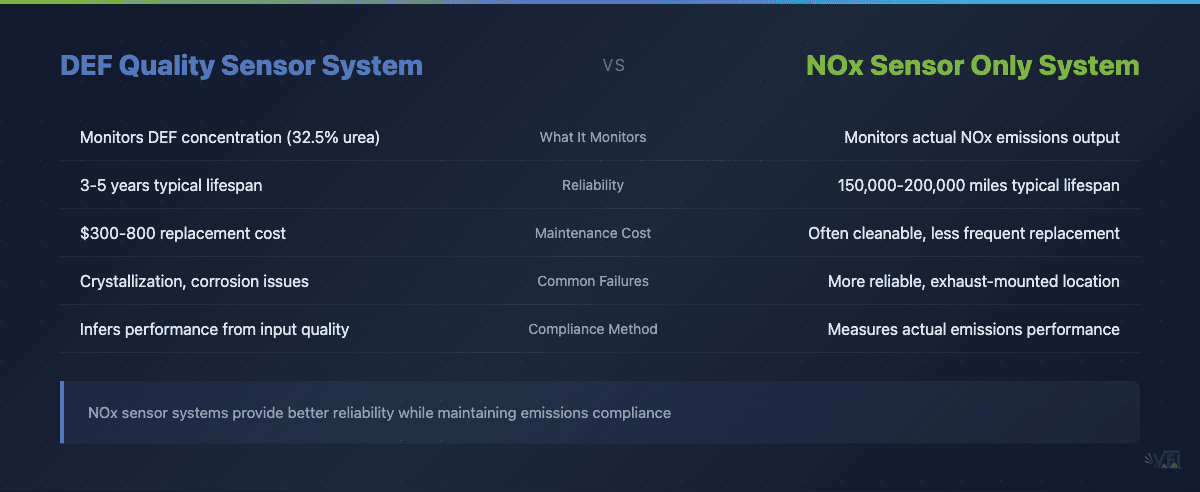
The DEF quality sensor was designed to monitor the concentration and quality of diesel exhaust fluid before injection into the SCR catalyst. This sensor measured the refractive index of the DEF solution to ensure it met the required 32.5% urea concentration standard mandated by emissions regulations.
Originally implemented as part of EPA Tier 4 Final emissions standards, the DEF quality sensor served as a primary safeguard against diluted or contaminated DEF that could compromise SCR system effectiveness. When the sensor detected poor-quality DEF, it would trigger warning lights and eventually initiate power derates to force compliance.
DEF quality sensors were one of the most common failure points in modern diesel emissions systems, often causing unnecessary downtime and expensive repairs even when the DEF quality was actually acceptable.
The sensor operated by measuring how light bent through the DEF solution, comparing this measurement to stored calibration values. However, factors like temperature fluctuations, crystallization buildup, and electrical corrosion frequently caused false readings, leading to unnecessary service calls and frustrated diesel owners.
At our Woodland shop, we’ve diagnosed hundreds of DEF quality sensor failures over the years, and many times the DEF itself tested perfectly fine when we analyzed it with our laboratory-grade equipment.
Why Are Manufacturers Removing DEF Quality Sensors?
Manufacturers are eliminating DEF quality sensors primarily due to reliability concerns and improved confidence in downstream monitoring systems. The California Air Resources Board (CARB) and EPA have approved this approach after extensive testing showed that NOx sensors provide adequate emissions monitoring.
Several factors drove this regulatory change:
- High failure rates: DEF quality sensors typically failed every 3-5 years, often due to crystallization and electrical issues rather than actual DEF quality problems
- False positives: Sensors frequently triggered fault codes and derates when DEF quality was actually within specifications
- Cost burden: Replacement sensors cost $300-800 plus labor, creating significant maintenance expenses for fleet operators
- Improved NOx monitoring: Modern NOx sensors provide real-time feedback on actual emissions performance rather than just input quality
If you’re experiencing DEF quality sensor issues on an older diesel, focus on using only high-quality DEF and keeping the tank clean. Many sensor failures are actually caused by contaminated DEF rather than sensor defects. Our diesel maintenance services include DEF system cleaning and testing.
The regulatory approval process involved extensive field testing by manufacturers like Bosch Mobility and Cummins, demonstrating that NOx sensor feedback alone could maintain emissions compliance while eliminating a major reliability concern.
How Do NOx Sensors Replace DEF Quality Monitoring?
NOx sensors provide direct measurement of actual emissions output rather than inferring performance from DEF quality. This approach monitors what really matters: whether the SCR system is actually reducing NOx emissions to compliant levels.
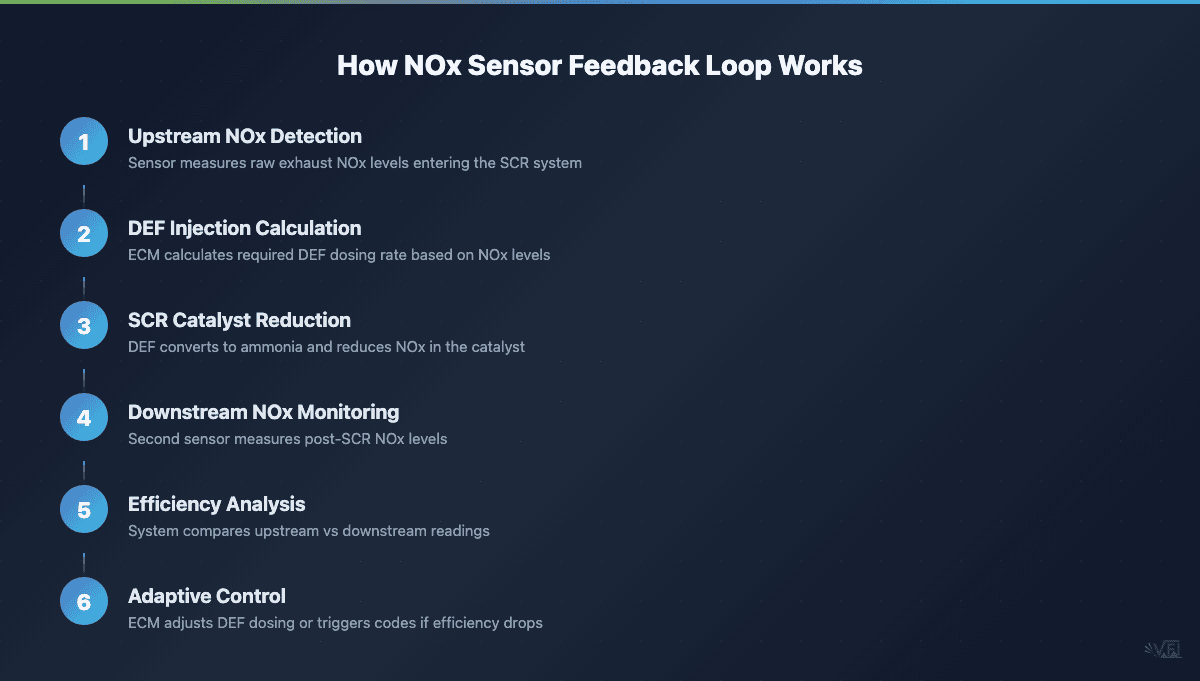
The system works through a feedback loop:
| Monitoring Stage | NOx Sensor Function | System Response |
|---|---|---|
| Upstream NOx Detection | Measures raw exhaust NOx levels | Calculates required DEF injection rate |
| Downstream NOx Monitoring | Measures post-SCR NOx levels | Adjusts DEF dosing for optimal reduction |
| Efficiency Calculation | Compares upstream vs downstream readings | Triggers fault codes if efficiency drops |
This closed-loop system continuously adjusts DEF injection based on actual performance rather than assumed DEF quality. If NOx reduction efficiency drops below regulatory thresholds, the system increases DEF dosing or triggers diagnostic codes.
Modern NOx sensors are significantly more reliable than DEF quality sensors because they don’t directly contact the DEF solution. They’re positioned in the exhaust stream where they measure actual gas concentrations rather than liquid properties that can vary due to temperature, contamination, or crystallization.
NOx sensors typically last 150,000-200,000 miles compared to 60,000-100,000 miles for DEF quality sensors, potentially saving diesel owners $1,000-2,000 in sensor replacements over the engine’s lifetime.
The transition to NOx-based monitoring also enables more sophisticated control strategies. ECMs can now optimize DEF injection for varying load conditions, ambient temperatures, and fuel quality variations while maintaining emissions compliance.
What Are the Reliability Benefits of Sensor Elimination?
Eliminating DEF quality sensors removes one of the most problematic components in modern diesel emissions systems. The reliability improvements are substantial and measurable across multiple failure modes.
Key reliability benefits include:
- Reduced crystallization issues: DEF quality sensors were prone to urea crystal buildup that caused false readings and sensor failures
- Eliminated electrical corrosion: Constant exposure to DEF solution caused connector corrosion and wiring problems
- Fewer false fault codes: Temperature-sensitive readings often triggered unnecessary warning lights and derates
- Simplified diagnostics: Technicians can focus on actual performance issues rather than sensor calibration problems
In our experience servicing common rail systems and emissions equipment, DEF quality sensor failures accounted for approximately 30% of all SCR-related service calls. Many of these were unnecessary repairs where the DEF quality was actually acceptable.
While DEF quality sensor elimination improves reliability, diesel owners must be more vigilant about DEF quality. Poor-quality or contaminated DEF can now cause SCR catalyst damage before the system detects the problem through NOx readings.
The elimination also reduces the complexity of the SCR system’s electrical architecture. Fewer sensors mean fewer potential points of electrical failure, simplified wiring harnesses, and reduced electromagnetic interference issues that could affect other engine systems.
For fleet operators and diesel owners in Sacramento and surrounding areas, this translates to reduced maintenance costs and improved uptime. However, it also places greater responsibility on operators to maintain DEF quality through proper storage and handling practices.
Should You Be Concerned About Emissions Compliance?
The DEF quality sensor delete does not compromise emissions compliance when the system is properly maintained. Regulatory agencies have approved this approach based on extensive testing showing that NOx sensor monitoring maintains the same emissions performance levels.
However, the shift does change how compliance is monitored and maintained:
- Real-time monitoring: NOx sensors provide continuous feedback on actual emissions rather than periodic DEF quality checks
- Performance-based compliance: The system focuses on results (NOx reduction) rather than inputs (DEF quality)
- Adaptive control: ECMs can compensate for minor DEF quality variations by adjusting injection rates
- Improved accuracy: Direct emissions measurement eliminates the guesswork involved in inferring performance from DEF quality
The SAE International standards for diesel emissions monitoring support this approach, recognizing that outcome-based monitoring is more reliable than input-based monitoring for ensuring long-term compliance.
For diesel owners, this means maintaining emissions compliance requires greater attention to:
- Using only high-quality DEF from reputable suppliers
- Proper DEF storage to prevent contamination and degradation
- Regular SCR system maintenance including catalyst inspections
- Prompt attention to any NOx sensor fault codes
Our Bosch-certified technicians can help ensure your diesel’s emissions system remains compliant while taking advantage of the improved reliability offered by sensor elimination.
What This Means for Diesel Engine Maintenance Going Forward
The DEF quality sensor delete fundamentally changes diesel maintenance priorities, shifting focus from sensor management to fluid quality management and system performance monitoring.
Key maintenance changes include:
Enhanced DEF Quality Management
Without quality sensors providing early warning, diesel owners must be more proactive about DEF quality. This means purchasing DEF only from reputable suppliers, storing it properly, and replacing it if contamination is suspected.
NOx Sensor Maintenance Priority
NOx sensors become critical components requiring regular inspection and cleaning. Unlike DEF quality sensors, NOx sensors can often be cleaned and recalibrated rather than replaced, but they require more frequent attention.
Schedule NOx sensor inspection every 50,000 miles rather than waiting for fault codes. Early cleaning can extend sensor life to 200,000+ miles. Call us at 530-668-0818 to schedule NOx sensor service.
Diagnostic Approach Changes
Technicians must adapt their diagnostic procedures to focus on performance-based troubleshooting rather than sensor-based diagnosis. This requires more sophisticated testing equipment and deeper understanding of SCR system operation.
At Valley Fuel Injection, we’ve invested in advanced NOx analysis equipment to support this transition. Our testing capabilities now include real-time emissions monitoring that can verify SCR system performance without relying on potentially faulty quality sensors.
Preventive Maintenance Evolution
Maintenance intervals may need adjustment based on NOx sensor feedback rather than fixed schedules. Systems that show declining NOx reduction efficiency may require more frequent DEF system cleaning or catalyst inspection.
For Kubota equipment owners and other diesel operators, this means working with service providers who understand both the new monitoring systems and the increased importance of fluid quality management.
The DEF quality sensor delete is part of a broader industry trend toward performance-based emissions monitoring. Similar changes are being implemented in diesel particulate filter systems and EGR monitoring.
Looking ahead, we expect to see continued evolution toward smarter, more reliable emissions control systems that focus on actual environmental performance rather than component monitoring. This trend should ultimately benefit diesel owners through improved reliability and reduced maintenance costs.
If you’re dealing with SCR system issues or want to understand how these changes affect your specific diesel engine, schedule a diagnostic with our experienced team. We stay current with all regulatory changes and can help optimize your diesel’s performance and reliability.
Our Bosch-certified technicians understand the latest emissions control technologies and can help ensure your diesel runs reliably while meeting all environmental standards. Call us at 530-668-0818 or visit our Woodland, CA shop. We also provide mail-in diagnostic services for diesel owners nationwide.