
Diesel Engine Misfire: 8 Causes, Symptoms & How to Fix It
04/06/2026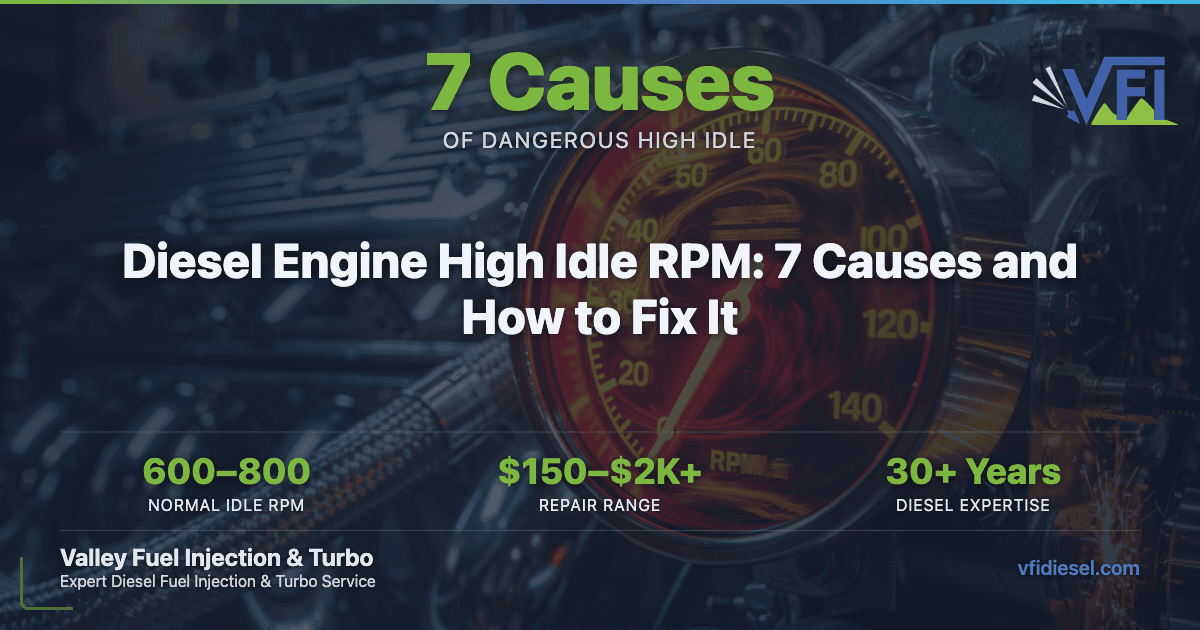
When your diesel engine high idle RPM climbs above normal operating range, it’s signaling a problem that demands immediate attention. High idle conditions typically indicate issues with fuel delivery, air intake, or electronic control systems that can lead to engine damage if left uncorrected.
Diesel engine high idle RPM is usually caused by fuel system leaks, faulty injectors, turbocharger problems, or ECM issues. Most cases require professional diagnosis to prevent costly engine damage.
What Causes Diesel Engine High Idle RPM?
High idle RPM in diesel engines occurs when the engine management system cannot maintain proper idle speed control. Normal diesel idle speed ranges from 600-800 RPM, but high idle conditions can push this to 1000-1500 RPM or higher.
The root cause typically stems from one of three system failures: fuel delivery problems that create lean conditions, air intake issues that disrupt combustion balance, or electronic control malfunctions that prevent proper idle speed regulation.
Never ignore high idle RPM conditions. Extended operation at elevated idle speeds can cause excessive wear, overheating, and catastrophic engine failure.
How Do You Diagnose High Idle RPM Problems?
Proper diagnosis starts with monitoring actual RPM versus commanded idle speed using diagnostic scan tools. We begin every high idle diagnosis by checking for stored trouble codes and monitoring live data streams.
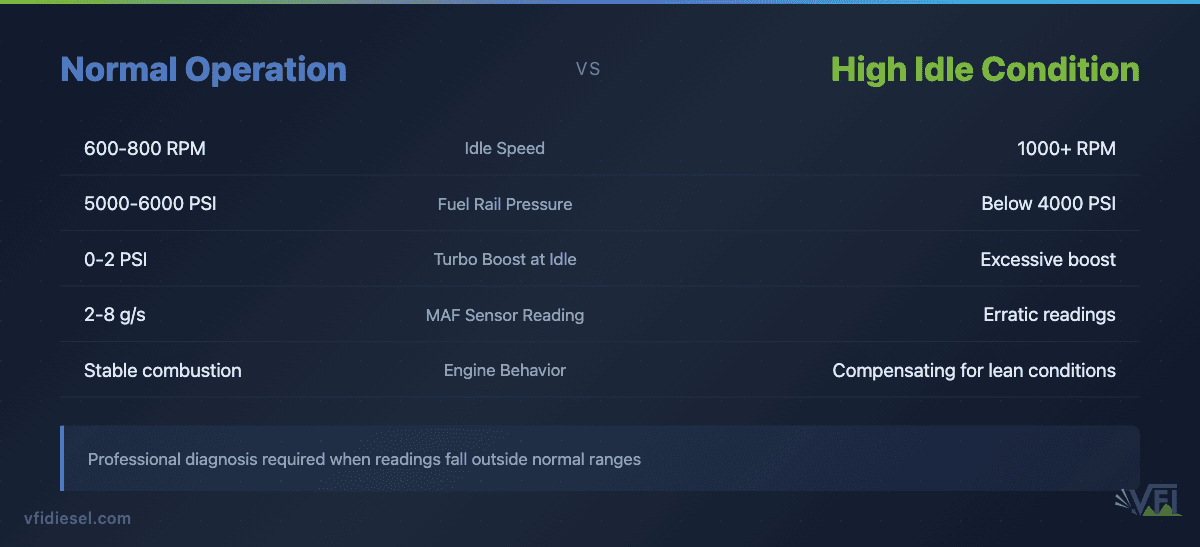
The diagnostic process involves systematic testing of fuel pressure, air intake integrity, turbocharger operation, and electronic control signals. Here’s our proven diagnostic sequence:
| Diagnostic Step | Normal Range | High Idle Indication |
|---|---|---|
| Idle Speed | 600-800 RPM | 1000+ RPM |
| Fuel Rail Pressure | 5000-6000 PSI | Below 4000 PSI |
| Turbo Boost | 0-2 PSI at idle | Excessive boost |
| MAF Sensor | 2-8 g/s | Erratic readings |
Always check for vacuum leaks first. A simple smoke test can reveal intake leaks that cause lean conditions and high idle RPM in minutes.
What Are the 7 Most Common Causes of High Idle RPM?
1. Fuel Injection System Problems
Faulty fuel injectors are the leading cause of diesel engine high idle RPM we see at our Woodland shop. Worn injector nozzles, damaged O-rings, or internal injector failures create lean fuel conditions that force the ECM to increase idle speed.
Common rail systems are particularly susceptible to injector-related high idle issues. When injectors leak internally or fail to deliver proper fuel atomization, the engine management system compensates by raising idle speed to maintain combustion stability.
Our Bosch-certified technicians use specialized flow bench testing to diagnose injector problems accurately. We’ve found that even minor injector flow variations can trigger high idle conditions in modern diesel engines.
2. Turbocharger Malfunctions
Turbocharger problems frequently cause high idle RPM by disrupting the engine’s air-fuel balance. Stuck wastegate actuators, damaged turbine wheels, or boost leaks create conditions where the ECM raises idle speed to compensate for irregular airflow.
We regularly see high idle issues caused by carbon buildup on variable geometry turbocharger vanes. When VGT vanes stick in the closed position, excessive backpressure forces the engine to idle at higher RPM to maintain proper exhaust flow.
Our turbocharger service team uses precision measurement tools to diagnose turbo-related high idle problems. According to Bosch Mobility research, turbocharger issues account for approximately 30% of diesel high idle complaints.
3. Air Intake System Leaks
Vacuum leaks in the air intake system create lean running conditions that trigger high idle RPM. Common leak points include intercooler boots, intake manifold gaskets, and crankcase ventilation hoses.
Even small air leaks can significantly impact idle quality. We use smoke testing equipment to locate intake leaks that aren’t visible during standard inspections. The EPA’s emissions testing protocols emphasize the importance of intake system integrity for proper engine operation.
Air intake leak repairs typically cost $150-$400, while major intake manifold replacement can reach $800-$1,200 depending on engine complexity.
4. Electronic Control Module (ECM) Issues
ECM software problems or hardware failures can cause erratic idle speed control. Corrupted calibration files, failed idle speed control algorithms, or damaged ECM circuits prevent proper idle speed regulation.
We’ve encountered high idle issues caused by aftermarket tuning that modified idle speed parameters incorrectly. When ECM programming doesn’t match engine hardware specifications, high idle conditions often result.
Modern diesel engines rely heavily on electronic control for idle speed management. SAE International studies show that ECM-related idle problems have increased with the complexity of emissions control systems.
5. Exhaust Gas Recirculation (EGR) Problems
Faulty EGR systems commonly cause high idle RPM by creating improper combustion conditions. Stuck EGR valves, clogged EGR coolers, or failed EGR position sensors disrupt the air-fuel mixture at idle.
Carbon buildup in EGR components is particularly problematic. When EGR passages become restricted, the engine management system may increase idle speed to maintain proper exhaust flow and emissions compliance.
Our diagnostic process includes EGR system functionality testing using scan tools and visual inspection. We’ve found that EGR-related high idle issues often coincide with other symptoms like diesel engine surging at idle.
6. Fuel System Pressure Problems
Low fuel rail pressure forces the ECM to increase idle speed to maintain adequate fuel delivery. Common causes include worn high-pressure fuel pumps, faulty fuel pressure regulators, or restricted fuel filters.
In common rail systems, fuel pressure must remain within tight tolerances for proper idle control. When pressure drops below specification, the engine compensates by raising idle RPM.
We use precision fuel pressure gauges to diagnose pressure-related high idle problems. Fuel system pressure issues often present alongside symptoms like power loss under load.
Modern common rail systems operate at pressures up to 30,000 PSI. Even small pressure variations can trigger high idle conditions as the ECM attempts to maintain combustion stability.
7. Throttle Position Sensor Malfunctions
Faulty throttle position sensors send incorrect signals to the ECM, causing erratic idle speed control. While diesel engines don’t use throttle plates for power control like gasoline engines, they rely on TPS data for idle speed management and emissions control.
We regularly encounter high idle problems caused by TPS calibration issues or sensor drift. When the ECM receives incorrect throttle position data, it may default to higher idle speeds as a safety measure.
How Do You Fix High Idle RPM in Diesel Engines?
Effective repair depends on accurate diagnosis of the root cause. Our systematic repair approach addresses the most common causes in order of probability and cost-effectiveness.
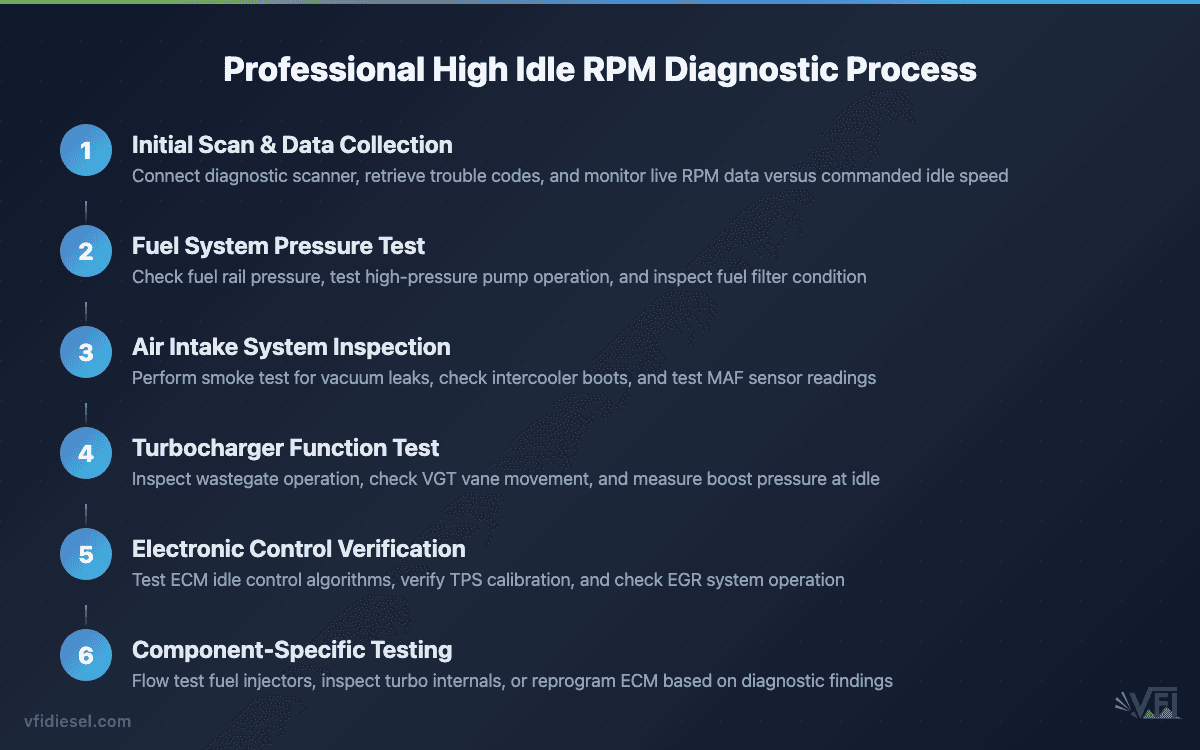
Start with the simplest solutions first: check for vacuum leaks, inspect air filter condition, and verify fuel filter status. Many high idle problems resolve with basic maintenance that costs under $100.
For more complex issues, professional diagnosis is essential. Our experienced team uses factory diagnostic procedures and specialized equipment to identify problems that generic scan tools miss.
When Should You Call a Professional for High Idle RPM?
Contact a qualified diesel technician immediately if high idle RPM occurs with other symptoms like excessive smoke, unusual noises, or engine misfiring. These combinations often indicate serious problems requiring immediate attention.
Professional diagnosis is also recommended when basic troubleshooting doesn’t resolve the issue. Modern diesel fuel injection systems require specialized knowledge and equipment for proper repair.
If you’re experiencing high idle issues with your diesel engine, schedule a diagnostic with our certified technicians. We serve Sacramento area diesel owners with comprehensive fuel system expertise.
Document the conditions when high idle occurs (cold start, warm engine, specific RPM ranges). This information helps technicians diagnose the problem more efficiently and reduces repair time.
Can You Prevent High Idle RPM Problems?
Regular maintenance significantly reduces the risk of high idle RPM problems. Follow manufacturer service intervals for fuel filter replacement, air filter changes, and fuel system cleaning.
Quality fuel is crucial for preventing fuel system problems that cause high idle. Use only reputable fuel suppliers and consider periodic professional injector cleaning to maintain optimal performance.
Monitor your engine’s idle behavior regularly. Early detection of idle speed changes allows for preventive repairs before major component failures occur.
According to CARB regulations, proper maintenance of diesel emissions systems is essential for compliance and optimal performance.
What Are the Costs of High Idle RPM Repairs?
Repair costs vary significantly depending on the root cause and engine type. Simple fixes like replacing air filters or repairing vacuum leaks typically cost $50-$200.
More complex repairs involving fuel injection components or turbocharger service can range from $800-$3,000. ECM replacement or reprogramming generally costs $500-$1,500.
Professional diagnosis typically costs $150-$250 but saves money by identifying the exact problem before unnecessary parts replacement. Most high idle repairs range from $200-$1,500.
Frequently Asked Questions
What RPM is considered high idle for a diesel engine?
Normal diesel idle speed ranges from 600-800 RPM. Anything consistently above 1000 RPM at idle is considered high and requires investigation. Some engines may idle slightly higher when cold, but should return to normal range when warmed up.
Can high idle RPM damage my diesel engine?
Yes, prolonged high idle operation can cause excessive wear, increased fuel consumption, and overheating. The increased RPM puts additional stress on engine components and can lead to premature failure if not corrected promptly.
Is it safe to drive with high idle RPM?
You should avoid driving with persistent high idle RPM until the problem is diagnosed and repaired. While short-term operation may not cause immediate damage, the underlying issue could worsen and lead to more serious problems while driving.
How much does it cost to fix high idle RPM?
Repair costs range from $50 for simple fixes like air filter replacement to $3,000 for major fuel system or turbocharger repairs. Professional diagnosis typically costs $150-$250 and helps avoid unnecessary repairs by identifying the exact cause.
Can dirty fuel injectors cause high idle RPM?
Yes, dirty or faulty fuel injectors are one of the most common causes of high idle RPM in diesel engines. Poor fuel atomization or internal injector leaks create lean conditions that force the ECM to increase idle speed to maintain combustion stability.
Don’t let high idle RPM problems damage your diesel engine. Our certified technicians at Valley Fuel Injection have the expertise and equipment to diagnose and repair high idle issues quickly and effectively. Call us at 530-668-0818 or visit our Woodland, CA facility for professional diesel fuel injection service. We also provide comprehensive fuel system services and ship remanufactured components nationwide.