Diesel Fuel Injector Cleaning: DIY vs Professional Service
03/23/2026
Diesel Engine Surging at Idle: 6 Common Causes & Fixes
03/31/2026
When your diesel engine losing power under load becomes a recurring problem, it’s more than just frustrating—it can signal serious underlying issues that affect performance, fuel economy, and even safety. Whether you’re pulling a heavy trailer, climbing a steep grade, or operating heavy equipment, power loss under load typically points to problems with fuel delivery, air intake, or exhaust systems.
🔧 Key Takeaway
A diesel engine losing power under load is usually caused by fuel injection problems (40% of cases), restricted air intake (25%), or turbocharger issues (20%). The remaining 15% stems from exhaust restrictions, timing problems, or mechanical wear. Proper diagnosis requires systematic testing of fuel pressure, boost pressure, and injection timing.
What Does “Power Loss Under Load” Actually Mean?
Power loss under load refers to your diesel engine’s inability to maintain performance when working hard. You might notice:
- Sluggish acceleration when towing or hauling
- Engine struggles on hills or inclines
- RPMs climb but vehicle speed doesn’t increase proportionally
- Black smoke from the exhaust during acceleration
- Engine feels “flat” or unresponsive to throttle input
Unlike idle issues or cold-start problems, power loss under load specifically occurs when your engine needs to work hardest—exactly when you need reliable performance most.
Why Do Diesel Engines Lose Power Under Heavy Load?
Diesel engines generate power through precise fuel injection timing and high compression ratios. Under load, your engine demands more fuel and air to produce additional power. When any component in this system fails to meet increased demand, power loss occurs.
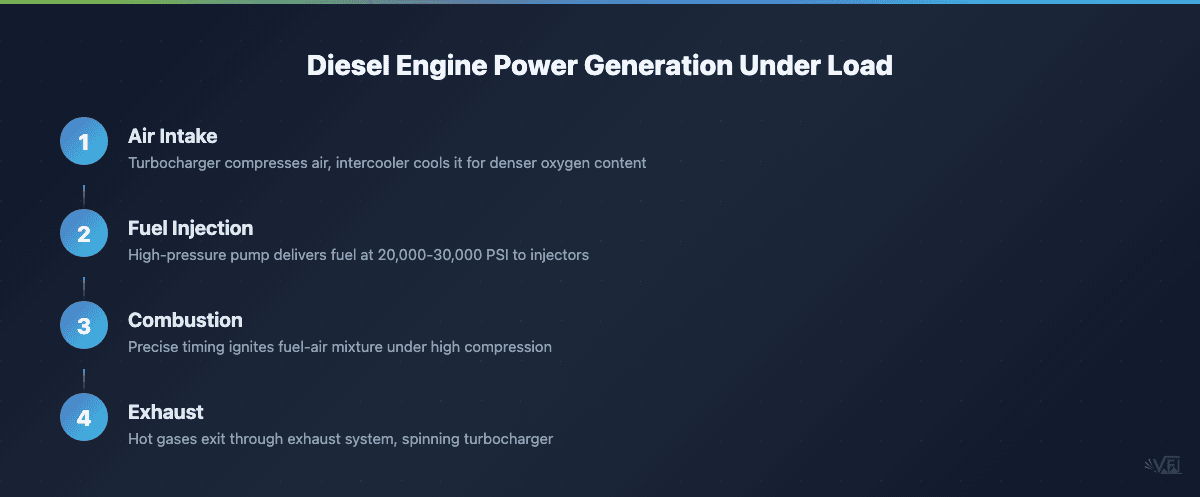
The most common culprits involve the fuel injection system, which must deliver precise amounts of fuel at extremely high pressures (up to 30,000 PSI in modern common rail systems). Even minor degradation in fuel injector performance becomes magnified under load conditions.
💡 Pro Tip
Document when power loss occurs: during acceleration, at specific RPM ranges, or only when towing. This information helps technicians pinpoint the root cause faster, potentially saving hundreds in diagnostic time.
What Are the 8 Main Causes of Diesel Engine Power Loss Under Load?
1. Fuel Injection System Problems
Fuel injection issues account for roughly 40% of power loss cases we diagnose. Common problems include:
- Worn fuel injectors: Reduced spray pattern efficiency and incorrect fuel metering
- Low fuel rail pressure: Insufficient pressure for proper atomization
- Faulty high-pressure fuel pump: Cannot maintain pressure under load
- Contaminated fuel: Water or debris affecting injection quality
Modern common rail systems are particularly sensitive to fuel quality and precise pressure control. When pressure drops even 10-15% below specification, power loss becomes noticeable under load conditions.
2. Turbocharger Malfunctions
Turbocharger problems cause approximately 20% of power loss issues. Key symptoms include:
- Reduced boost pressure under load
- Excessive exhaust smoke (black or blue)
- Unusual whistling or grinding noises
- Oil consumption increases
⚠️ Warning
Never ignore turbocharger problems. A failing turbo can cause catastrophic engine damage if metal debris enters the combustion chambers. If you hear grinding noises or see blue smoke, stop driving immediately.
3. Air Intake Restrictions
Restricted airflow prevents your engine from breathing properly, causing power loss and increased exhaust temperatures. Common restrictions include:
- Clogged air filter (most common)
- Blocked intercooler fins
- Collapsed or kinked intake hoses
- Faulty mass airflow sensor readings
4. Exhaust System Blockages
Exhaust restrictions create back-pressure that reduces engine efficiency. Look for:
- Clogged diesel particulate filter (DPF)
- Failed catalytic converter
- Damaged exhaust pipes or mufflers
- Excessive soot buildup in exhaust manifold
5. Fuel System Supply Issues
Problems delivering fuel to the injection system include:
- Clogged fuel filters
- Failing lift pump or transfer pump
- Restricted fuel lines or fittings
- Contaminated fuel tank
💰 Cost Estimate
Fuel filter replacement: $50-150. Lift pump replacement: $300-800. Complete fuel system cleaning and testing: $200-500. Addressing fuel supply issues early prevents expensive injection pump damage.
6. Engine Timing Problems
Incorrect injection timing significantly impacts power output:
- Worn timing chain or belt
- Faulty camshaft or crankshaft position sensors
- ECM timing map corruption
- Mechanical timing gear wear
7. Compression Loss
Reduced compression affects power generation:
- Worn piston rings or cylinders
- Blown head gasket
- Cracked cylinder head
- Valve seat recession
8. Electronic Control Issues
Modern diesels rely heavily on electronic controls:
- Faulty ECM programming
- Sensor malfunctions (boost, temperature, pressure)
- Wiring harness problems
- Software corruption or outdated calibrations
How Do You Diagnose Power Loss Issues Systematically?
Professional diagnosis follows a systematic approach to avoid costly misdiagnosis. Here’s how we approach power loss problems at our facility:
Step 1: Visual Inspection
Check for obvious problems like damaged hoses, loose connections, or excessive exhaust smoke. Look for oil leaks around the turbocharger and inspect air filter condition.
Step 2: Scan Tool Analysis
Connect professional diagnostic equipment to read fault codes and live data. Pay attention to:
- Fuel rail pressure readings
- Boost pressure values
- Mass airflow sensor data
- Exhaust gas temperature readings
Step 3: Performance Testing
Conduct controlled tests to replicate the power loss condition:
| Test Type | Normal Range | What It Reveals |
|---|---|---|
| Fuel Pressure Test | 20,000-30,000 PSI | Injection pump and rail health |
| Boost Pressure Test | 15-25 PSI typical | Turbocharger performance |
| Compression Test | 400-500+ PSI | Engine mechanical condition |
| Injector Balance Test | ±2 mm³ variation | Individual injector health |
🔍 Did You Know?
Professional injector testing can reveal problems before they cause noticeable symptoms. Our Bosch-certified test bench can detect flow variations as small as 1%, helping prevent costly engine damage.
When Should You Seek Professional Diesel Engine Diagnosis?
While some basic checks can be performed by experienced owners, professional diagnosis is recommended when:
- Multiple symptoms occur simultaneously
- Power loss is progressive and worsening
- You’ve replaced basic maintenance items without improvement
- Diagnostic codes point to injection system problems
- Your vehicle is still under warranty
Modern diesel fuel injection systems require specialized equipment for proper testing. DIY approaches often miss subtle problems that professional testing reveals.
If you’re experiencing persistent power loss issues with your diesel engine, our Bosch-certified technicians in Woodland, CA can provide comprehensive diagnosis and repair. Call us at 530-668-0818 to schedule your diagnostic appointment.
What Preventive Measures Help Avoid Power Loss Problems?
Preventing power loss issues is more cost-effective than repairing them:
Fuel System Maintenance
- Replace fuel filters every 15,000-20,000 miles
- Use high-quality diesel fuel from reputable sources
- Add fuel system cleaner every 5,000 miles
- Drain water from fuel/water separator regularly
Air System Care
- Replace air filter according to manufacturer schedule
- Clean intercooler fins annually
- Inspect intake hoses for cracks or loose clamps
- Keep engine bay clean to prevent debris buildup
Regular Professional Service
Annual professional injection system service can identify developing problems before they cause power loss. This preventive approach often saves thousands compared to emergency repairs.
💰 Cost Comparison
Preventive injection service: $300-600 annually. Emergency injection pump rebuild: $2,500-4,500. Regular maintenance prevents 80% of catastrophic fuel system failures.
How Do Different Diesel Engine Types Affect Diagnosis?
Diagnostic approaches vary depending on your engine type:
Common Rail Systems
These systems (found in most 2003+ diesels) require high-pressure testing equipment. Problems often relate to pressure regulation and injector flow rates.
VP44 Systems
Popular in Dodge Cummins engines, VP44 pumps are sensitive to electrical issues and fuel temperature. Rebuild costs can be significant when these systems fail.
Mechanical Systems
Older mechanical injection systems typically have simpler diagnostic procedures but may require specialized timing equipment.
What Role Does Fuel Quality Play in Power Loss?
Poor fuel quality contributes to 30% of power loss cases we see. Common fuel-related issues include:
- Water contamination: Causes corrosion and poor combustion
- Biological growth: Algae and bacteria clog filters and injectors
- Sediment buildup: Abrasive particles damage injection components
- Low cetane rating: Poor ignition quality affects power output
According to the EPA’s diesel fuel standards, fuel quality significantly impacts both performance and emissions compliance.
When Is Engine Replacement More Cost-Effective Than Repair?
Sometimes power loss indicates such extensive damage that replacement becomes more economical:
- Multiple major system failures (injection pump + turbo + engine internals)
- Repair costs exceed 60% of engine replacement cost
- Engine has over 400,000 miles with declining reliability
- Emissions system compliance requires extensive updates
Our experienced technicians can help you make informed decisions about repair versus replacement based on your specific situation and budget.
For fleet operators, understanding failure patterns and safety implications helps guide maintenance scheduling and replacement planning.
Frequently Asked Questions
Can I continue driving with power loss under load?
Limited driving is possible, but avoid heavy loads and high speeds. Power loss often indicates developing problems that can cause expensive damage if ignored. Schedule diagnosis as soon as possible to prevent costly repairs.
How much does professional diagnosis typically cost?
Comprehensive diesel engine diagnosis ranges from $150-400 depending on complexity. This investment often saves hundreds or thousands by identifying the exact problem before unnecessary parts replacement.
Will power loss affect my truck’s fuel economy?
Yes, engines losing power under load typically consume 10-25% more fuel as they work harder to maintain performance. Addressing the root cause usually improves both power and fuel economy.
Can diesel fuel additives fix power loss problems?
Fuel additives may help with minor fuel system deposits but won’t fix mechanical problems like worn injectors or failing turbochargers. Professional diagnosis determines if additives are appropriate for your specific situation.
How long do diesel injection system repairs typically take?
Simple repairs (filter replacement, sensor replacement) take 1-2 hours. Complex repairs (injection pump rebuild, multiple injector replacement) may require 1-3 days depending on parts availability and extent of work needed.
If your diesel engine is losing power under load, don’t let the problem worsen. Our Bosch-certified facility in Woodland, CA specializes in comprehensive diesel fuel injection diagnosis and repair. With over 30 years of experience serving Northern California and Nevada, we have the expertise and equipment to identify and fix your power loss issues efficiently. Contact Valley Fuel Injection & Turbo at 530-668-0818 to schedule your diagnostic appointment today.