Diesel Turbocharger Failure Signs: Early Detection Guide
03/01/2026
7.3 Powerstroke Injection Pump Problems: What Actually Fails
03/04/2026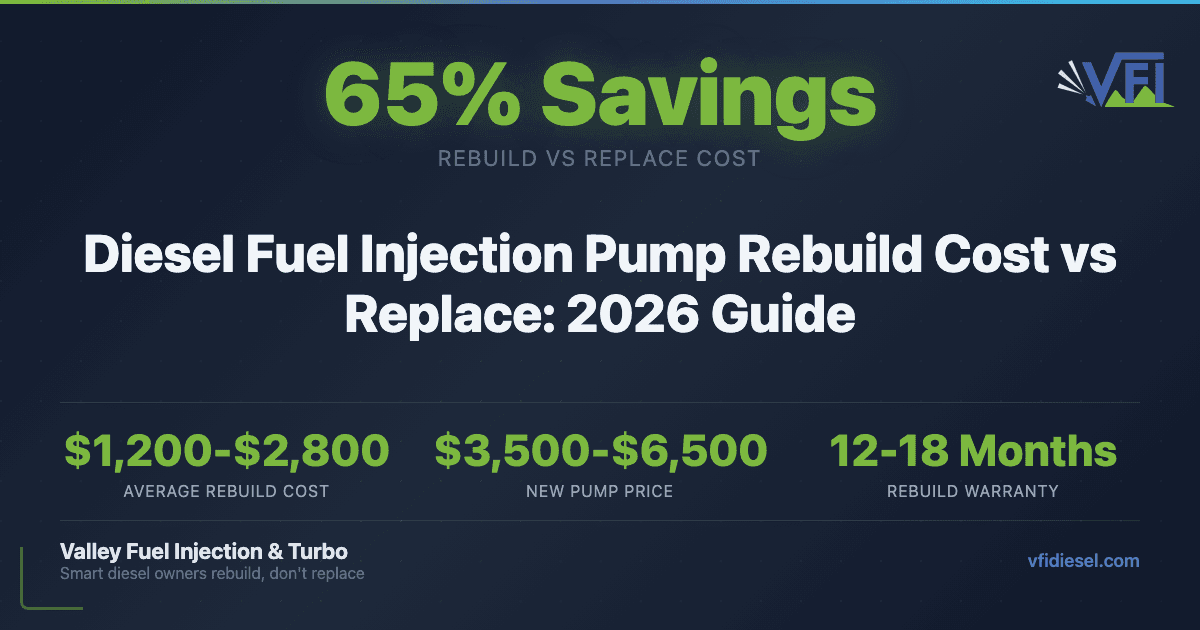
When your diesel fuel injection pump fails, you’re facing a critical decision that can impact your fleet’s bottom line for years. The diesel fuel injection pump rebuild cost typically ranges from $800–$3,200 per pump, while replacement can run $4,500–$10,000+ depending on your application. After rebuilding thousands of injection pumps at our Woodland, California facility since 1993, we’ve seen fleet managers make costly mistakes by choosing the wrong option.
A test-bench rebuild usually costs far less than a replacement pump: our rebuilds typically run $1,000 to $3,500 for most pumps, while replacement runs $4,500 to $10,000+.
What Factors Determine Diesel Fuel Injection Pump Rebuild Cost?
The diesel fuel injection pump rebuild cost depends on several critical factors that many fleet managers overlook when budgeting. Pump type is the biggest variable, a mechanical Bosch P-pump rebuild might cost $1,200–$2,800, while a sophisticated VP44 or common rail high-pressure pump can run $1,800–$3,500.
Here’s what drives rebuild pricing:
- Pump complexity: Mechanical pumps have fewer precision components than electronic units
- Internal damage extent: Catastrophic failures require more new parts
- OEM part availability: Discontinued models cost more due to sourcing challenges
- Calibration requirements: Advanced pumps need specialized test bench work
- Turnaround time: Rush jobs carry premium pricing
We maintain detailed rebuild cost histories for fleet customers. This data helps predict future pump failures and budget accordingly.
At our Woodland, CA facility, we’ve rebuilt over 10,000 injection pumps across every major brand. The most cost-effective rebuilds happen when pumps are brought in at first signs of trouble, not after complete failure.
How Much Does It Cost to Replace vs Rebuild a Diesel Injection Pump?
The cost difference between rebuilding and replacing diesel fuel injection pumps is substantial, but the decision isn’t always straightforward. Replacement costs vary dramatically based on whether you choose OEM, remanufactured, or aftermarket options.
Rebuild Cost Breakdown:
- Mechanical P-pumps: $1,200–$2,800
- VP44 pumps: $1,800–$2,800
- Common rail pumps: $1,800–$3,500
- Denso HP3 supply pumps: $1,200–$2,600
- Denso HP4 supply pumps: $1,000–$3,000 (the 2017+ L5P Duramax pump sits at the low end, ag and industrial engines at the top)
- Specialty/marine pumps: $2,500–$5,000
Rebuild prices are pump only, on the bench.
Denso’s HP4 is the three-plunger version of the two-plunger HP3, sized for bigger engines. Prices swing by application, so price the pump by the number on its tag.
On the Bosch side, a worn CP3 on a 2003–2018 Ram Cummins or an LB7 through LMM Duramax is usually fastest to fix with a Bosch factory reman CP3 exchange pump. A failed CP4 is a different bill, because it can send metal through the rails and injectors. Our CP4 failure cost breakdown covers that job, and our Duramax CP4 to CP3 conversion guide covers what it costs to swap the CP4 out before it lets go.
Replacement Cost Breakdown:
- OEM new: $5,000–$10,000+
- OEM remanufactured: $3,500–$6,500
- Aftermarket new: $3,000–$5,500
- Aftermarket reman: $2,500–$4,500
Replacement prices are pump only, before core charge and installation.
A fleet with 2 pump failures a year can save $8,000-$15,000 a year by choosing professional rebuilds over replacement. Over 5 years, that’s $40,000-$75,000 in savings.
Our Bosch-certified rebuild process includes complete disassembly, precision cleaning, worn component replacement, and test bench calibration.
When Does Rebuilding Make Financial Sense for Fleet Operations?
Rebuilding makes financial sense when your fleet experiences regular pump failures and you need predictable, cost-effective solutions.
Key indicators that rebuilding is your best option:
- High-mileage fleet: Trucks with 200,000+ miles will likely need multiple pump services
- Harsh operating conditions: Construction, agriculture, or marine applications accelerate wear
- Older equipment: Parts availability for discontinued models favors rebuilding
- Budget constraints: Rebuilding preserves cash flow while maintaining reliability
- Downtime sensitivity: Rebuilds often have shorter lead times than new pump orders
Fleet managers in Sacramento and throughout Northern California often choose rebuilding for another reason: environmental responsibility. Rebuilding extends component life and reduces waste compared to replacement, aligning with EPA diesel fuel and emissions standards that encourage sustainable practices.
Our rebuilds carry a 12-month, unlimited-mileage parts and labor warranty, with 30 days on electrical and electronic parts. Compare that with the written warranty on any replacement quote.
However, rebuilding isn’t always the answer. If your pump suffered catastrophic internal damage or you’re dealing with a chronic failure pattern, replacement might be more cost-effective long-term.
What’s Included in a Professional Diesel Pump Rebuild Process?
A professional diesel fuel injection pump rebuild involves complete disassembly, precision inspection, and replacement of worn components using OEM or OEM-equivalent parts. At our facility, we follow Bosch-certified procedures that ensure each rebuilt pump meets or exceeds original specifications.
Our comprehensive rebuild process includes:
Disassembly and Inspection:
- Complete teardown with photographic documentation
- Precision measurement of all critical components
- Ultrasonic cleaning of housings and non-replaceable parts
- Magnetic particle inspection for stress cracks
Component Replacement:
- All seals, gaskets, and O-rings
- Worn plungers, barrels, and delivery valves
- Damaged springs and adjustment screws
- Electronic components as needed (solenoids, sensors)
Calibration and Testing:
- Bosch test bench calibration to OEM specifications
- Flow rate verification across RPM range
- Injection timing validation
- Pressure testing for internal leakage
Our common rail test bench capabilities allow us to service the most advanced fuel systems.
Avoid “rebuilds” that only replace seals and gaskets. True rebuilds require precision measurement, proper tooling, and test bench calibration. Shortcuts lead to premature failures and higher long-term costs.
How Long Do Rebuilt Diesel Injection Pumps Last Compared to New?
How long a rebuilt pump lasts comes down to the rebuild quality and the technician’s expertise level.
Longevity factors for rebuilt pumps:
- Component quality: OEM parts vs. aftermarket makes a significant difference
- Calibration precision: Proper test bench work ensures optimal performance
- Installation quality: Proper fuel system preparation prevents premature failure
- Operating conditions: Clean fuel and regular maintenance extend life
The secret is comprehensive fuel system service during pump installation. We always recommend complete fuel system cleaning and filter replacement when installing rebuilt pumps. Contaminated fuel systems are the leading cause of premature pump failure.
What Are the Hidden Costs of Diesel Pump Replacement vs Rebuilding?
Hidden costs can dramatically impact your total investment in diesel fuel injection pump service. Many fleet managers focus only on the pump price but overlook significant additional expenses that favor rebuilding.
Hidden Replacement Costs:
- Core charges (reman and exchange pumps): $600–$2,000 per pump, tied up until the old pump is returned and accepted
- Programming/calibration: $300–$700 for electronic pumps
- Extended downtime: New pumps often have 2-4 week lead times
- Compatibility issues: Aftermarket pumps may require additional modifications
- Shorter warranties: Many aftermarket pumps offer minimal warranty coverage
Hidden Rebuild Advantages:
- No core charges: You keep your original pump housing
- Faster turnaround: Most rebuilds complete in 3-5 business days
- Perfect fit: Original pump housing ensures compatibility
- Better warranties: Professional rebuilds often carry superior coverage
- Relationship benefits: Ongoing service relationships provide priority scheduling
For fleets operating in Reno or other remote areas, the logistics advantage of rebuilding becomes even more pronounced. Shipping costs and downtime multiply when dealing with multiple replacement scenarios.
Smart fleet managers maintain a spare rebuilt pump inventory. This cuts out the wait for parts and lets you schedule rebuilds during maintenance windows. We offer fleet pricing for spare pump programs.
Why Choose Bosch-Certified Rebuild Services Over Generic Shops?
Bosch certification represents the highest standard in diesel fuel injection service, and the difference in rebuild quality is substantial. As a Bosch-certified facility in Northern California, we see the results of generic shop “rebuilds” regularly, and they’re rarely pretty.
Bosch certification requirements include:
- Factory training: Technicians complete comprehensive Bosch education programs
- Specialized equipment: Bosch test benches and calibration tools (see our Bosch test bench capabilities)
- OEM procedures: Strict adherence to manufacturer rebuild specifications
We also maintain factory authorization for Kubota, Yanmar, Delphi, and Alliant Power components. Our guide to authorized diesel parts sourcing explains what that means for the parts in your pump.
How to Calculate ROI for Fleet Diesel Pump Rebuild Programs?
Calculating return on investment for diesel fuel injection pump rebuilds requires analyzing total cost of ownership over your fleet’s operational lifecycle. The math consistently favors rebuilding for fleets with regular pump service needs.
ROI Calculation Framework:
Annual Pump Service Costs:
- Number of pump failures per year × replacement cost = Total replacement spending
- Number of pump failures per year × rebuild cost = Total rebuild spending
- Annual savings = Replacement spending – Rebuild spending
Additional ROI Factors:
- Reduced downtime from faster rebuild turnaround
- Eliminated core charge cash flow impact
- Better warranty coverage reducing repeat failures
- Improved fuel economy from precision calibration
For fleets in Stockton and throughout the Central Valley, operating conditions accelerate pump wear. These fleets see even greater ROI from rebuild programs due to higher service frequency.
What Questions Should Fleet Managers Ask Rebuild Shops?
Choosing the right rebuild shop is critical for achieving the cost savings and reliability that make rebuilding worthwhile. Not all shops offer the same level of service, and asking the right questions upfront prevents costly mistakes.
Essential Questions:
- What certifications do your technicians hold? Look for Bosch, OEM, or ASE certifications
- Do you have proper test bench equipment? Verify they can calibrate your specific pump types
- What’s included in your rebuild process? Ensure complete disassembly and inspection
- What parts do you use? OEM or OEM-equivalent parts ensure longevity
- What warranty do you provide? Professional shops offer 12+ month warranties
- Can you provide customer references? Established shops have satisfied fleet customers
- What’s your typical turnaround time? Factor this into your operational planning
- Do you offer fleet pricing? Volume discounts improve your ROI
At Valley Fuel Injection & Turbo, we welcome these questions because our 30+ years of experience and Bosch certification provide clear answers. We’ve served fleet customers throughout Northern California and Nevada since 1993.
Avoid shops that can’t answer technical questions about your specific pump models or don’t have proper test equipment. Poor rebuilds cost more than replacements when you factor in repeat failures and downtime.
We also offer mail-in services for fleets outside our immediate service area, ensuring consistent quality regardless of location.
Frequently Asked Questions
How much does it cost to rebuild a diesel fuel injection pump?
Diesel fuel injection pump rebuild costs typically range from $800–$3,500 depending on pump type and complexity. Mechanical pumps cost less to rebuild than electronic common rail or VP44 pumps. Professional Bosch-certified rebuilds include complete disassembly, precision part replacement, and test bench calibration.
Is it better to rebuild or replace a diesel injection pump?
Rebuilding is typically better for fleets experiencing regular pump failures, and it usually costs far less than replacement. Professional rebuilds often provide longer warranties than aftermarket replacements.
How long do rebuilt diesel injection pumps last?
How long a rebuilt pump lasts depends on rebuild quality: certified technicians, OEM parts and proper test bench calibration, plus clean fuel and regular maintenance after it is installed.
What’s included in a professional diesel pump rebuild?
Professional rebuilds include complete disassembly, ultrasonic cleaning, precision measurement, replacement of all worn components with OEM parts, and Bosch test bench calibration. This comprehensive process ensures rebuilt pumps meet or exceed original performance specifications with proper warranties.
Why choose Bosch-certified rebuild services?
Bosch certification ensures technicians have factory training, proper test equipment, and access to OEM procedures and parts. Certified shops provide superior calibration accuracy and better warranties compared to generic rebuild services, making them worth the investment for fleet operations.
Making the right decision on diesel fuel injection pump service can significantly impact your fleet’s operating costs and reliability. Whether you choose rebuilding or replacement, working with experienced professionals ensures optimal results.
If you’re managing a fleet in Northern California or Nevada and need expert guidance on pump service decisions, contact our team at 530-668-0818. Our Bosch-certified technicians can evaluate your specific situation and provide detailed cost analysis to help you make the most economical choice for your operation.