7 Essential Maintenance Tips for Diesel Fuel Injectors in Kubota Equipment
11/11/2025
CP4 Injection Pump Failures: Symptoms, Causes, Repair Costs, Prevention
01/14/2026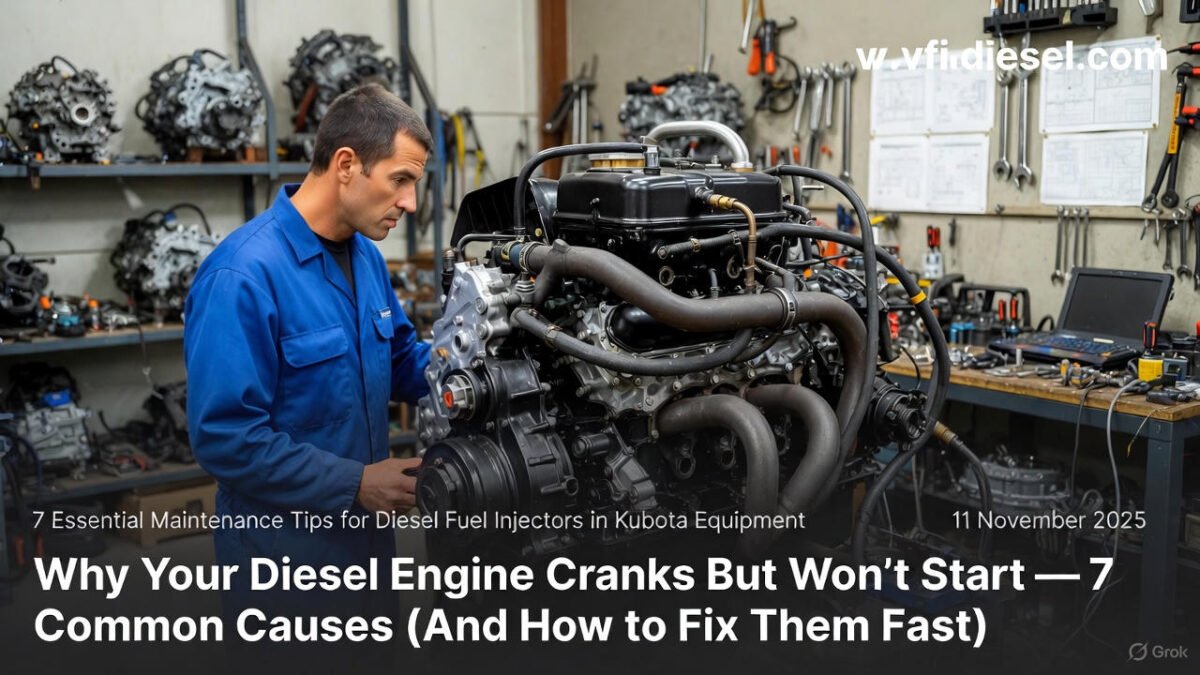
Published by Valley Fuel Injection & Turbo, Inc. | Woodland, CA
Reviewed by VFI’s Bosch-Certified Diesel Technicians | Updated January 2026
You turn the key. The engine cranks strong — starter sounds healthy, battery is fine — but the engine refuses to fire. No combustion, no rumble. Just cranking.
This is one of the most common and frustrating diesel problems, and it hits everything from pickup trucks to tractors to generators. The good news: a diesel that cranks but won’t start is almost always a fuel delivery, air intrusion, or combustion support problem — not a catastrophic engine failure. In most cases, the fix is something you or your shop can identify without tearing the engine apart.
At Valley Fuel Injection & Turbo, we diagnose diesel no-start problems every week across Northern California and Nevada. This 2026 guide walks through the 7 most common causes in order of likelihood, how to diagnose each one, what it costs to fix, and when the problem points to something more serious like failing injectors or a failed injection pump.
- Listen — Do you hear the lift/fuel pump prime when you turn the key to ON (before cranking)? A humming sound for 1-2 seconds means the pump is working.
- Look — Check the dash for warning lights: glow plug indicator, water-in-fuel light, low fuel pressure warning, check engine light.
- Smell — Do you smell raw diesel at the exhaust while cranking? If yes, fuel is reaching the cylinders but not igniting (glow plug or compression issue). If no smell, fuel isn’t getting there (fuel delivery issue).
- Scan — If you have an OBD-II scanner, pull codes before doing anything else. A single code can save hours of guessing.
Cause #1: Fuel Starvation — Empty Tank, Bad Fuel, or Water Contamination
This is the most common cause of a diesel no-start, and it’s the easiest to overlook. Diesel engines are completely dependent on a continuous supply of clean fuel at adequate pressure. Any interruption — even momentary — and the engine won’t fire.
Why it happens:
- Tank ran dry (or near-dry) and air entered the fuel system
- Water accumulated in the tank from condensation or bad fuel
- Fuel sat too long and degraded (common in seasonal equipment like generators, tractors, and construction machinery)
- Bad batch of fuel from a station with contaminated tanks
- Fuel gelled in cold weather (especially with summer-blend diesel in winter)
How to diagnose:
- Check fuel level — Don’t trust the gauge. Use a dipstick or remove the tank cap and look/listen.
- Inspect fuel quality — Draw a sample from the tank drain or fuel filter. Look for water separation (clear layer at bottom), cloudiness, or dark color.
- Test fuel temperature — If it’s been below 20°F, fuel may have gelled even with anti-gel additives.
- Check water separator — Most diesels have a water-in-fuel sensor. If the light is on, drain the separator immediately.
- Fuel system bleeding: $100-200
- Fuel filter replacement: $50-100
- Water separator service: $75-150
- Tank cleaning (severe contamination): $300-800
Quick fixes:
- Add fresh fuel if tank is low
- Use diesel anti-gel additive if fuel has gelled
- Drain water separator if water-in-fuel light is on
- Replace fuel filter if it’s been more than 15,000 miles or shows contamination
Cause #2: Air in the Fuel System
Diesel fuel systems operate under vacuum on the suction side and pressure on the delivery side. Any air leak — even microscopic — can prevent fuel from reaching the injection pump and injectors. This is especially common after running out of fuel, changing fuel filters, or in older vehicles with aging fuel lines.
Common air entry points:
- Loose fuel filter housing or O-rings
- Cracked fuel lines (especially rubber return lines)
- Faulty lift pump or primer pump
- Loose fittings at the injection pump
- Tank pickup tube with cracks or loose connections
How to diagnose:
- Visual inspection — Look for fuel stains around filter housing, pump connections, and fuel lines. Wet spots indicate leaks that can also let air in.
- Prime the system — Use the manual primer pump (if equipped) or electric lift pump. If it takes excessive pumping or won’t build pressure, air is entering.
- Clear fuel lines test — If you can see the fuel lines, look for air bubbles while priming or running.
- Pressure test — A shop can pressure-test the fuel system to locate leaks precisely.
How to fix:
- Replace fuel filter and O-rings
- Tighten all fuel system connections
- Replace cracked or aged fuel lines
- Bleed the fuel system completely after repairs
- Fuel filter and O-rings: $50-100
- Fuel line replacement: $150-400
- Lift pump replacement: $200-500
- Professional fuel system bleeding: $100-200
Cause #3: Glow Plug System Failure
Glow plugs preheat the combustion chambers to enable cold starting. When they fail, the engine may crank indefinitely without firing, especially in temperatures below 50°F. Modern diesels rely heavily on glow plugs, and even one failed plug can prevent starting in cold conditions.
Signs of glow plug problems:
- Hard starting or no starting in cold weather
- White smoke during cranking (unburned fuel)
- Glow plug warning light stays on or flashes
- Engine starts fine when warm but struggles when cold
- Rough idle for the first few minutes after cold start
How to diagnose:
- Check glow plug light — It should illuminate for 1-30 seconds depending on temperature, then turn off. If it doesn’t come on or stays on constantly, there’s a problem.
- Test individual plugs — Use a multimeter to check resistance. Good plugs typically read 0.5-2.0 ohms. Infinite resistance = open circuit (failed plug).
- Check glow plug relay/module — Listen for clicking when turning key to ON. No click may indicate a failed relay.
- Scan for codes — Modern diesels store glow plug fault codes that pinpoint which cylinder has the problem.
How to fix:
- Replace failed glow plugs (always do all cylinders)
- Replace glow plug relay/control module if faulty
- Repair wiring harness if damaged
- Clean carbon buildup from glow plug holes
- Standard glow plugs (set of 4-8): $60-240
- Ceramic glow plugs (set of 4-8): $160-640
- Glow plug relay/module: $50-200
- Professional installation: $200-400
Our Bosch-certified technicians can diagnose your diesel no-start problem quickly and accurately. We service all major diesel brands and have the latest diagnostic equipment. Contact Valley Fuel Injection & Turbo for expert service in Woodland, CA, and throughout Northern California.
Cause #4: Fuel Filter Clogged or Restriction
A severely clogged fuel filter can completely block fuel flow, preventing the engine from starting. This is especially common in high-mileage vehicles, equipment that sits for long periods, or engines that have been run on contaminated fuel.
Why fuel filters clog:
- Normal accumulation of dirt and debris over time
- Water contamination causing microbial growth
- Fuel degradation creating sludge and varnish
- Tank contamination from rust or debris
- Using incorrect filter type or size
How to diagnose:
- Check filter condition — Remove and inspect. A clogged filter will be dark, sticky, or have visible debris.
- Test fuel flow — Disconnect fuel line after filter and check flow rate while priming.
- Monitor fuel pressure — Use a fuel pressure gauge to check pressure before and after the filter.
- Check service records — When was the filter last changed? Most diesels need new filters every 10,000-15,000 miles.
Cause #5: Injection Pump Problems
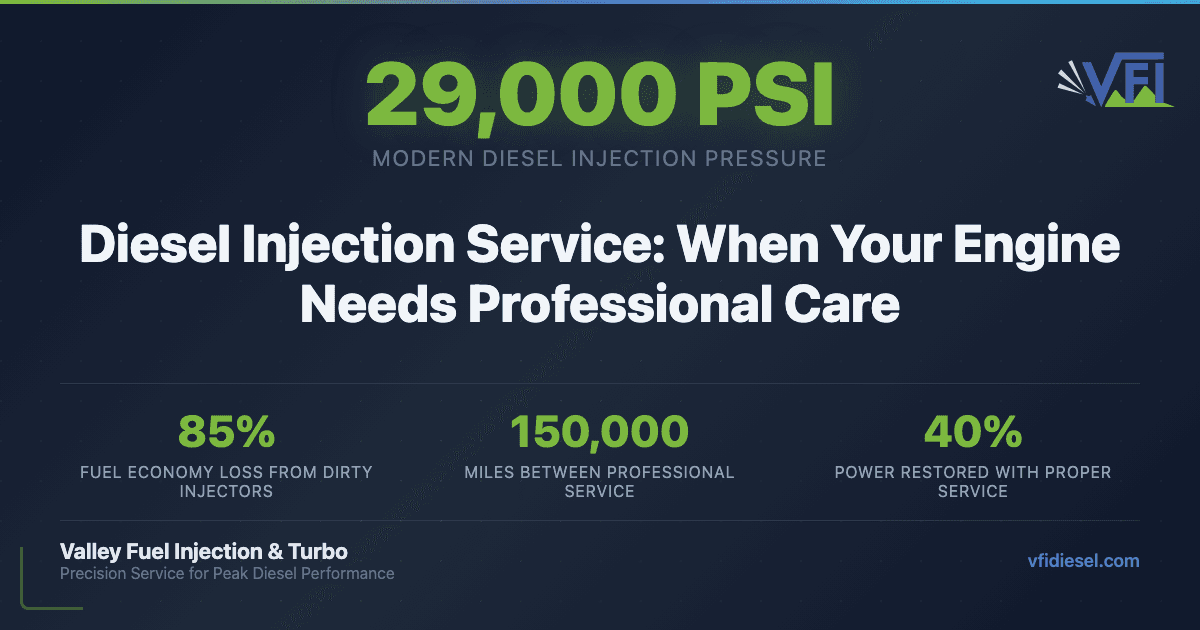
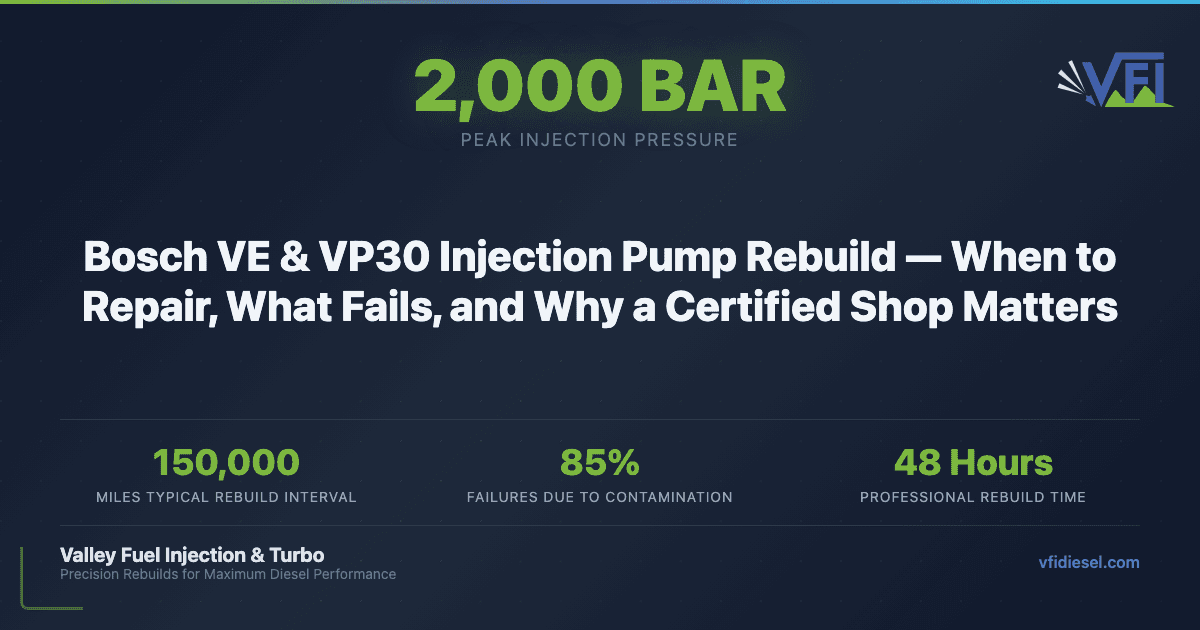
The injection pump is the heart of the diesel fuel system, creating the high pressure needed for proper fuel injection. When it fails, the engine won’t start regardless of cranking time. This is more common in high-mileage vehicles or engines that have been run on contaminated fuel.
Common injection pump failures:
- Internal wear causing loss of pressure
- Contamination damage from water or debris
- Drive coupling failure (mechanical pumps)
- Electronic control module failure (electronic pumps)
- Fuel starvation damage from running out of fuel
How to diagnose:
- Check fuel pressure — Measure pressure at the injection pump outlet. Should be 15,000+ PSI on common rail systems.
- Listen for pump operation — Mechanical pumps should make a rhythmic clicking sound. Electronic pumps may be silent.
- Scan for codes — Injection pump problems usually trigger fault codes.
- Professional testing — Pump testing requires specialized equipment and expertise.
- Injection pump rebuild: $1,500-3,000
- New injection pump: $2,000-5,000+
- CP4 pump replacement (with fuel system cleaning): $8,000-12,000
- Labor for pump replacement: $800-1,500
If you suspect injection pump problems, this is definitely a job for professionals. Our diesel injection services include complete pump testing, rebuilding, and replacement with Bosch-certified components.
Cause #6: Low Compression
Diesel engines rely on compression to generate the heat needed for combustion. If compression is too low due to worn rings, valves, or head gasket problems, the engine won’t start even with good fuel delivery and functioning glow plugs.
Signs of low compression:
- Engine cranks faster than normal (less resistance)
- White smoke during cranking but no ignition
- Loss of power before the no-start condition
- Excessive blow-by or oil consumption
- Coolant loss without visible leaks
How to diagnose:
- Compression test — Use a diesel compression tester. Minimum compression is typically 300-400 PSI, with no more than 50 PSI variation between cylinders.
- Leak-down test — More accurate than compression test for finding specific problems.
- Visual inspection — Look for oil in coolant, coolant in oil, or excessive exhaust smoke.
Cause #7: Electrical Issues
Modern diesels have complex electrical systems controlling fuel injection, glow plugs, and engine management. Electrical problems can prevent starting even when mechanical systems are fine.
Common electrical causes:
- Faulty crankshaft or camshaft position sensors
- Bad engine control module (ECM)
- Wiring harness damage
- Poor ground connections
- Immobilizer or security system issues
When to Call the Professionals
While some diesel no-start issues can be DIY fixes, others require professional diagnosis and repair. Call a qualified diesel shop when:
- You’ve checked the obvious causes (fuel, glow plugs, filters) without success
- The problem involves injection pump or high-pressure fuel system components
- You’re getting multiple diagnostic trouble codes
- The engine has low compression or other internal problems
- You’re not comfortable working with diesel fuel systems
At Valley Fuel Injection & Turbo, we’ve been solving diesel problems since 1993. Our Bosch-certified technicians have the experience and equipment to diagnose complex diesel issues quickly and accurately. We work on everything from pickup trucks to heavy equipment, serving customers throughout Northern California and Nevada.
Don’t let a no-start problem keep your diesel down. Our expert technicians can diagnose and fix your diesel quickly, often the same day. We’re authorized dealers for Bosch, Kubota, Yanmar, Delphi, and Alliant Power. Schedule your diagnostic appointment today or call us at (530) 662-4036.
Frequently Asked Questions
How long should I crank a diesel engine that won’t start?
Never crank for more than 10-15 seconds at a time, with 30-60 second breaks between attempts. Extended cranking can damage the starter, drain the battery, and flood the cylinders with unburned fuel. If the engine doesn’t start after 3-4 attempts, stop and diagnose the problem rather than continuing to crank.
Can I use starting fluid on a diesel engine?
Never use ether-based starting fluid on modern diesels with glow plugs. It can cause explosive combustion and engine damage, including cracked pistons or bent connecting rods. If you must use starting aid, use diesel-specific products designed for compression ignition engines, and only as a last resort after proper diagnosis.
How much does it cost to fix a diesel that cranks but won’t start?
Most common fixes range from $50-300: fuel filter replacement ($50-100), glow plug replacement ($150-300), or fuel system bleeding ($100-200). More serious problems like injection pump failure can cost $2,000-5,000+, while major engine problems (low compression) can require $5,000-15,000+ in repairs. Always get a proper diagnosis before authorizing expensive repairs.
Valley Fuel Injection & Turbo, Inc. has been Northern California’s trusted diesel specialist since 1993. Our Bosch-certified technicians provide expert diagnosis and repair for all diesel fuel injection and turbo systems. Located in Woodland, CA, we serve customers throughout Northern California and Nevada with quality parts, professional service, and competitive pricing.