Diesel Fuel System Pressure Loss: 9 Causes & Diagnosis Guide
03/18/2026
Diesel Fuel Injector Cleaning: DIY vs Professional Service
03/23/2026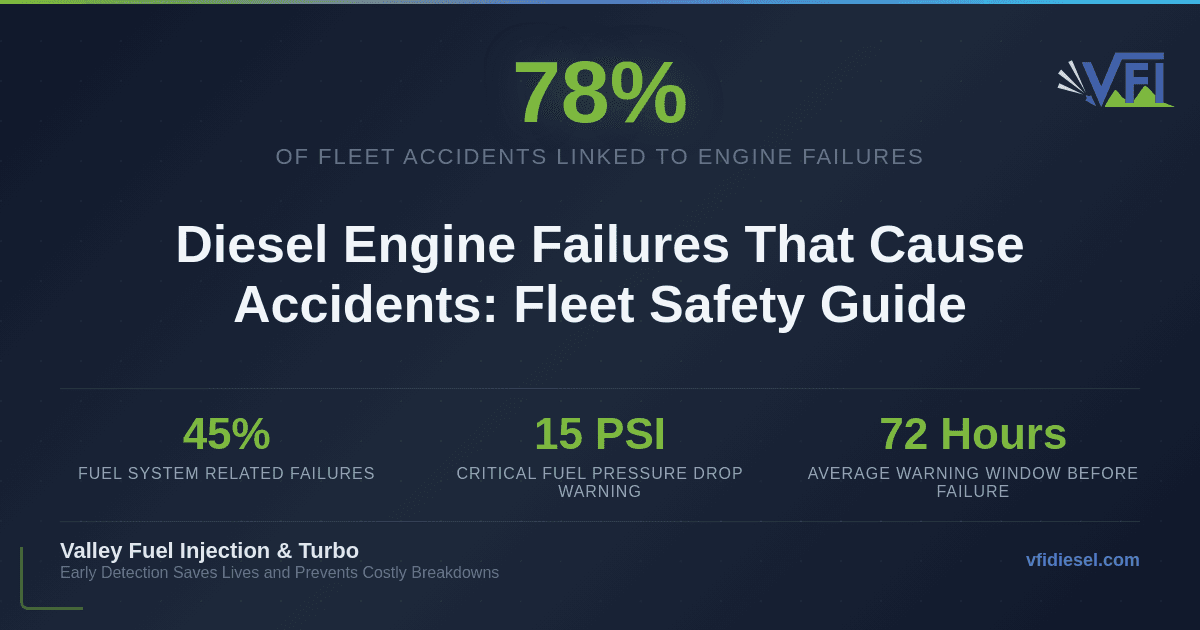
Diesel engine failures in commercial fleets can lead to catastrophic accidents, costly liability claims, and devastating safety consequences. The most dangerous failures, fuel injection system breakdowns, turbocharger malfunctions, and complete power loss, often provide warning signs that fleet managers can learn to recognize and address before disaster strikes.
Most catastrophic diesel engine failures that cause accidents are preventable through proper fuel system maintenance and early intervention when warning signs appear.
What Are the Most Dangerous Diesel Engine Failures for Commercial Fleets?
The most dangerous diesel engine failures for commercial fleets are those that cause sudden, complete power loss or create hazardous operating conditions without warning.
Sudden injection pump failure tops the list of catastrophic failures. When a high-pressure fuel injection pump fails completely, the engine loses power instantly, no gradual decline, no opportunity to safely pull over. We’ve seen this scenario countless times in our Woodland facility, where fleet operators bring in vehicles after experiencing sudden power loss on highways, grades, or in heavy traffic.
Turbocharger shaft failures create equally dangerous situations. A seized turbocharger can cause complete power loss, excessive smoke that obscures vision, or even engine fires. The failure often happens without warning, one moment the truck is operating normally, the next it’s billowing black smoke and losing power.
Fuel system failures in heavy vehicles can create multi-vehicle accidents. A 40-ton truck losing power on a grade poses extreme risks to surrounding traffic.
Common rail system failures present unique dangers because they can cause erratic engine behavior, sudden surges of power followed by complete loss. This unpredictability makes it nearly impossible for drivers to maintain safe control.
According to the Federal Motor Carrier Safety Administration, mechanical failures contribute to approximately 10% of large truck crashes, with engine-related failures being a significant subset.
How Do Fuel System Failures Lead to Catastrophic Engine Problems?
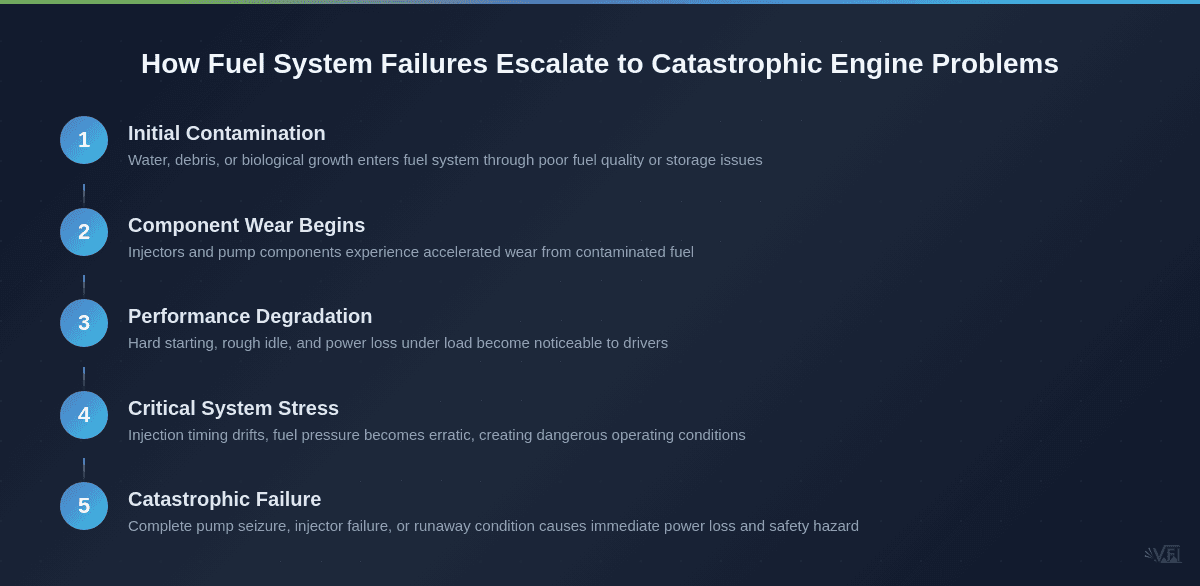
Fuel system failures create a cascade of engine problems that can rapidly escalate from minor issues to complete breakdowns.
Injection timing failures are particularly dangerous because they can cause engine runaway, a condition where the engine accelerates uncontrollably. We’ve diagnosed several cases where worn injection pumps allowed fuel delivery timing to drift, causing engines to race beyond safe RPM limits. This creates immediate safety hazards and can lead to catastrophic engine destruction.
| Failure Type | Immediate Risk | Accident Potential |
|---|---|---|
| Injection Pump Seizure | Complete power loss | High, especially on grades |
| Injector Failure | Power loss, rough running | Moderate, gradual degradation |
| Common Rail Pressure Loss | Erratic power delivery | High, unpredictable behavior |
| Fuel Supply Interruption | Stalling, power loss | High, sudden stops |
High-pressure fuel leaks present immediate fire hazards. Common rail systems operate at pressures exceeding 30,000 PSI, a pinhole leak can create a fuel spray that ignites instantly if it contacts hot engine components. We’ve seen cases where small fuel leaks led to engine bay fires, creating extreme danger for drivers and surrounding vehicles.
Contaminated fuel creates progressive damage that often goes unnoticed until catastrophic failure occurs. Water, debris, or biological growth in fuel systems causes injector seizure, pump damage, and erratic fuel delivery. The engine may run acceptably for weeks before suddenly failing completely.
Implement fuel quality testing in your preventive maintenance program. We test fuel samples for water content, particulate contamination, and biological growth, catching problems before they cause failures.
What Are the Early Warning Signs of Injection System Failures?
Recognizing early warning signs of injection system failures can prevent catastrophic breakdowns and potential accidents.
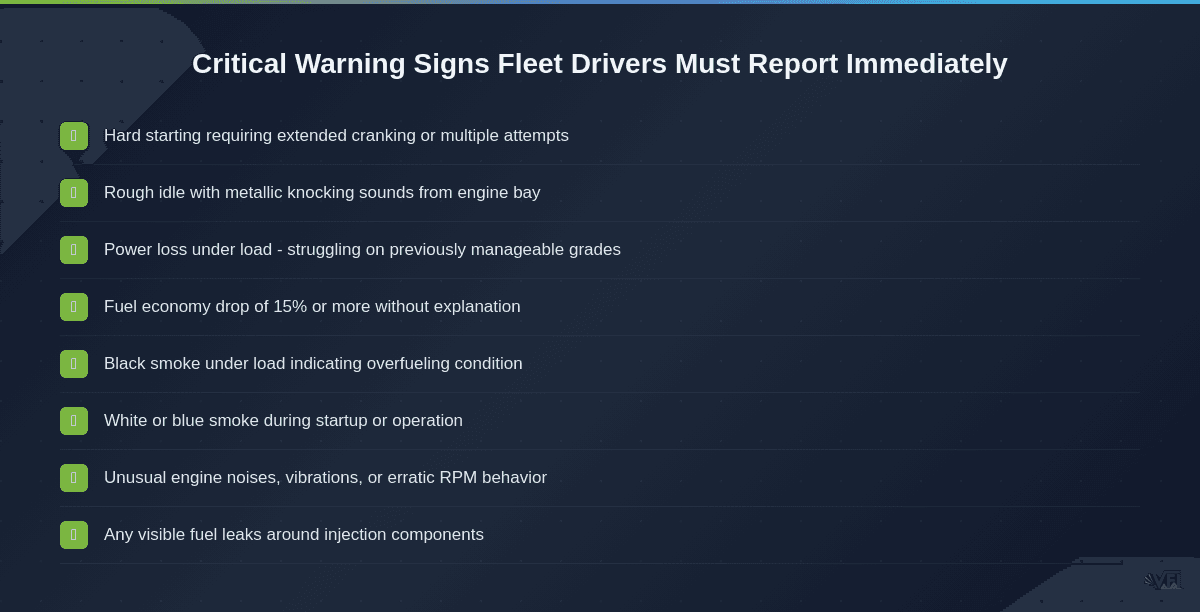
Hard starting, especially when combined with white or blue smoke, indicates injection timing problems or worn injectors. Drivers should report any changes in starting behavior immediately. We’ve found that engines requiring extended cranking time or multiple start attempts are often days away from complete failure.
Rough idle with metal knocking sounds signals advanced injector wear or pump timing issues. This isn’t just a comfort issue, it indicates internal damage that can progress rapidly to complete failure. Professional injection service at this stage can prevent catastrophic breakdown.
Power loss under load is a critical warning sign that demands immediate attention. When trucks struggle to maintain speed on grades they previously climbed easily, fuel system degradation is advanced. This condition creates immediate safety risks as the vehicle becomes unable to maintain traffic speeds.
Modern common rail systems have over 200 diagnostic trouble codes related to fuel injection. Professional diagnostic equipment can detect problems weeks before drivers notice symptoms.
Excessive fuel consumption often precedes major injection failures. When fuel economy drops 15% or more without explanation, injectors are likely leaking internally or injection timing has shifted. This condition stresses the entire fuel system and accelerates wear on pumps and other components.
Black smoke under load indicates overfueling, either from failing injectors or pump timing problems. Beyond the obvious environmental and legal issues, overfueling creates excessive heat that can damage turbochargers, pistons, and exhaust systems.
For fleet managers in the Sacramento area, establishing driver reporting protocols for these warning signs is crucial. Drivers are the first line of defense against catastrophic failures.
How Can Turbocharger Failures Cause Sudden Power Loss and Accidents?
Turbocharger failures can create immediate, dangerous situations that lead to accidents, especially in heavy commercial vehicles.
Shaft seizure causes instant power loss and often catastrophic engine damage. When turbocharger bearings fail, the shaft can seize completely, cutting off all airflow to the engine. The result is immediate power loss, no warning, no gradual decline. We’ve seen this failure mode cause accidents when trucks lost power on highway grades or during merge situations.
Compressor wheel failure creates multiple hazards simultaneously. A disintegrating compressor wheel can send metal fragments into the intake system while causing complete boost loss. The engine immediately loses 30-50% of its power output, and metal debris can damage pistons, valves, and other components.
Turbocharger failure can cause $25,000–$50,000 in engine damage beyond the turbo replacement cost. Preventive maintenance typically ranges from $500 to $1,500 annually per vehicle.
Oil seal failures create fire hazards and visibility problems. When turbocharger seals fail, engine oil is blown into the exhaust system, creating dense white or blue smoke that can completely obscure the driver’s vision. Oil contacting hot exhaust components can ignite, creating engine bay fires.
According to SAE International studies, turbocharger-related failures account for a significant percentage of heavy-duty engine breakdowns, with many occurring without adequate warning.
Our turbocharger service program includes regular inspection of bearing play, seal condition, and boost pressure, catching problems before they cause dangerous failures.
Variable geometry turbocharger (VGT) failures present unique risks because they can cause erratic power delivery. Sticking vanes can cause the engine to surge and lose power unpredictably, making it nearly impossible for drivers to maintain safe control.
What Preventive Maintenance Steps Prevent Critical Diesel Engine Failures?
Implementing comprehensive preventive maintenance programs can prevent most catastrophic diesel engine failures that lead to accidents.
Fuel system maintenance should be the cornerstone of any fleet safety program. Regular injector testing using professional equipment can detect problems months before they cause failures. We recommend annual injector flow testing for high-mileage fleet vehicles and immediate testing when performance changes are noted.
Oil analysis programs provide early warning of internal engine problems. Regular oil sampling can detect metal particles from bearing wear, fuel dilution from injector leaks, and coolant contamination from head gasket problems. This information allows fleet managers to schedule repairs before catastrophic failures occur.
| Maintenance Task | Frequency | Failure Prevention |
|---|---|---|
| Fuel filter replacement | Every 15,000 miles | Injection pump damage |
| Injector flow testing | Annually or 100,000 miles | Power loss, rough running |
| Turbocharger inspection | Every 50,000 miles | Sudden power loss |
| Fuel quality testing | Quarterly | System contamination |
Driver training programs should include recognition of warning signs and proper response procedures. Drivers need to understand that certain symptoms, sudden power loss, unusual smoke, or strange noises, require immediate shutdown and professional assistance. Understanding common failure modes helps drivers make better decisions in emergency situations.
Regular diagnostic scans using professional equipment can detect problems before they become apparent to drivers. Modern diesel engines generate diagnostic codes for hundreds of potential issues, many of which indicate developing problems that haven’t yet affected performance.
For Kubota equipment operators, following manufacturer-specific maintenance protocols is crucial for preventing failures.
When Should Fleet Managers Replace vs Rebuild Critical Fuel System Components?
The decision to replace or rebuild critical fuel system components should be based on cost analysis, downtime considerations, and reliability requirements.
Injection pumps with high mileage but good core condition are often excellent candidates for rebuilding. Professional rebuilding can restore pumps to like-new condition at 60-70% of replacement cost. However, pumps with internal damage from contamination or lack of maintenance may be more cost-effective to replace.
Age and technology considerations play crucial roles in replacement decisions. Older mechanical injection systems may be candidates for upgrading to newer common rail technology, providing improved reliability and performance. However, this requires significant investment and system integration work.
Keep detailed maintenance records for each vehicle. Components with proper maintenance history are better candidates for rebuilding than those with unknown or poor service history.
Fleet utilization patterns should influence replacement decisions. High-mileage, critical-service vehicles may benefit from new components to minimize downtime risk, while lower-priority vehicles can use rebuilt components effectively.
Warranty considerations are crucial for fleet operations. New components typically carry longer warranties than rebuilt units, but the cost difference may not justify the extended coverage for all applications.
Component availability affects replacement timing. Some older injection systems have limited parts availability, making rebuilding the only viable option. Our Bosch-certified facility maintains extensive rebuild capabilities for systems where replacement parts are no longer available.
For fleet managers in the Reno area, we provide detailed cost analysis and recommendations based on each vehicle’s specific situation and operational requirements.
According to the EPA, proper maintenance and timely component replacement can extend diesel engine life significantly while reducing emissions and improving fuel economy.
Don’t wait for catastrophic failures to threaten your operations and safety record. Schedule a comprehensive fuel system inspection for your fleet vehicles today. Call us at 530-668-0818 to discuss your preventive maintenance needs.
Frequently Asked Questions
What are the most common diesel engine failures that cause accidents?
The most dangerous failures include sudden injection pump seizure, turbocharger shaft failure, and common rail pressure loss. These failures can cause immediate power loss without warning, creating hazardous situations especially on highways or grades.
How often should commercial fleets test fuel injectors?
We recommend annual injector flow testing for high-mileage fleet vehicles, or immediately when performance changes are noticed. Regular testing can detect problems months before they cause dangerous failures.
What should drivers do if they notice sudden power loss?
Drivers should immediately activate hazard lights, safely move to the shoulder if possible, and shut down the engine. Continuing to operate with fuel system problems can cause catastrophic damage and create additional safety hazards.
How much does preventive maintenance cost compared to emergency repairs?
Preventive maintenance typically costs $500–$1,500 annually per vehicle, while catastrophic engine failures can cost $18,000–$50,000 or more in repairs plus downtime, towing, and potential liability costs.
Can rebuilt fuel injection components be as reliable as new ones?
Properly rebuilt components from certified facilities can match new component reliability when the core is in good condition and proper maintenance practices are followed. However, components with contamination damage or poor maintenance history may be better candidates for replacement.