CP4 to DCR Conversion Guide: Eliminate Ford 6.7 Powerstroke Failures
04/10/2026
Biodiesel Injector Damage: California’s Hidden Fuel Crisis
04/14/2026
Common rail injector problems can turn a smooth-running diesel engine into a rough, inefficient machine that costs you money at every mile. After rebuilding thousands of common rail injectors over three decades, we’ve identified six telltale failure patterns that signal injector trouble, and understanding these signs early can save you from catastrophic engine damage and expensive repairs.
Common rail injector problems typically manifest as rough idle, white/black smoke, poor fuel economy, hard starting, engine knock, or reduced power. Most failures stem from fuel contamination, electrical issues, or high-mileage wear, and early diagnosis determines whether you need a $400 injector rebuild or a $10,000+ engine overhaul.
What Are the Most Common Signs of Common Rail Injector Problems?
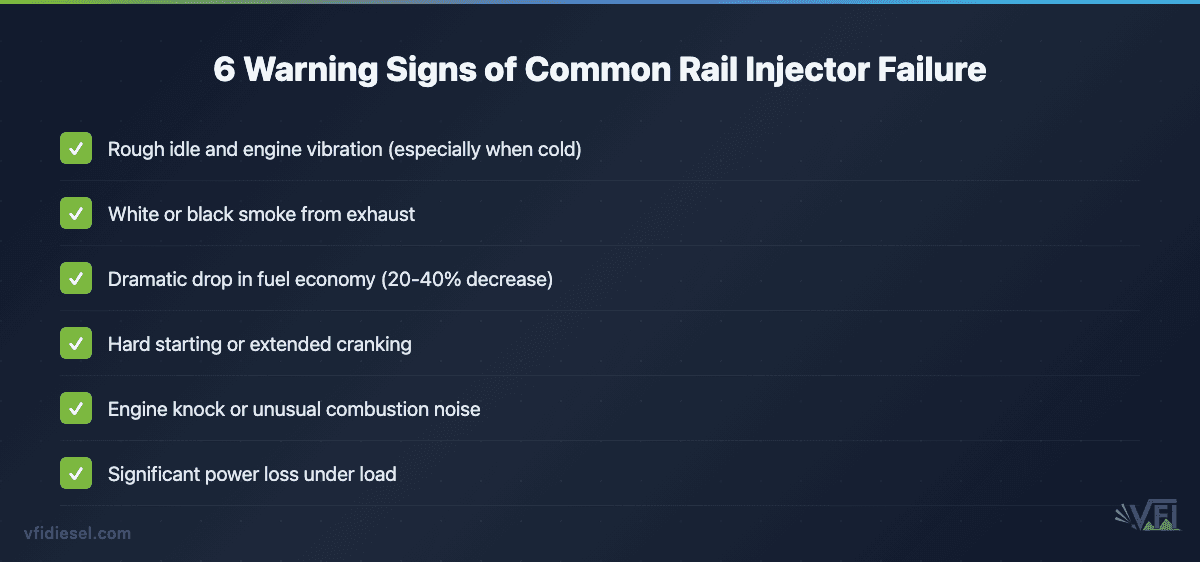
Common rail injector problems announce themselves through six distinct symptoms that experienced diesel technicians recognize immediately. These signs often appear gradually, making them easy to dismiss until they become severe enough to strand you on the roadside.
1. Rough Idle and Engine Vibration
A failing common rail injector creates an uneven fuel spray pattern, causing one or more cylinders to misfire or burn fuel inefficiently. You’ll feel this as a rough, shaking idle that gets worse when the engine is cold. The vibration often smooths out at higher RPMs when other cylinders compensate for the failing injector.
If your diesel idles rough when cold but smooths out when warm, suspect injector problems rather than glow plug issues. Glow plug problems typically cause hard starting but don’t affect idle quality once the engine warms up.
2. White or Black Smoke from the Exhaust
Faulty common rail injectors produce distinctive smoke patterns. White smoke indicates unburned fuel (incomplete combustion), while black smoke signals over-fueling. Both point to injectors that aren’t atomizing fuel properly, either delivering too little fuel at the wrong time (white smoke) or too much fuel that can’t burn completely (black smoke).
3. Dramatic Drop in Fuel Economy
When common rail injectors fail, they often stick partially open, allowing excess fuel into the combustion chamber. This “fuel dumping” can cut your fuel economy by 20-40% seemingly overnight. If your truck suddenly needs fuel stops twice as often, suspect injector problems before blaming driving habits or fuel quality.
4. Hard Starting or Extended Cranking
Common rail systems rely on precise fuel delivery timing and quantity. When injectors fail, they can’t provide the exact fuel atomization needed for reliable ignition. You’ll notice longer cranking times, especially on cold mornings, or complete failure to start despite adequate fuel and battery power.
5. Engine Knock or Unusual Combustion Noise
Failing injectors often develop inconsistent spray patterns that cause fuel to ignite at the wrong time in the combustion cycle. This creates a distinctive knocking or pinging sound, particularly under load. Unlike bearing knock, injector-related knock often disappears at idle and returns under acceleration.
6. Significant Power Loss Under Load
When common rail injectors can’t deliver proper fuel atomization, your engine loses power dramatically under load, hills that never bothered your truck suddenly require downshifting, and towing capacity drops noticeably. This power loss is often most apparent during highway merging or climbing grades.
What Causes Common Rail Injectors to Fail?
Common rail injector failures don’t happen randomly, they result from specific conditions that damage the precision components inside these sophisticated fuel delivery systems. Understanding these root causes helps prevent repeat failures after repair.
Fuel Contamination: The Primary Killer
Poor fuel quality causes 70% of the common rail injector problems we see in our shop. Water, dirt, algae, and chemical contaminants act like sandpaper inside injector nozzles, wearing away the precision-machined surfaces that create proper spray patterns. Even microscopic particles can jam the tiny orifices that meter fuel flow.
Never ignore fuel filter service intervals. A $30 fuel filter change prevents $3,000+ injector repairs. We’ve seen entire injector sets destroyed by a single tank of contaminated fuel that bypassed a clogged filter.
Electrical System Problems
Common rail injectors are electrically controlled solenoid valves that require precise voltage and timing signals. Corroded connectors, damaged wiring, or failing injector control modules disrupt these signals, causing injectors to open at the wrong time, stay open too long, or fail to open at all.
High-Pressure System Wear
Common rail systems operate at 23,000-29,000 PSI, pressure that would cut through steel. Over time, this extreme pressure wears internal seals and precision surfaces inside injectors. High-mileage engines (200,000+ miles) often experience injector failures simply from normal wear, regardless of maintenance quality.
Carbon Buildup and Heat Damage
Injector tips operate in the combustion chamber where temperatures exceed 2,000°F. Carbon deposits from incomplete combustion can build up on injector nozzles, disrupting spray patterns. Additionally, excessive heat from engine problems (like failed EGR coolers) can warp injector components or damage internal seals.
Modern common rail injectors contain over 100 precision-machined components, with tolerances measured in microns. That’s why professional testing and rebuilding requires specialized equipment, you can’t fix these with basic hand tools.
How Do You Diagnose Common Rail Injector Problems?
Proper diagnosis of common rail injector problems requires systematic testing that goes beyond simple visual inspection. Professional shops use specialized equipment to pinpoint exactly which injectors are failing and why.
Electronic Diagnostic Scanning
Modern diesel engines monitor injector performance continuously through the ECM. Diagnostic scanners reveal injector balance rates, fuel delivery rates, and electrical response times. These data points help technicians identify failing injectors before symptoms become severe.
Cylinder Contribution Testing
This test measures how much power each cylinder contributes to engine operation. Technicians disable individual injectors while monitoring engine RPM drop, cylinders with failing injectors show minimal RPM change because they’re already contributing little power.
Professional Injector Flow Testing
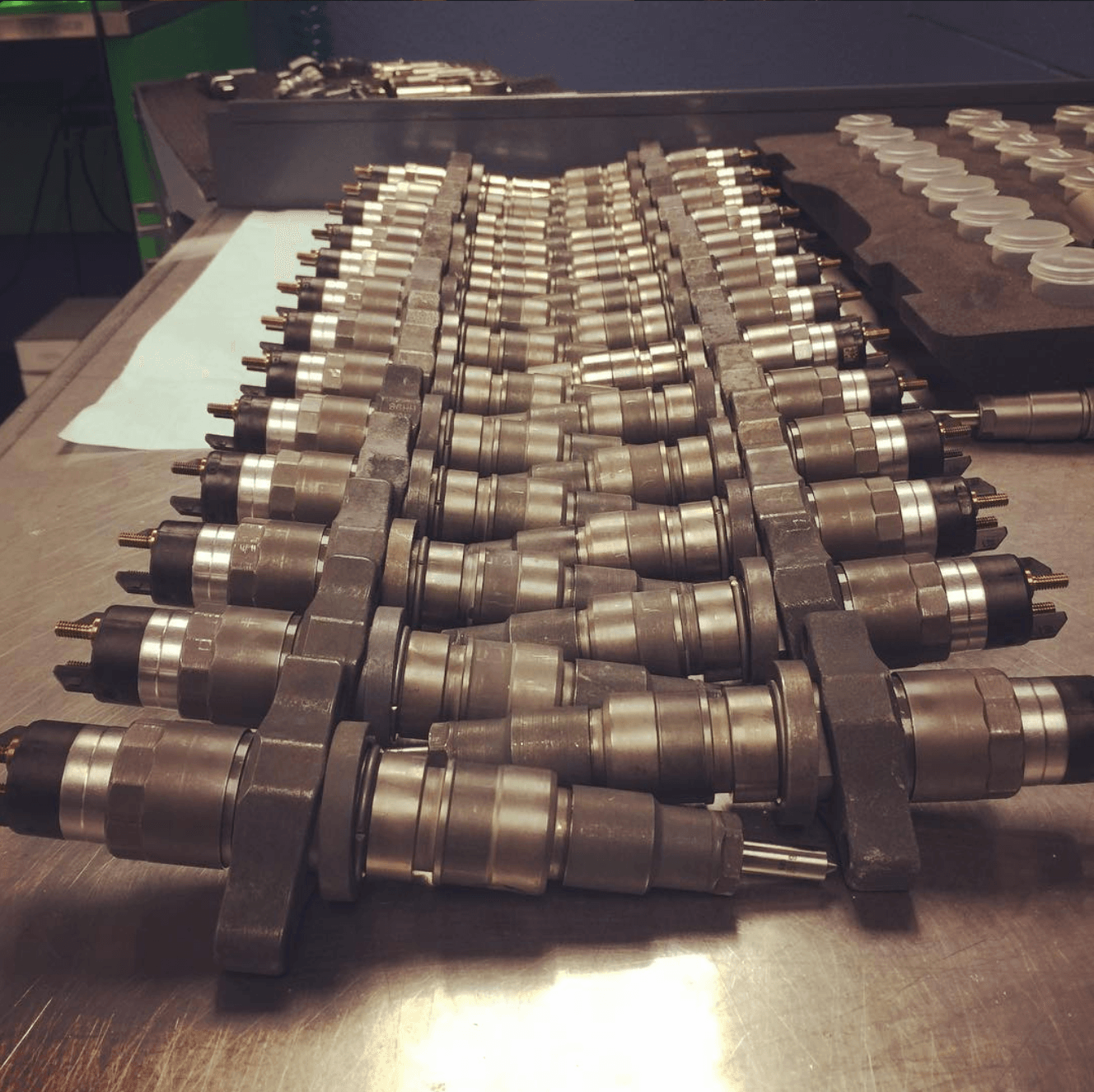
The gold standard for injector diagnosis involves removing injectors and testing them on specialized equipment. Our Bosch-certified test bench measures fuel flow rates, spray patterns, and electrical response under actual operating pressures and temperatures.
Professional injector testing typically costs $150–$300 per set, but this investment prevents misdiagnosis that could lead to unnecessary repairs. We’ve seen customers spend thousands replacing good injectors because of improper diagnosis.

Can You Fix Common Rail Injector Problems Yourself?
DIY repair of common rail injector problems is extremely limited due to the precision manufacturing and specialized equipment required. Unlike older mechanical injectors, common rail injectors contain electronic components and require exact calibration that’s impossible without professional test equipment.
What You Can Do Yourself
Basic maintenance like fuel filter changes, fuel additive treatments, and keeping fuel tanks full (to minimize water condensation) can prevent many injector problems. You can also perform visual inspections for obvious damage like cracked fuel lines or corroded electrical connections.
For more comprehensive maintenance approaches, our guide on diesel fuel injector cleaning explains what’s realistic for DIY versus professional service.
What Requires Professional Service
Injector removal, testing, rebuilding, and calibration require specialized tools and training.
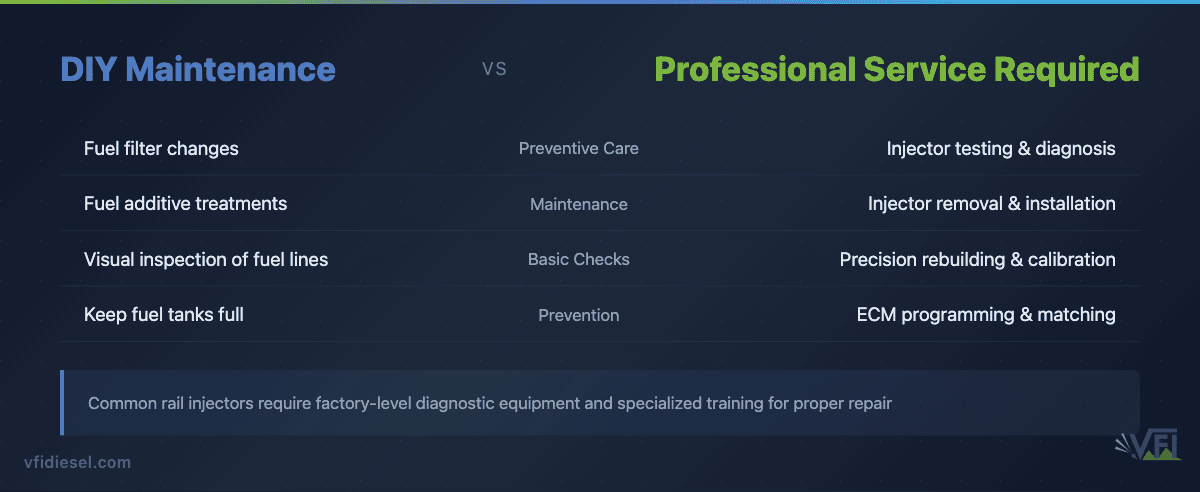
Common rail injectors must be programmed to match specific engine requirements, a process that requires factory-level diagnostic equipment and software access.
When Should You Repair vs Replace Common Rail Injectors?
The repair versus replacement decision depends on injector condition, vehicle value, and long-term plans. Professional testing reveals whether injectors can be successfully rebuilt or need complete replacement.
| Condition | Recommendation | Typical Cost |
|---|---|---|
| Minor wear, good electrical function | Professional rebuild | typically $300–$550 each |
| Severe internal damage | Remanufactured replacement | typically $300–$550 each (reman) to $500–$900 each (new OEM) |
| Electrical component failure | New OEM replacement | typically $500–$900 each |
| High-mileage preventive service | Test first, rebuild if needed | typically $150–$300 testing |
Factors That Influence the Decision
Vehicle age and mileage play crucial roles in repair decisions. High-mileage trucks (300,000+ miles) often benefit from complete injector replacement to avoid repeat failures, while newer vehicles with isolated injector problems are good candidates for individual rebuilds.
Fleet operators often choose remanufactured injectors for consistent performance and warranty coverage, while individual truck owners might opt for rebuilds to manage costs. The key is working with experienced technicians who can assess each situation individually.
How Much Do Common Rail Injector Repairs Cost?
Common rail injector repair costs vary significantly based on the extent of damage, repair approach, and vehicle type. Understanding these cost factors helps you budget appropriately and avoid surprise expenses.
Professional Diagnosis Costs
Proper diagnosis typically costs $150–$300 but saves money by identifying exactly which injectors need service. Many shops apply diagnostic fees toward repair costs, making this essential first step essentially free when you proceed with recommended repairs.
Individual Injector Repair Costs
Single injector rebuilds range from $300–$550 each, depending on the extent of internal damage and parts required. Complete replacement with remanufactured injectors typically ranges from $300–$550 each, while new OEM injectors range from $500–$900 each for late-model applications.
Complete Set Replacement
Many technicians recommend replacing injectors in complete sets to ensure balanced performance and prevent repeat service calls. Full set replacement costs typically $3,800–$7,500 or more depending on the engine and injector type, but provides the most reliable long-term solution.
Always factor in related repairs when budgeting for injector service. Common rail problems often damage fuel rails, high-pressure pumps, or contaminate the entire fuel system, addressing these issues during injector service prevents comebacks.
How Can You Prevent Common Rail Injector Problems?
Preventing common rail injector problems costs far less than repairing them after failure. A systematic maintenance approach addresses the root causes before they damage expensive injection components.
Fuel Quality Management
Use only high-quality diesel fuel from busy stations with rapid fuel turnover. Add fuel biocide treatments every 6 months to prevent algae growth, and use fuel stabilizers during storage periods. Keep fuel tanks as full as possible to minimize water condensation.
Filter Maintenance Excellence
Change fuel filters at manufacturer intervals or sooner in dusty conditions. Replace both primary and secondary filters simultaneously, and always use OEM-quality filters that meet your engine’s filtration requirements. Never extend filter service intervals to save money.
System Monitoring
Monitor fuel system pressures regularly using diagnostic equipment. Address fuel pressure problems immediately, low pressure starves injectors while excessive pressure can damage internal components. Professional system analysis can identify developing problems before they cause injector damage.
Understanding common rail injector problems helps diesel owners make informed maintenance and repair decisions. If you’re experiencing symptoms like rough idle, smoke, or poor fuel economy, our common rail system specialists can provide accurate diagnosis and cost-effective repair solutions.
Which Common Rail Systems Are Most Problematic?
Certain common rail systems have developed reputations for specific injector problems based on design characteristics and operating conditions. Understanding these patterns helps owners anticipate and prevent issues.
Ford 6.0L Powerstroke Injector Issues
The Ford 6.0L Powerstroke uses a unique HEUI injection system that combines hydraulic and electronic control. These injectors are particularly sensitive to oil quality and electrical problems. Our detailed analysis of Ford 6.0 Powerstroke injector problems covers the specific failure patterns and solutions for this engine.
6.7L Cummins Common Rail Challenges
The 6.7L Cummins uses Bosch common rail injectors that can develop problems with high-mileage wear and fuel contamination. These engines are generally reliable but require attention to fuel quality and regular maintenance. Learn more about 6.7 Cummins injector problems and their solutions.
Duramax LB7 Injector Problems
Early Duramax LB7 engines (2001-2004) experienced widespread injector failures due to design issues and fuel contamination sensitivity. Later generations improved significantly, but LB7 owners should monitor injector performance closely and maintain excellent fuel quality.
The difference between common rail and VP44 systems affects diagnostic approaches and repair costs. Common rail systems offer better performance but require more sophisticated diagnostic equipment and repair techniques.
When common rail injector problems develop, early diagnosis and professional repair prevent costly engine damage. Our team at Valley Fuel Injection has specialized in common rail systems since their introduction, providing expert diagnosis and repair services for diesel truck owners throughout Sacramento and Northern California.
Don’t let common rail injector problems leave you stranded or facing expensive engine repairs. Call us at 530-668-0818 to schedule professional diagnosis, or visit our Woodland, CA shop for immediate service. We also provide nationwide shipping for injector rebuilding and testing services.
Frequently Asked Questions
How long do common rail injectors typically last?
Common rail injectors typically last 150,000-200,000 miles with proper maintenance and fuel quality. However, severe operating conditions, poor fuel quality, or neglected maintenance can cause failures as early as 100,000 miles, while well-maintained systems sometimes exceed 300,000 miles.
Can bad common rail injectors damage my engine?
Yes, failed common rail injectors can cause serious engine damage. Over-fueling from stuck-open injectors can wash oil from cylinder walls, leading to bearing damage. Under-fueling can cause overheating and piston damage. Raw fuel in the oil dilutes lubrication and accelerates wear throughout the engine.
Is it safe to drive with failing common rail injectors?
Driving with failing common rail injectors risks expensive engine damage and potential safety issues. Severe power loss can create dangerous situations in traffic, while continued operation can damage pistons, bearings, and the turbocharger. Stop driving and seek professional diagnosis immediately when symptoms appear.
Should I replace all injectors at once or just the bad ones?
For high-mileage engines (200,000+ miles), replacing all injectors together ensures balanced performance and prevents repeat service calls. For newer engines with isolated failures, individual replacement may be cost-effective. Professional testing determines the best approach for your specific situation.
How can I tell if my injector problems are electrical or mechanical?
Professional diagnostic scanning reveals electrical problems through error codes and response time measurements. Mechanical problems typically show up as flow rate variations and spray pattern issues during bench testing. Accurate diagnosis requires specialized equipment, visual inspection alone cannot distinguish between electrical and mechanical failures.