Stanadyne Performance Formula Review: The Ultimate Diesel Additive
04/21/2026
Diesel Engine Losing Oil Pressure: 7 Causes & Fixes
05/01/2026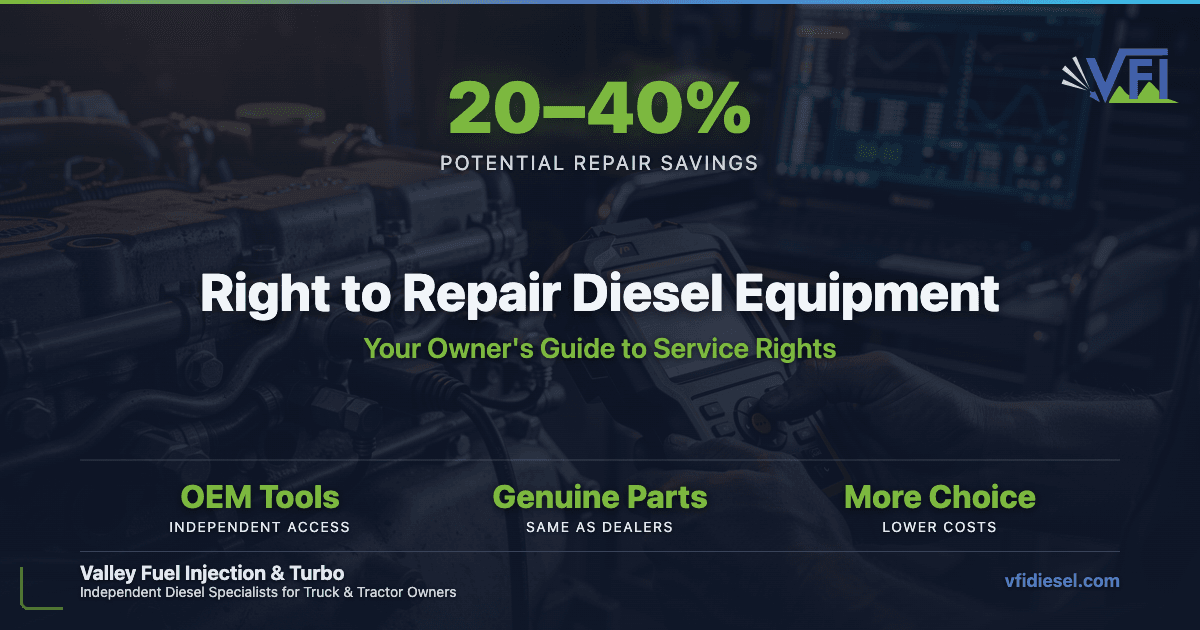
Right to repair diesel equipment laws are reshaping how truck and tractor owners can maintain their vehicles, giving them more control over where and how their diesel fuel systems get serviced. This movement directly impacts your ability to choose independent diesel specialists over manufacturer dealerships for critical repairs like fuel injection system service, turbocharger rebuilds, and engine diagnostics.
Right to repair laws require manufacturers to provide independent shops with the same diagnostic tools, technical information, and genuine parts access that authorized dealers receive, giving diesel owners more service options and potentially lower repair costs.
What Is the Right to Repair Movement and Why Does It Matter for Diesel Owners?
The right to repair movement is a consumer advocacy effort that requires equipment manufacturers to provide independent repair shops with access to the same diagnostic tools, service manuals, and genuine parts that authorized dealers use. For diesel truck and tractor owners, this means you’re no longer locked into expensive dealership service for complex fuel injection repairs.
Traditionally, manufacturers like John Deere, Caterpillar, and major truck OEMs restricted access to proprietary diagnostic software and service information. This forced owners to use authorized dealers even for routine maintenance, often at significantly higher costs and longer wait times.
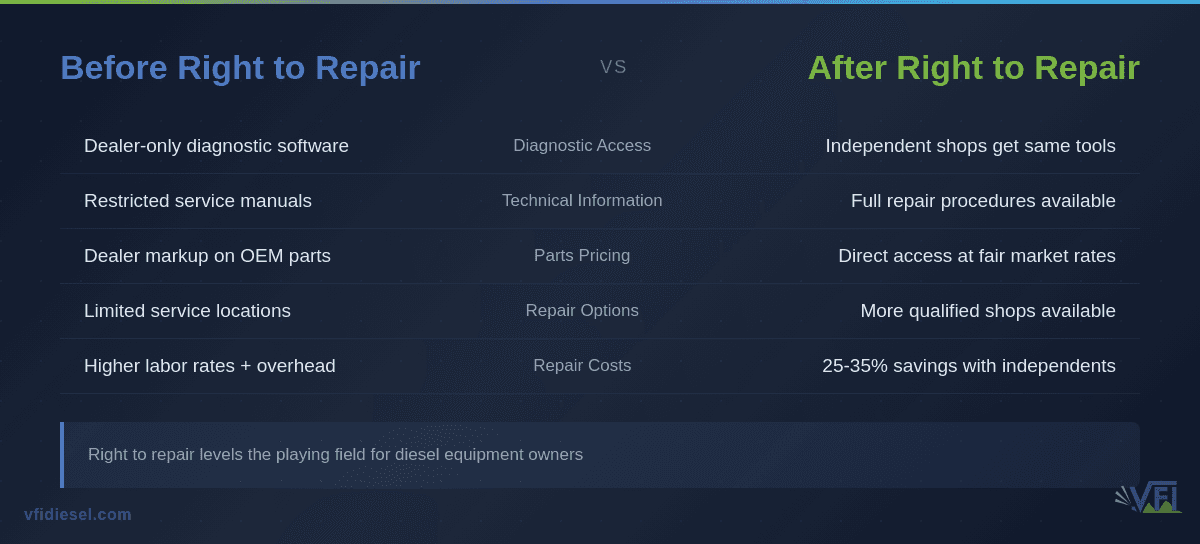
The EPA estimates that right to repair legislation could save equipment owners 20-40% on repair costs by increasing competition among service providers.
At Valley Fuel Injection, we’ve seen firsthand how manufacturer restrictions affected our ability to service certain diesel fuel systems. With evolving right to repair laws, independent shops like ours can now access the diagnostic capabilities needed to properly service modern common rail fuel systems and other advanced diesel technologies.
How Do Manufacturer Restrictions Affect Diesel Fuel System Repairs?
Manufacturer restrictions on diesel fuel system repairs primarily impact three critical areas: diagnostic software access, technical service information, and genuine parts availability.
Modern diesel engines rely heavily on electronic control systems that require specialized diagnostic equipment to identify fuel injection problems, turbocharger issues, and emissions system faults. Before right to repair legislation, manufacturers often limited this software to authorized dealers only.
| Restriction Type | Impact on Owners | Right to Repair Solution |
|---|---|---|
| Diagnostic Software | Forced dealer visits for fault code reading | Independent shops get same diagnostic access |
| Service Manuals | Limited repair options, higher costs | Technical information must be shared |
| Genuine Parts | Dealer markup on critical components | Direct parts access for qualified shops |
For diesel fuel injection systems specifically, these restrictions meant that complex Bosch injector diagnostics or VP44 pump programming often required expensive dealer visits, even when qualified independent shops had the mechanical expertise to perform the repairs.
Some manufacturers still use proprietary connectors and encrypted communications to limit independent repair access, despite right to repair laws. Always verify your shop has the proper diagnostic capabilities before authorizing complex fuel system work.
What Diagnostic Tools and Parts Can Independent Shops Legally Access?
Right to repair legislation requires manufacturers to provide independent repair facilities with access to the same diagnostic tools, software updates, and technical service bulletins that authorized dealers receive, typically within a reasonable timeframe and at fair market prices.
For diesel fuel injection specialists like our team at Valley Fuel Injection, this means we can now access:
- OEM diagnostic software: Factory-level scan tools for reading fault codes, performing injector coding, and calibrating fuel delivery parameters
- Technical service bulletins: Real-time updates on known issues, repair procedures, and software updates for specific engine models
- Wiring diagrams and specifications: Complete electrical schematics for troubleshooting complex fuel system problems
- Genuine parts sourcing: Direct access to OEM injectors, pumps, and sensors at competitive pricing
However, the implementation varies by manufacturer and equipment type. SAE International has developed industry standards for diagnostic tool compatibility, but some manufacturers still use proprietary systems that require specific licensing agreements.
When choosing an independent diesel shop, ask specifically about their diagnostic capabilities for your equipment brand. A qualified shop should have access to the same fault code definitions and repair procedures that dealers use.
At our Woodland, CA facility, we maintain current diagnostic software licenses for Bosch, Delphi, and other major fuel system manufacturers, ensuring we can provide the same level of service as authorized dealers for most diesel fuel injection repairs.
Why Are Farmers and Truckers Fighting for Repair Rights?
Farmers and truckers are leading the right to repair fight because equipment downtime directly impacts their livelihood, and manufacturer repair restrictions often create costly delays during critical work periods.
Agricultural equipment owners face unique challenges during planting and harvest seasons when every day of downtime can cost thousands in lost productivity. When a tractor’s fuel injection system fails during harvest, waiting weeks for a dealer appointment isn’t economically viable.
Similarly, commercial truck operators need immediate access to qualified diesel repair services. A Class 8 truck generating $500+ per day in revenue can’t afford extended dealer wait times for fuel system diagnostics or turbocharger repairs.
Independent diesel repair shops typically charge 20–35% less than dealerships for equivalent fuel injection services, with faster turnaround times due to specialized focus and lower overhead costs.
The California Air Resources Board has also supported right to repair initiatives because they increase the availability of qualified emissions system repair services, helping keep older diesel equipment compliant with environmental regulations.
For Kubota equipment owners and other agricultural diesel users, right to repair means local shops can now access the diagnostic tools needed to maintain fuel injection systems properly, reducing the need for expensive dealer visits during busy farming seasons.
How Does Right to Repair Impact Warranty Coverage on Diesel Equipment?
Right to repair laws protect your warranty coverage when using independent repair shops, as long as the work is performed according to manufacturer specifications using approved parts and procedures.
The Magnuson-Moss Warranty Act already prohibited manufacturers from voiding warranties simply because owners used independent repair services, but right to repair legislation strengthens these protections by ensuring independent shops have access to the same repair information and genuine parts that authorized dealers use.
However, warranty considerations for diesel fuel injection work require careful attention to several factors:
- Genuine parts usage: Warranty coverage typically requires OEM or manufacturer-approved replacement parts for critical fuel system components
- Proper procedures: Repairs must follow published service procedures and torque specifications
- Documentation: Detailed records of all work performed, including part numbers and calibration procedures
- Qualified technicians: Some warranties require repairs by certified technicians with appropriate training
While right to repair protects your choice of service provider, using non-OEM parts or improper repair procedures can still void warranty coverage. Always discuss warranty implications before authorizing fuel injection repairs.
At Valley Fuel Injection, our technicians are factory-trained and certified by major manufacturers including Bosch and Delphi. We maintain detailed service records and use only approved parts and procedures to protect your equipment warranty while providing comprehensive diesel fuel injection services.
What Should You Know About Choosing Independent vs. Dealer Service?
Choosing between independent and dealer service for diesel fuel injection work depends on several factors including warranty status, repair complexity, cost considerations, and service availability in your area.
Independent diesel specialists often provide advantages for fuel injection work because they focus specifically on diesel systems rather than maintaining expertise across multiple vehicle systems. This specialization typically results in faster diagnosis, more competitive pricing, and deeper knowledge of common fuel system problems.
However, dealer service may still be preferable for certain situations:
| Service Type | Independent Shop | Dealer Service |
|---|---|---|
| Warranty Work | Often faster, same quality | Direct warranty processing |
| Complex Diagnostics | Specialized diesel expertise | Factory support access |
| Emergency Repairs | Usually more flexible scheduling | May have longer wait times |
| Cost Considerations | Typically 20–35% lower | Higher labor rates, markup |
When evaluating independent diesel shops, look for specific qualifications that indicate they can provide dealer-quality service. Key factors include manufacturer certifications, diagnostic equipment capabilities, and experience with your specific fuel injection system type.
For example, our team at Valley Fuel Injection maintains Bosch certification for common rail systems, which means we have access to the same diagnostic procedures and repair specifications that Bosch-authorized dealers use. This certification, combined with over 30 years of diesel fuel injection experience, allows us to provide Sacramento area diesel owners with dealer-quality service at independent shop pricing.
Ask potential repair shops about their diagnostic capabilities, manufacturer certifications, and parts sourcing before committing to fuel injection work. A qualified independent shop should be transparent about their capabilities and limitations.
Right to repair legislation has also improved the relationship between independent shops and equipment manufacturers. Many OEMs now offer training programs and certification paths for independent technicians, recognizing that a broader service network benefits both manufacturers and equipment owners.
The key is finding an independent shop that has invested in the proper diagnostic equipment and technician training to match dealer capabilities.
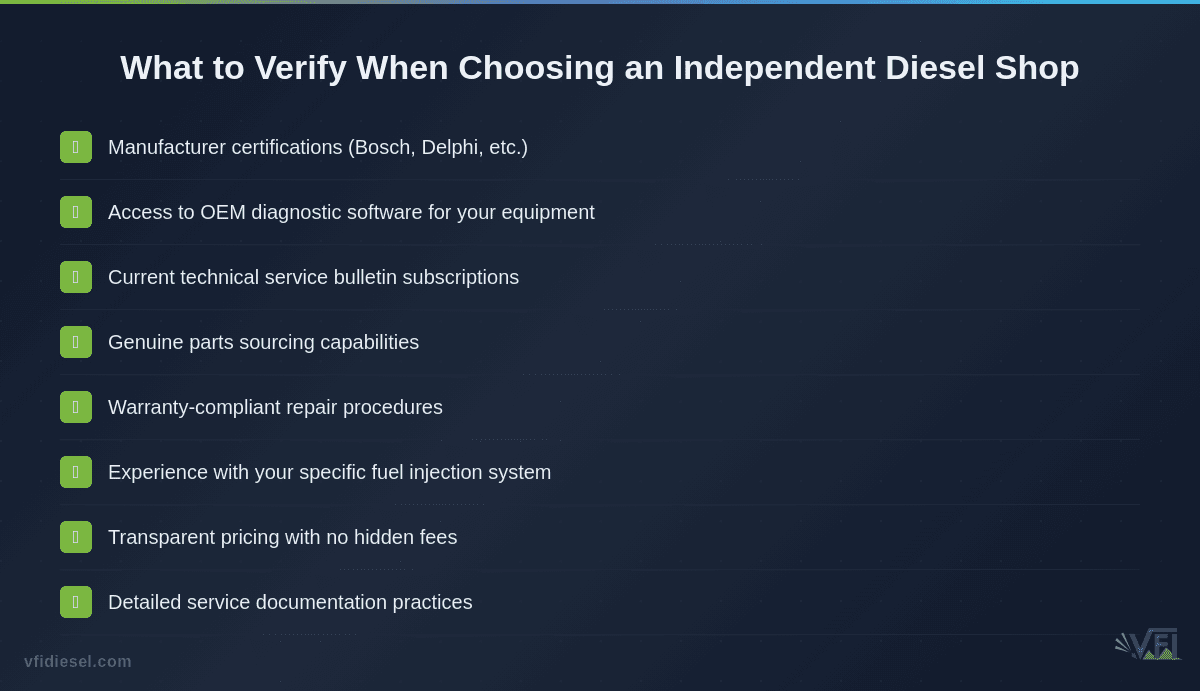
For diesel fuel injection work specifically, look for shops with experience in your equipment type and access to the diagnostic tools needed for proper fuel system calibration.
Whether you choose independent or dealer service, the most important factor is ensuring the shop has the expertise and equipment to properly diagnose and repair your specific diesel fuel injection system. Right to repair laws have made it easier to find qualified independent options, but the decision should always be based on the shop’s demonstrated capabilities rather than just cost considerations.
If you’re dealing with diesel fuel injection problems and want to explore your repair options, schedule a diagnostic with our team. We can explain exactly what diagnostic capabilities we have for your specific equipment and help you understand all your service options under current right to repair protections.
Frequently Asked Questions
Can using an independent shop void my diesel equipment warranty?
No, right to repair laws and the Magnuson-Moss Warranty Act protect your warranty when using qualified independent shops that follow manufacturer procedures and use approved parts. Manufacturers cannot void warranties simply because you chose independent service.
Do independent diesel shops have access to the same diagnostic tools as dealers?
Under right to repair legislation, manufacturers must provide independent shops with access to the same diagnostic software, technical information, and genuine parts that authorized dealers receive. However, implementation varies by manufacturer, so verify your shop’s specific diagnostic capabilities.
How much can I save using independent diesel fuel injection service?
Independent diesel specialists typically charge 20–35% less than dealerships for equivalent fuel injection services, with potentially faster turnaround times due to their specialized focus and lower overhead costs.
What should I look for when choosing an independent diesel repair shop?
Look for manufacturer certifications, appropriate diagnostic equipment, experience with your specific fuel injection system, and transparent communication about their capabilities. Ask about their parts sourcing and warranty protection procedures.
Are there any diesel repairs that still require dealer service?
While right to repair has opened most service options, some warranty work may process more smoothly through dealers, and certain proprietary systems may still have limited independent access. Complex programming or recalls typically require dealer service initially.
Right to repair diesel equipment laws have fundamentally changed the service landscape for truck and tractor owners, providing more choices and competitive pricing for critical fuel injection repairs. At Valley Fuel Injection, we’re committed to providing dealer-quality diesel service with the personalized attention and competitive pricing that independent shops are known for. Call us at 530-668-0818 to discuss your diesel fuel injection needs, or visit our Woodland, CA facility. We also provide mail-in service for fuel injection components nationwide, giving you access to our specialized expertise regardless of your location.







2 Comments
I really appreciate how you didn’t sugarcoat anything.
Thank you for the kind words Jenna! We like keeping it straight to the facts.