
Stanadyne Performance Formula Review: The Ultimate Diesel Additive
04/21/2026
Diesel Engine Losing Oil Pressure: 7 Causes & Fixes
05/01/2026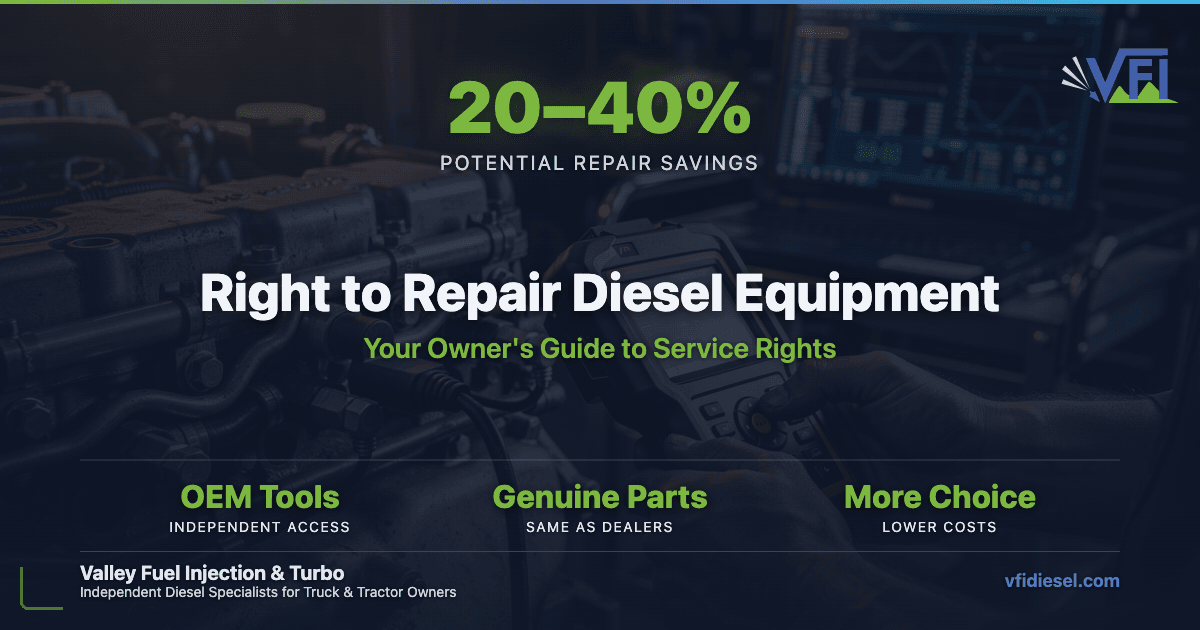
Right to Repair Diesel Equipment: An Owner’s Guide to Service Rights
Right to repair diesel equipment laws are reshaping how truck and tractor owners can maintain their vehicles, giving them more control over where and how their diesel fuel systems get serviced. This movement directly impacts your ability to choose independent diesel specialists over manufacturer dealerships for critical repairs like fuel injection system service, turbocharger rebuilds, and engine diagnostics.
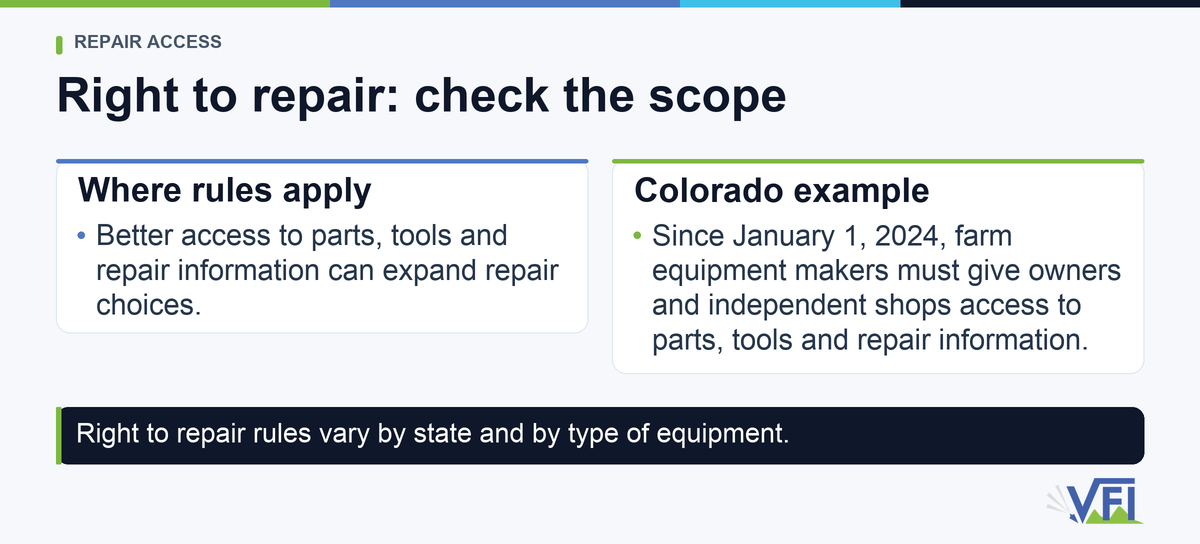
Right to repair rules vary by state and by type of equipment. Colorado, for example, has required makers of farm equipment to give owners and independent shops access to parts, tools and repair information since January 1, 2024. Where these rules apply, diesel owners get more service options and potentially lower repair costs.
What Is the Right to Repair Movement and Why Does It Matter for Diesel Owners?
The right to repair movement is a consumer advocacy effort to get equipment manufacturers to give independent repair shops access to the same diagnostic tools, service manuals, and genuine parts that authorized dealers use. Right to repair rules vary by state and by type of equipment.
Colorado, for example, has required makers of farm equipment to give owners and independent shops access to parts, tools and repair information since January 1, 2024. For tractor and farm-equipment owners there, this means more choices beyond dealership service for complex fuel injection repairs. The Colorado law does not cover highway trucks.
Traditionally, manufacturers like John Deere, Caterpillar, and major truck OEMs restricted access to proprietary diagnostic software and service information. That sent owners to authorized dealers for repairs that needed a software step, often at higher cost and with longer waits.
At Valley Fuel Injection, we’ve seen firsthand how manufacturer restrictions affected our ability to service certain diesel fuel systems. Where right to repair rules apply, independent shops like ours can get better access to the diagnostic capabilities needed to properly service modern common rail fuel systems and other advanced diesel technologies.
How Do Manufacturer Restrictions Affect Diesel Fuel System Repairs?
Manufacturer restrictions on diesel fuel system repairs primarily impact three critical areas: diagnostic software access, technical service information, and genuine parts availability.
Modern diesel engines rely heavily on electronic control systems that require specialized diagnostic equipment to identify fuel injection problems, turbocharger issues, and emissions system faults. Manufacturers have often limited this software to authorized dealers only.
For diesel fuel injection systems specifically, these restrictions meant that complex Bosch injector diagnostics or VP44 pump programming often required expensive dealer visits, even when qualified independent shops had the mechanical expertise to perform the repairs.
Some manufacturers still use proprietary connectors and encrypted communications to limit independent repair access, despite right to repair laws. Always verify your shop has the proper diagnostic capabilities before authorizing complex fuel system work.
What Diagnostic Tools and Parts Can Independent Shops Access?
Where right to repair rules apply, access for diesel fuel injection specialists like our team at Valley Fuel Injection covers:
- OEM diagnostic software: Factory-level scan tools for reading fault codes, coding injectors and running the maker’s own calibration routines (repair access does not allow emissions or power changes)
- Technical service bulletins: Real-time updates on known issues, repair procedures, and software updates for specific engine models
- Wiring diagrams and specifications: Complete electrical schematics for troubleshooting complex fuel system problems
- Genuine parts sourcing: Access to OEM parts on fair and reasonable terms where the law applies
However, the implementation varies by manufacturer and equipment type. SAE International has developed industry standards for diagnostic tool compatibility, but some manufacturers still use proprietary systems that require specific licensing agreements.
When choosing an independent diesel shop, ask specifically about their diagnostic capabilities for your equipment brand. A qualified shop should have access to the same fault code definitions and repair procedures that dealers use.
At our Woodland, CA facility, we maintain current diagnostic software licenses for Bosch, Delphi, and other major fuel system manufacturers, ensuring we can provide the same level of service as authorized dealers for most diesel fuel injection repairs.
Why Are Farmers and Truckers Fighting for Repair Rights?
Farmers and truckers are leading the right to repair fight because equipment downtime directly impacts their livelihood, and manufacturer repair restrictions often create costly delays during critical work periods.
Agricultural equipment owners face unique challenges during planting and harvest seasons when every day of downtime can cost thousands in lost productivity. When a tractor’s fuel injection system fails during harvest, waiting weeks for a dealer appointment isn’t economically viable.
Similarly, commercial truck operators need immediate access to qualified diesel repair services. A Class 8 truck generating $500+ per day in revenue can’t afford extended dealer wait times for fuel system diagnostics or turbocharger repairs.
For Kubota equipment owners and other agricultural diesel users, right to repair rules, where they apply, mean local shops can access the diagnostic tools needed to maintain fuel injection systems properly, reducing the need for expensive dealer visits during busy farming seasons.
How Does Right to Repair Impact Warranty Coverage on Diesel Equipment?
For consumer products, the federal Magnuson-Moss Warranty Act bars a maker from voiding your warranty just because an independent shop did the work. The maker can still deny a claim for damage the repair caused. Commercial equipment warranties follow their own written terms, so read yours.
However, warranty considerations for diesel fuel injection work require careful attention to several factors:
- Genuine parts usage: For consumer products, using a non-OEM part does not by itself void the warranty, but the maker can deny coverage for damage the part caused
- Proper procedures: Repairs must follow published service procedures and torque specifications
- Documentation: Detailed records of all work performed, including part numbers and calibration procedures
- Qualified technicians: Some commercial equipment warranties require repairs by certified technicians; read the written terms
For consumer products, using an independent shop or a non-OEM part does not by itself void the warranty, but the maker can deny coverage for damage the work or the part caused. Always discuss warranty implications before authorizing fuel injection repairs.
At Valley Fuel Injection, our technicians are factory-trained and certified by major manufacturers including Bosch and Delphi. We maintain detailed service records and use only approved parts and procedures to protect your equipment warranty while providing comprehensive diesel fuel injection services.
What Should You Know About Choosing Independent vs. Dealer Service?
Choosing between independent and dealer service for diesel fuel injection work depends on several factors including warranty status, repair complexity, cost considerations, and service availability in your area.
Independent diesel specialists often provide advantages for fuel injection work because they focus specifically on diesel systems rather than maintaining expertise across multiple vehicle systems. This specialization typically results in faster diagnosis, more competitive pricing, and deeper knowledge of common fuel system problems.
However, dealer service may still be preferable for certain situations:
When evaluating independent diesel shops, look for specific qualifications that indicate they can provide dealer-quality service. Key factors include manufacturer certifications, diagnostic equipment capabilities, and experience with your specific fuel injection system type.
For example, our team at Valley Fuel Injection maintains Bosch certification for common rail systems, which means we have access to the same diagnostic procedures and repair specifications that Bosch-authorized dealers use. This certification, combined with over 30 years of diesel fuel injection experience, allows us to provide Sacramento area diesel owners with dealer-quality service at independent shop pricing.
Ask potential repair shops about their diagnostic capabilities, manufacturer certifications, and parts sourcing before committing to fuel injection work. A qualified independent shop should be transparent about their capabilities and limitations.
The key is finding an independent shop that has invested in the proper diagnostic equipment and technician training to match dealer capabilities.
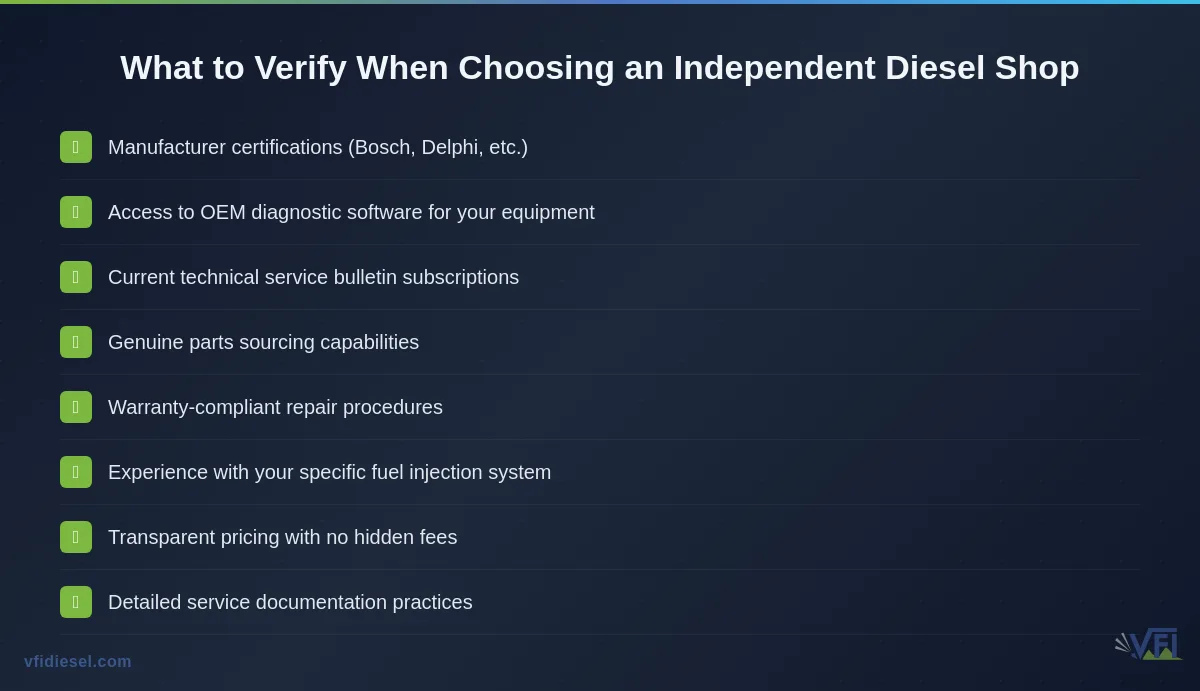
For diesel fuel injection work specifically, look for shops with experience in your equipment type and access to the diagnostic tools needed for proper fuel system calibration.
Whether you choose independent or dealer service, the most important factor is ensuring the shop has the expertise and equipment to properly diagnose and repair your specific diesel fuel injection system. Right to repair laws have made it easier to find qualified independent options, but the decision should always be based on the shop’s demonstrated capabilities rather than just cost considerations.
If you’re dealing with diesel fuel injection problems and want to explore your repair options, schedule a diagnostic with our team. We can explain exactly what diagnostic capabilities we have for your specific equipment and help you understand all your service options under current right to repair protections.
Frequently Asked Questions
Can using an independent shop void my diesel equipment warranty?
For consumer products, the federal Magnuson-Moss Warranty Act bars a maker from voiding your warranty just because an independent shop did the work. The maker can still deny a claim for damage the repair caused. Commercial equipment warranties follow their own written terms, so read yours.
Do independent diesel shops have access to the same diagnostic tools as dealers?
Right to repair rules vary by state and by type of equipment. Colorado, for example, has required makers of farm equipment to give owners and independent shops access to parts, tools and repair information since January 1, 2024. Access still varies by manufacturer, so verify your shop’s specific diagnostic capabilities.
What should I look for when choosing an independent diesel repair shop?
Look for manufacturer certifications, appropriate diagnostic equipment, experience with your specific fuel injection system, and transparent communication about their capabilities. Ask about their parts sourcing and warranty protection procedures.
Are there any diesel repairs that still require dealer service?
Where right to repair rules apply, they have opened more service options, but some warranty work may process more smoothly through dealers, and certain proprietary systems may still have limited independent access. Complex programming or recalls typically require dealer service initially.
Where they apply, right to repair rules are changing the service landscape for truck and tractor owners, providing more choices and competitive pricing for critical fuel injection repairs. At Valley Fuel Injection, we’re committed to providing dealer-quality diesel service with the personalized attention and competitive pricing that independent shops are known for. Call us at 530-668-0818 to discuss your diesel fuel injection needs, or visit our Woodland, CA facility. We also provide mail-in service for fuel injection components nationwide, giving you access to our specialized expertise regardless of your location.







2 Comments
I really appreciate how you didn’t sugarcoat anything.
Thank you for the kind words Jenna! We like keeping it straight to the facts.