
Biodiesel Injector Damage: California’s Hidden Fuel Crisis
04/14/2026
Turbo Boost Leak Symptoms: 7 Signs Your Diesel Is Losing Power
04/20/2026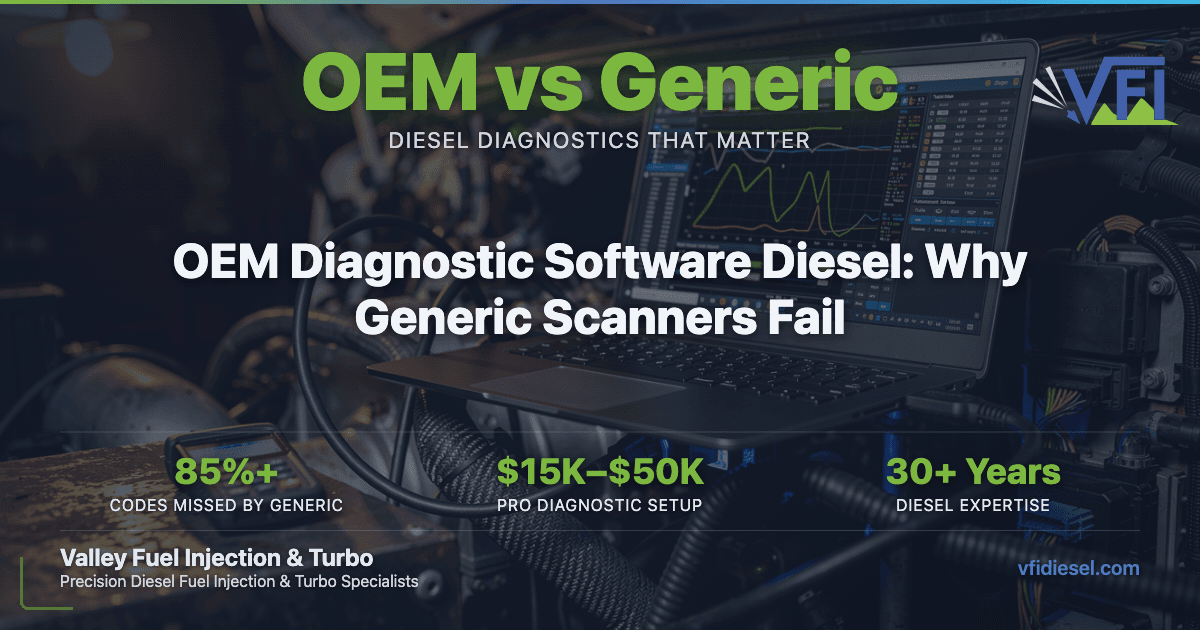
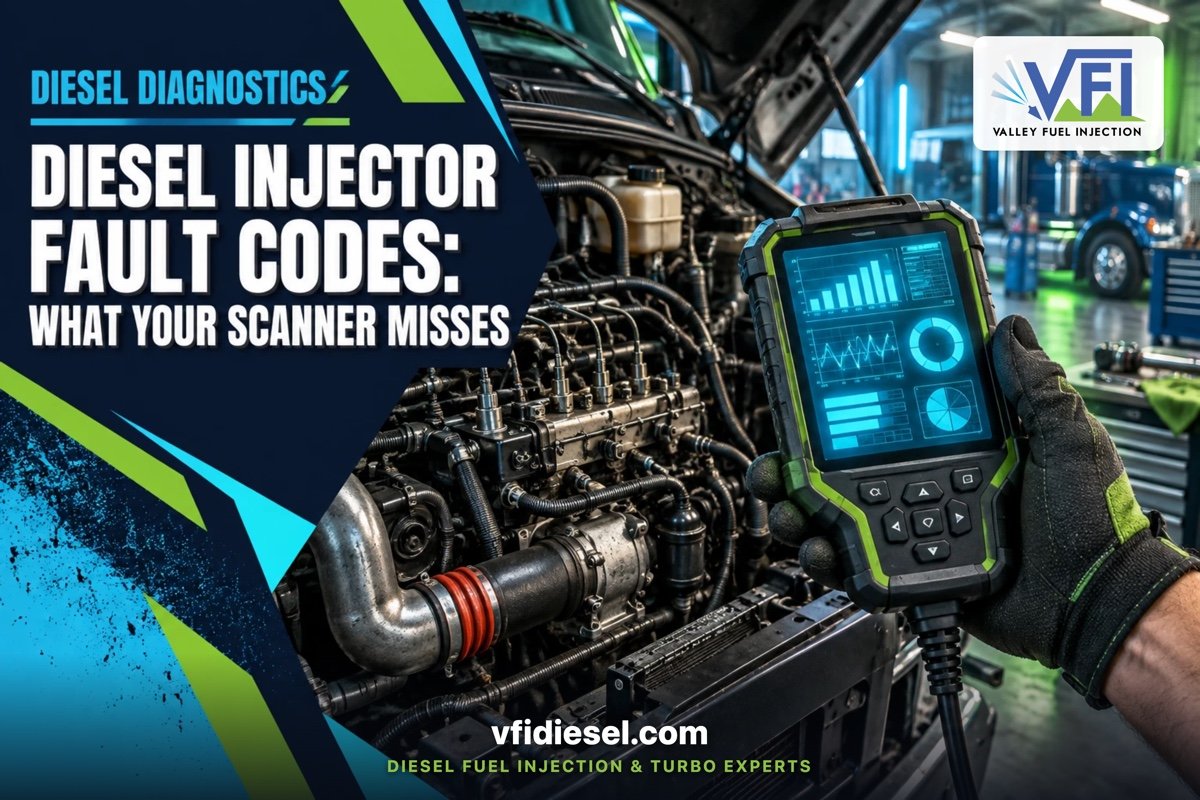
Modern diesel engines require OEM diagnostic software diesel systems to properly diagnose and repair complex fuel injection, emissions, and engine management issues. While generic OBD scanners can read basic trouble codes, they lack the depth and manufacturer-specific protocols needed to access critical diesel engine parameters, perform component tests, or execute calibration procedures that professional diesel repair demands.
Generic scanners only scratch the surface of diesel diagnostics. Professional OEM diagnostic software provides manufacturer-specific access to injection timing, rail pressure parameters, DPF regeneration cycles, and component calibration procedures that generic tools simply cannot reach.
Why Generic OBD Scanners Can’t Handle Modern Diesel Systems?
Generic OBD scanners are fundamentally limited when it comes to diesel engine diagnostics because they only access standardized OBD-II protocols, missing the proprietary manufacturer communications that control critical diesel systems.
Modern diesel engines operate with multiple control modules beyond the basic engine ECU. Common rail fuel systems utilize dedicated fuel injection control units, while emissions systems employ separate modules for DPF, SCR, and EGR management. Generic scanners typically communicate with only the main engine control module, leaving these specialized systems invisible.
Attempting to diagnose diesel injection problems with generic scanners often leads to misdiagnosis. We’ve seen countless cases where shops replaced expensive components based on generic scan data, only to discover the real issue required manufacturer-specific testing procedures.
The limitations become particularly evident with fuel injection systems. While a generic scanner might show “fuel system rich” or “injection timing error,” it cannot access individual injector balance rates, rail pressure sensor calibration values, or injection quantity adaptation parameters. These data points are essential for diagnosing issues like:
- Individual injector performance variations
- High-pressure fuel pump delivery rates
- Rail pressure sensor accuracy
- Injection timing deviations
- Pilot injection quantity errors
For professional common rail injector testing, we rely on manufacturer-specific diagnostic protocols that generic scanners simply cannot access.
What Makes OEM Diagnostic Software Different for Diesel Engines?
OEM diagnostic software diesel platforms communicate using proprietary protocols that access manufacturer-specific data streams, control functions, and calibration procedures unavailable through standard OBD-II connections.
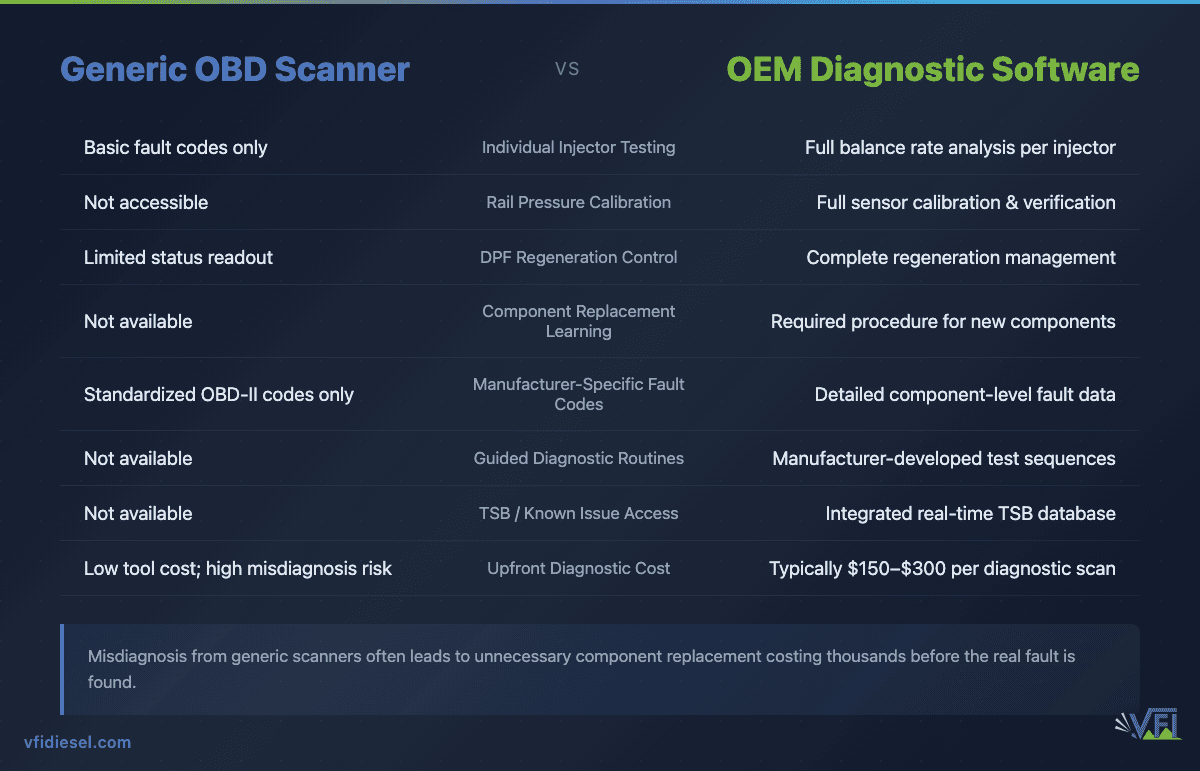
The primary difference lies in communication depth. While OBD-II provides a standardized “window” into basic engine parameters, OEM software opens direct communication channels with individual control modules using manufacturer-specific protocols. This access enables technicians to:
| Diagnostic Capability | Generic Scanner | OEM Software |
|---|---|---|
| Individual Injector Testing | Basic codes only | Full balance rate analysis |
| Rail Pressure Calibration | Not accessible | Full sensor calibration |
| DPF Regeneration Control | Limited status | Complete regeneration management |
| Component Replacement Learning | Not available | Required for new components |
OEM software also provides guided diagnostic routines that walk technicians through systematic testing procedures. These routines are particularly valuable for complex diesel systems where multiple components interact. For example, diagnosing a biodiesel-related injector issue requires specific test sequences that verify fuel quality impact on injection performance.
OEM diagnostic software often includes technical service bulletins (TSBs) and known issue databases integrated directly into the diagnostic interface. This provides real-time access to manufacturer-identified problems and approved repair procedures.
Which OEM Software Platforms Do Professional Shops Use?
Professional diesel repair facilities utilize multiple OEM diagnostic software platforms depending on the vehicle and engine manufacturers they service, with each platform requiring specific hardware interfaces and ongoing subscription costs.
At our Bosch-certified facility, we maintain several OEM diagnostic platforms to properly service the diverse range of diesel engines that come through our shop:
Bosch ESI[tronic] serves as our primary diagnostic platform for Bosch fuel injection systems. This software provides complete access to Bosch common rail systems, VP44 injection pumps, and electronic diesel control modules. The platform includes component-specific test routines and calibration procedures essential for Bosch injection system service.
Kubota Diagmaster enables comprehensive diagnostics for Kubota diesel engines used in agricultural and construction equipment. This platform accesses engine-specific parameters not available through generic tools, including proprietary emission control strategies and fuel system adaptations.
Yanmar Technical Support System provides similar capabilities for Yanmar diesel engines, with particular strength in marine and industrial applications where precise diagnostic capabilities are critical for minimizing downtime.
According to Bosch Mobility Solutions, professional diagnostic software platforms are updated continuously to address new engine technologies and emission requirements, making ongoing subscriptions essential for current diagnostic capabilities.
Many OEM diagnostic platforms require factory certification and training before access is granted. This ensures technicians understand the sophisticated diagnostic procedures and safety requirements for modern diesel systems.
Heavy-duty truck diagnostics require additional platforms like Detroit Diesel Diagnostic Link (DDDL), Cummins INSITE, and Caterpillar Electronic Technician (ET). Each platform provides manufacturer-specific access to engine parameters, fault analysis, and component calibration procedures.
How Much Does Professional Diesel Diagnostic Equipment Cost?
Professional OEM diagnostic software diesel systems represent a significant investment, with initial setup costs ranging from $20,000 to $60,000 for a comprehensive multi-manufacturer diagnostic capability, plus ongoing annual subscription fees.
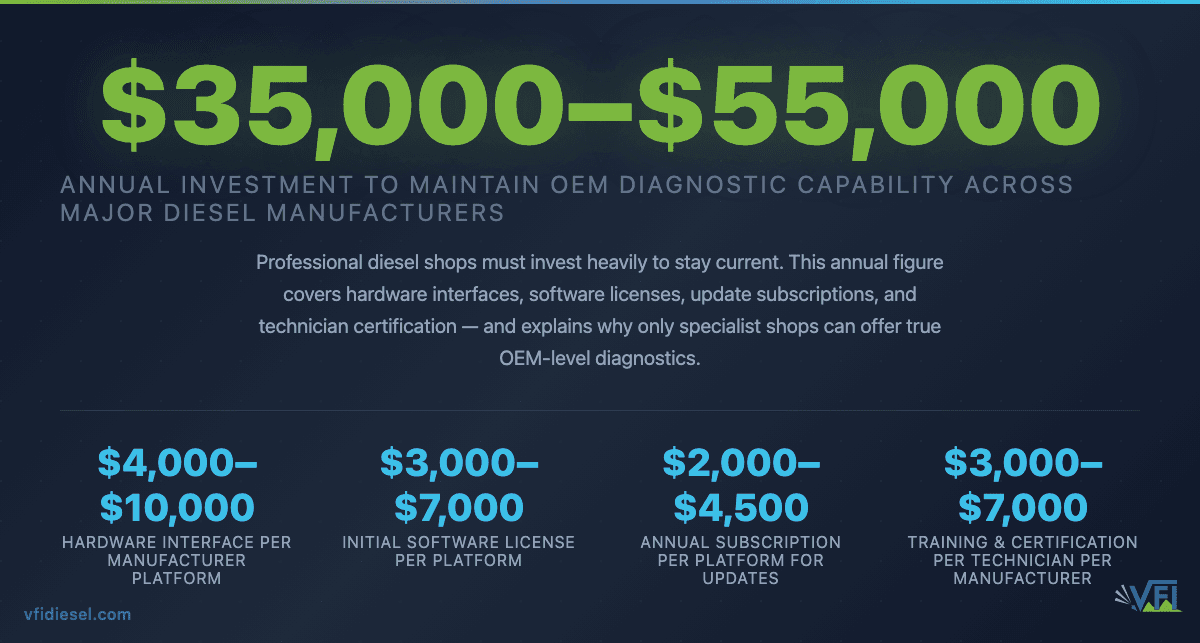
A professional shop typically invests $35,000-$55,000 in diagnostic equipment and software subscriptions annually to maintain current capabilities across major diesel engine manufacturers. This includes hardware interfaces, software licenses, and ongoing technical support.
The investment breakdown typically includes:
- Hardware Interfaces: $4,000-$10,000 per manufacturer platform
- Software Licenses: $3,000-$7,000 initial cost per platform
- Annual Subscriptions: $2,000-$4,500 per platform for updates
- Training and Certification: $3,000-$7,000 per technician per manufacturer
- Technical Support: $800-$2,000 annually per platform
These costs explain why many general repair shops cannot justify OEM diagnostic capabilities for diesel systems.
The investment only makes sense for shops that specialize in diesel repair and maintain sufficient volume to support the ongoing expenses.
According to the SAE J1939 standard, the complexity of modern diesel diagnostic requirements continues to increase, driving higher equipment costs and more specialized training requirements.
For diesel injection pump diagnostics, the specialized test equipment required for accurate diagnosis often costs more than many shops’ entire diagnostic tool budget.
When Should You Take Your Diesel to a Shop With OEM Tools?
You should seek a shop with OEM diagnostic software diesel capabilities whenever you experience performance issues that generic scanners cannot definitively diagnose, particularly for fuel injection problems, emissions system faults, or after any major component replacement.
Specific situations that require OEM diagnostic capabilities include:
Fuel Injection Performance Issues: When experiencing rough idle, power loss, or excessive smoke, OEM diagnostics can isolate individual injector performance, verify rail pressure accuracy, and test injection timing parameters. Professional injector diagnostics require manufacturer-specific test procedures unavailable to generic scanners.
Emissions System Problems: DPF, SCR, and EGR systems utilize complex control strategies that require OEM access for proper diagnosis. Generic scanners might show “emissions system fault” but cannot perform the regeneration procedures or component tests needed for accurate diagnosis.
After Component Replacement: Modern diesel engines require component “learning” procedures when injectors, sensors, or control modules are replaced. These calibration procedures are only available through OEM diagnostic software and are essential for proper system operation.
If a generic scan shows multiple seemingly unrelated codes on your diesel engine, this often indicates a single root cause that requires OEM diagnostic capabilities to identify. Don’t let shops throw parts at multiple codes without proper OEM diagnosis.
Fleet managers should establish relationships with OEM-equipped shops for several reasons:
- Reduced Diagnostic Time: OEM tools provide direct access to problem areas, reducing troubleshooting time
- Accurate Repairs: Proper diagnosis prevents unnecessary component replacement
- Warranty Compliance: Many manufacturers require OEM diagnostic procedures for warranty claims
- Preventive Maintenance: OEM software can identify developing problems before failures occur
If you’re in the Sacramento area and experiencing diesel performance issues, professional diagnostic services can save both time and money by identifying problems accurately the first time.
What Diagnostic Capabilities Separate Certified Shops From General Repair?
Certified diesel shops with OEM diagnostic software diesel capabilities can perform component-level testing, calibration procedures, and guided diagnostic routines that general repair facilities simply cannot access, providing definitive diagnosis rather than educated guessing.
The fundamental difference lies in diagnostic depth and accuracy. While general repair shops might replace components based on generic trouble codes, certified shops can verify component performance before replacement and ensure proper calibration after installation.
Component-Level Testing: Our certified diagnostic capabilities include individual injector balance testing, high-pressure pump performance verification, and sensor accuracy confirmation. These tests identify specific components requiring attention rather than suggesting wholesale system replacement.
Calibration and Adaptation: Modern diesel engines continuously adapt to component wear and operating conditions. When components are replaced, OEM diagnostic software performs learning procedures that optimize system performance for the new components. Generic scanners cannot access these calibration routines.
Guided Diagnostic Procedures: OEM software includes manufacturer-developed diagnostic trees that guide technicians through systematic testing procedures. These routines are based on engineering knowledge of system interactions and common failure modes.
Bosch-certified shops must demonstrate proficiency with OEM diagnostic software and maintain ongoing training to retain certification. This ensures consistent diagnostic quality across certified facilities.
Certified shops also maintain access to technical support networks that provide real-time assistance for complex diagnostic situations. When unusual problems arise, certified technicians can consult directly with manufacturer engineers through dedicated support channels.
The EPA’s emission standards for heavy-duty diesel engines continue to drive diagnostic complexity, making certified diagnostic capabilities increasingly important for proper repair.
For Kubota equipment maintenance, OEM diagnostic capabilities enable predictive maintenance strategies that identify developing problems before they cause equipment downtime.
If you’re experiencing diesel performance issues that generic diagnostics haven’t resolved, our team at Valley Fuel Injection combines over 30 years of diesel expertise with the latest OEM diagnostic capabilities. Schedule a diagnostic appointment or call us at 530-668-0818 to experience the difference professional OEM diagnostics makes.
Frequently Asked Questions
Can I buy OEM diagnostic software for my own use?
Most OEM diagnostic software diesel platforms require dealer or certified shop status, along with technician certification, before access is granted. The software typically costs thousands of dollars annually and requires specialized hardware interfaces.
Why does my generic scanner show different codes than OEM software?
Generic scanners only access standardized OBD-II codes, while OEM software reads manufacturer-specific codes that provide more detailed fault information. The OEM codes often identify the specific component or system causing the problem.
How often do OEM diagnostic software updates occur?
Most OEM platforms release updates quarterly or when new engine models are introduced. These updates include new diagnostic procedures, revised calibration parameters, and technical service bulletin information.
Do all diesel engines require OEM diagnostics?
While older mechanical diesel engines can often be diagnosed without OEM software, any diesel engine with electronic fuel injection, emissions controls, or computerized engine management benefits significantly from OEM diagnostic capabilities.
What happens if I skip OEM diagnostics and guess at repairs?
Guessing at diesel repairs often leads to unnecessary component replacement, incomplete repairs, and recurring problems. Modern diesel systems are too complex for effective troubleshooting without proper diagnostic tools and procedures.
At Valley Fuel Injection, we’ve invested in comprehensive OEM diagnostic capabilities because we understand that accurate diagnosis is the foundation of effective diesel repair. Whether you’re dealing with injection system problems, emissions faults, or performance issues, our certified diagnostic approach ensures we identify the real problem the first time. Contact us at 530-668-0818 or visit our Woodland, CA facility. We also provide diagnostic services for customers throughout Northern California and Nevada, with mail-in options available for specialized injection system testing.