
Diesel White Smoke: Causes, Diagnosis & How to Fix It
02/23/2026
Killer Dowel Pin (KDP): The 5.9 Cummins Problem That Can Destroy Your Engine
02/23/2026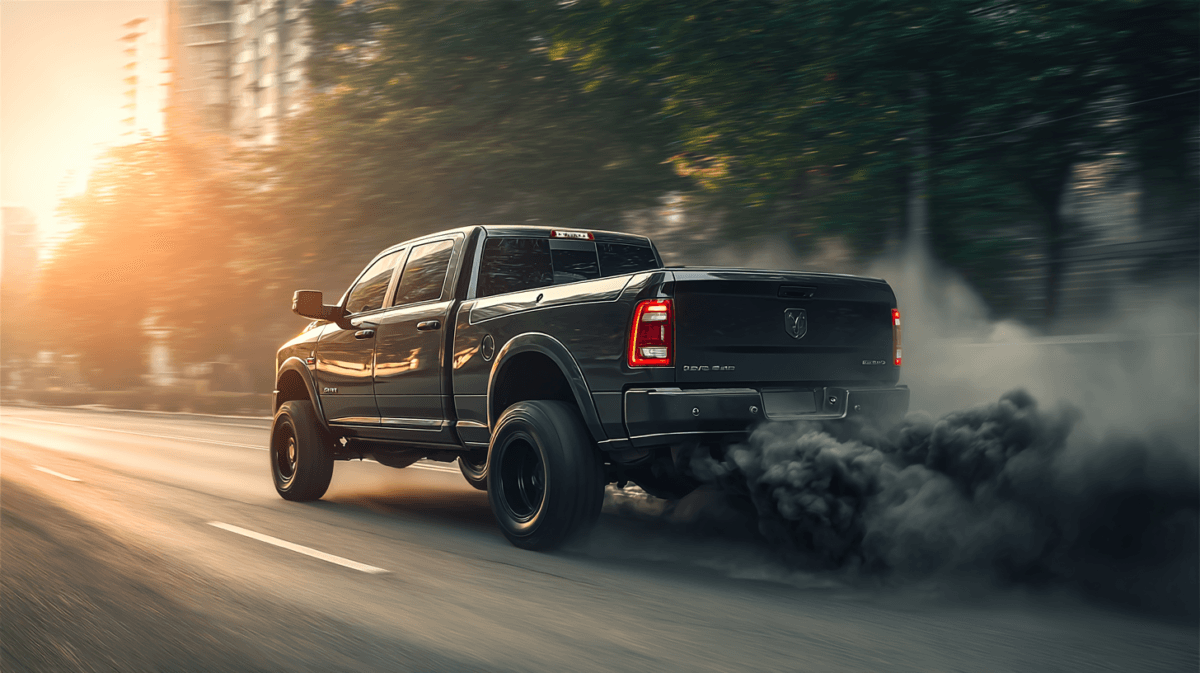
Published by Valley Fuel Injection & Turbo — Bosch-Certified Diesel Specialists, Woodland, CA
Black smoke from a diesel exhaust is the most common smoke complaint — and it’s almost always telling you the same thing: your engine is getting too much fuel, not enough air, or both. Unlike white smoke, which often points to coolant or unburned fuel vapor, black smoke means partially combusted diesel is exiting the exhaust as soot and carbon particles. A brief puff under hard acceleration on an older diesel can be normal — but persistent black smoke signals a problem that’s costing you fuel, power, and potentially your turbo or DPF.
At Valley Fuel Injection & Turbo, we’re a Bosch-certified diesel fuel injection center that diagnoses and repairs the root causes of black smoke every day. This guide covers every common cause, how to diagnose each one, and what it takes to fix it.
What Black Smoke Actually Means
Black smoke is unburned or partially burned diesel fuel. In a properly running diesel engine, fuel is injected into a cylinder full of highly compressed, superheated air. The fuel atomizes, ignites, and burns almost completely — producing carbon dioxide, water vapor, and very little visible exhaust.
When that combustion process breaks down — due to too much fuel, not enough air, poor atomization, or bad timing — not all the fuel burns. The leftover hydrocarbons exit the exhaust as black soot. The darker and heavier the smoke, the worse the imbalance.
The root cause always comes back to the air-to-fuel ratio. Either the fuel side is delivering too much, the air side isn’t delivering enough, or the combustion event itself is compromised.
Cause #1: Restricted Airflow — Clogged Filters, Intake, or Intercooler
The single most common cause of diesel black smoke is an air restriction somewhere in the intake system. If the engine can’t breathe, it can’t burn fuel cleanly — and the excess goes out the stack as soot.
Where to Look
- Air filter — The first thing to check and the easiest to fix. A clogged air filter starves every cylinder of oxygen simultaneously, causing black smoke across all operating conditions. Most diesel air filters have a restriction indicator — if it’s in the red, you’re overdue.
- Intake piping — Collapsed or disconnected intake hoses between the air filter and turbo compressor inlet. A soft rubber hose can collapse under vacuum at higher RPM, creating an intermittent restriction that’s hard to catch at idle.
- Intercooler — The charge air cooler (intercooler) sits between the turbo compressor and the intake manifold. If it’s clogged with oil residue, road debris, or internally damaged, it restricts airflow and reduces air density. A plugged intercooler also raises intake temperatures, further reducing combustion efficiency.
- Intake manifold — Carbon buildup in the intake manifold, especially on engines with EGR systems, can progressively restrict airflow. This is a common issue on 6.0 Powerstroke and LBZ/LMM Duramax engines.
Diagnosing Airflow Restrictions
Start with the air filter — pull it and inspect it visually. If it’s been more than a year or 15,000 miles, replace it regardless. For the rest of the intake system, perform a boost leak test: pressurize the intake side with shop air and listen for leaks. Check intercooler boots for cracks, and inspect the intercooler core for oil contamination or bent fins.
Cause #2: Faulty or Worn Fuel Injectors
When injectors malfunction, they can deliver too much fuel, deliver it at the wrong time, or spray it in a pattern that doesn’t atomize properly. Any of these conditions leads to incomplete combustion and black smoke.
How Injectors Cause Black Smoke
- Over-fueling — A stuck-open injector or one with a worn nozzle seat dumps more fuel than the cylinder can burn. This is different from the dribbling that causes white smoke — over-fueling puts excess fuel in at the right time, but too much of it.
- Poor spray pattern — An injector with a damaged or carbon-fouled nozzle tip won’t atomize fuel properly. Instead of a fine mist, it sprays streams or droplets that can’t combust completely. VFI’s Bosch-certified test benches can identify spray pattern issues that aren’t visible any other way.
- Incorrect timing — On older mechanical systems, injector timing that’s too advanced can cause fuel to ignite before the piston reaches the optimal position, resulting in a harsh combustion event with increased soot production.
Injector-related black smoke is often isolated to specific load conditions — you might see it under hard acceleration or at high RPM but not at idle. If only one injector is affected, you may also notice a rough idle or misfire code alongside the smoke.
For engines like the 6.7 Cummins or LB7 Duramax, professional injector testing with calibrated equipment is the only way to definitively identify which injector is the problem. A cylinder contribution test with a scan tool can help isolate which cylinder is over-fueling.
Cause #3: Turbocharger Problems
The turbocharger is responsible for forcing compressed air into the intake — if it’s not doing its job, the engine is effectively naturally aspirated and can’t burn the fuel volume it’s designed for. The result is black smoke, especially under load.
Turbo Issues That Cause Black Smoke
- Worn bearings or shaft play — Excessive radial or axial shaft play allows the compressor or turbine wheel to contact the housing, reducing efficiency and eventually causing failure.
- Stuck or damaged VGT vanes — Variable Geometry Turbochargers (used on 6.7 Cummins, 6.0/6.4/6.7 Powerstroke, and LML+ Duramax) use movable vanes to control boost across the RPM range. When these vanes stick from carbon buildup, the turbo can’t produce proper boost at all speeds.
- Boost leaks — Cracked or loose intercooler boots, damaged charge pipes, or a failed intercooler allow pressurized air to escape before it reaches the cylinders. The engine sees less air than the ECM expects, leading to a rich condition.
- Wastegate failure — On turbos with external wastegates, a stuck-open wastegate bleeds off exhaust energy and limits boost production.
Check boost pressure with a scan tool or mechanical gauge. If boost is significantly below spec under load, the turbo or charge air system needs inspection. Also check for oil in the intake piping downstream of the turbo — this indicates turbo seal leakage, which is a separate problem that causes blue-white smoke but often accompanies other turbo issues.
Cause #4: EGR System Malfunction
The Exhaust Gas Recirculation (EGR) system routes a portion of exhaust gas back into the intake manifold to lower combustion temperatures and reduce NOx emissions. When the EGR valve sticks open or the EGR cooler fails, it introduces excessive exhaust gas into the intake — displacing fresh oxygen and causing incomplete combustion.
Symptoms of EGR-related black smoke include smoke at all RPMs (not just under load), reduced power, rough idle, and codes related to EGR flow (P0401, P0402, P0404). On Powerstroke 6.0 and 6.4 engines, EGR cooler failure is a well-known issue that can also cause coolant contamination — check for white residue or coolant loss in addition to black smoke.
Cleaning or replacing the EGR valve and inspecting the EGR cooler for leaks are the standard repairs. On some platforms, deleting the EGR system is common — but this creates emissions compliance issues and may affect warranty coverage.
Cause #5: Injection Pump Problems
The high-pressure fuel pump controls how much fuel pressure is available to the injectors. When a pump malfunctions, it can cause over-fueling or timing issues that produce black smoke.
On VP44-equipped 5.9 Cummins trucks, internal wear can cause timing drift that affects combustion quality. On common rail systems, a failing CP4 pump may cause erratic rail pressure that the ECM tries to compensate for — sometimes resulting in over-fueling conditions at certain RPM ranges.
Rail pressure data from a scan tool is the primary diagnostic method. Compare actual vs. commanded rail pressure across different operating conditions. Significant deviations indicate pump wear or a fuel system leak.
Cause #6: Sensor Failures and ECM Calibration
Modern diesel engines rely on dozens of sensors to calculate the correct fuel delivery. When a sensor fails or sends inaccurate data, the ECM may command more fuel than necessary.
Key sensors that affect black smoke when they fail:
- Mass Airflow (MAF) sensor — If it reads low, the ECM thinks less air is entering the engine than actually is, but on some systems may still over-fuel.
- Manifold Absolute Pressure (MAP) / Boost Pressure sensor — A faulty boost sensor can cause the ECM to miscalculate air mass and deliver incorrect fuel quantity.
- Throttle Position Sensor (TPS) — Erratic TPS readings can cause sudden fuel delivery changes.
- Exhaust Back Pressure sensor — Affects DPF regeneration strategy and can cause over-fueling during regen events.
A scan tool that reads live sensor data is essential for diagnosing sensor-related black smoke. Compare each sensor’s reading to the expected value at each operating condition — any sensor significantly out of range is a candidate.
Cause #7: Aftermarket Tuning and Modifications
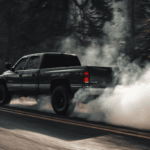
Aftermarket tuners, programmers, and modified injectors are a very common cause of black smoke — and an intentional one in some cases. “Rolling coal” is the result of deliberately over-fueling the engine beyond its air supply capacity.
While some owners consider black smoke a performance feature, it actually represents wasted fuel and increased stress on the turbo, EGR, DPF, and exhaust components. Aggressive tunes without supporting air modifications (larger turbo, intake upgrades, exhaust flow improvements) will always produce excess soot.
If you’re running an aftermarket tune and experiencing more smoke than expected, the tune’s fuel maps may need adjustment, or the supporting airflow modifications may not be adequate for the fuel volume being commanded.
Black Smoke Diagnostic Flowchart
- When does the smoke appear? Under load only → likely air restriction or turbo issue. At all RPMs → EGR, injector, or sensor problem. Only under hard acceleration → could be turbo lag (normal on larger turbos) or boost leak.
- Check the air filter. Dirty or restricted → replace it. This fixes more black smoke complaints than any other single repair.
- Scan for DTCs. Boost pressure codes → turbo or charge air system. Injector codes → fuel system. EGR codes → EGR valve or cooler. Sensor codes → specific sensor failure.
- Check boost pressure. Low boost under load → turbo failure, boost leak, or VGT issue. Normal boost → problem is likely on the fuel side.
- Inspect injectors. Over-fueling, poor spray patterns, or excessive return rates → injector replacement needed.
- Check rail pressure. Erratic or out-of-spec → pump issue or fuel system leak.
- Review modifications. Aftermarket tune installed? → May need fuel map adjustment or supporting air mods.
Black Smoke vs. White Smoke vs. Blue Smoke
Understanding the color of diesel exhaust smoke helps narrow the diagnosis quickly:
- Black smoke — Incomplete combustion of diesel fuel. Too much fuel, not enough air, or poor combustion quality. Most common type.
- White smoke — Unburned fuel (raw diesel vapor), coolant intrusion, or condensation. Often indicates injector, head gasket, or glow plug issues.
- Blue/gray smoke — Engine oil burning in the combustion chamber. Typically from worn valve seals, piston rings, or turbo seal leakage.
Multiple smoke colors can appear simultaneously if more than one problem exists — for example, a turbo with both a boost problem (causing black smoke) and a leaking seal (causing blue smoke).
Frequently Asked Questions
Is a little black smoke from a diesel normal?
A brief puff of black smoke during hard acceleration — especially on older, mechanically injected diesels — can be normal. This happens because fuel delivery responds faster than the turbocharger can spool up, creating a momentary rich condition. However, on modern electronically controlled diesels, even this should be minimal. Persistent or heavy black smoke at any RPM is never normal and indicates a problem.
Can a dirty air filter really cause that much black smoke?
Absolutely. The air filter is the most common single cause of diesel black smoke. A severely restricted filter can reduce airflow enough to create a rich condition across the entire RPM range. It’s also the cheapest and easiest fix — always check it first before chasing more expensive problems.
Does black smoke mean my injectors are bad?
It can, but not always. Black smoke from injectors typically means over-fueling (stuck open or worn nozzle) rather than the dribbling or poor atomization that causes white smoke. Injectors are a likely culprit if the smoke is accompanied by rough idle, misfire codes, or if it’s isolated to specific load conditions. Professional bench testing on calibrated equipment is the most accurate way to confirm injector health.
Why does my diesel blow black smoke only when I accelerate hard?
This is usually a turbo or airflow issue. Under hard acceleration, the engine demands maximum fuel and air simultaneously. If the turbocharger is slow to respond (turbo lag), has a boost leak, or isn’t producing rated boost pressure, the fuel delivery outpaces the air supply momentarily. If it clears quickly, it may be acceptable turbo lag. If it persists through the acceleration event, the turbo or charge air system needs inspection.
Will black smoke damage my DPF?
Yes. Black smoke is soot — and that soot goes directly into the Diesel Particulate Filter. Excessive soot loading forces more frequent DPF regeneration cycles, increases exhaust backpressure, reduces fuel economy, and can eventually clog the DPF beyond its ability to regenerate. A clogged DPF is an expensive replacement. Fixing the root cause of black smoke protects the DPF and the rest of the aftertreatment system.
Get Expert Diesel Smoke Diagnosis at Valley Fuel Injection
Black smoke is a symptom of an air-fuel imbalance — and the only way to fix it permanently is to find and correct the root cause. At Valley Fuel Injection & Turbo, we have the Bosch-certified diagnostic equipment, technical expertise, and parts inventory to pinpoint your black smoke problem and repair it right the first time.
We service all major diesel platforms — Cummins, Duramax, Powerstroke, Kubota, Yanmar, and more — and ship remanufactured injectors and injection pumps nationwide.
📞 Call us: (530) 668-0818
📧 Email: info@vfidiesel.com
📍 Visit: 1243 E Beamer St, Suite C, Woodland, CA 95776
🛒 Shop Parts: Diesel Injectors · Injection Pumps · Bosch Service
Valley Fuel Injection & Turbo, Inc. is an authorized dealer for Bosch, Kubota, Delphi, Yanmar, and Alliant Power. Located in Woodland, CA, we serve diesel owners and fleets throughout Northern California and nationwide via our mail-in repair and parts shipping services.