CP4 Injection Pump Failures: Symptoms, Causes, Repair Costs, Prevention
01/14/2026
6.6 Duramax LB7 Injector Replacement: Costs, Process & What to Expect
02/22/2026
A failing VP44 on a 1998.5 to 2002 Dodge Ram 5.9L Cummins can cause hard or long starts, the engine dying while driving, a surging idle and low power under load. Air in the fuel, a weak fuel supply, an electrical fault or timing can cause the same symptoms, so check those first and do not replace the pump until it is confirmed bad.
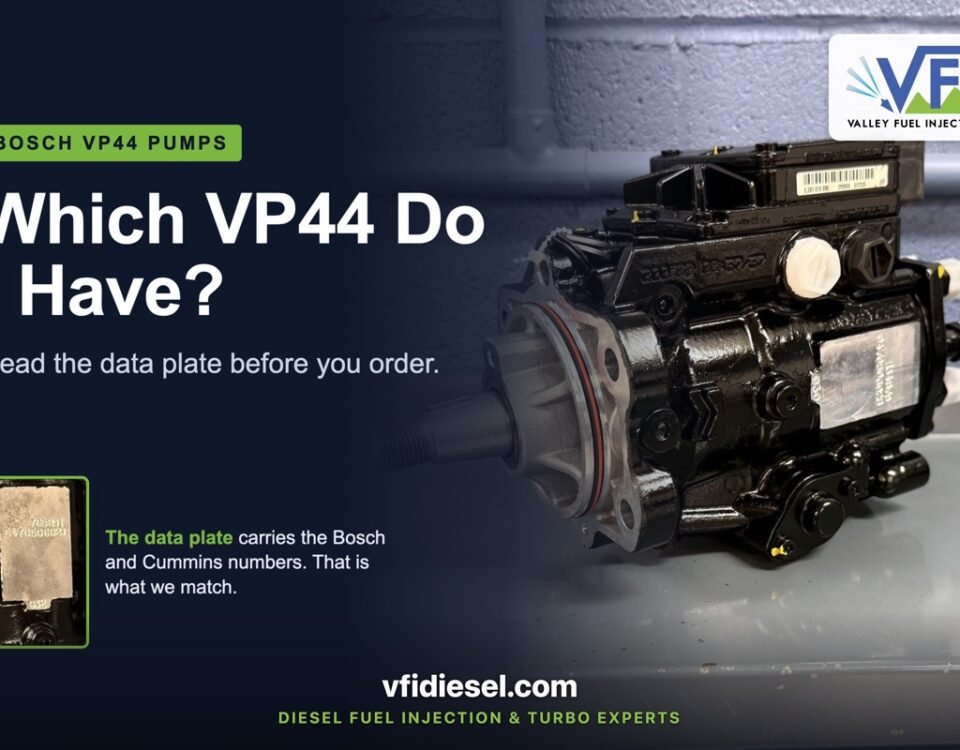
What is a VP44? Cummins describes the Bosch VP44 as an electronically controlled rotary distributor pump. It pressurizes, meters, distributes and times the fuel injection (Cummins CFP6E manual, printed p. 7-106). In Dodge Ram pickups it is the injection pump on the 24-valve 5.9L Cummins built from 1998.5 to 2002.
When a VP44 truck stalls, starts hard or loses power, the pump is a suspect. It is not the only one. Air in the fuel, a weak fuel supply, the electrical supply and timing can all produce the same complaint. This guide covers what to record, what to check before the pump, how to read a code, and when the pump needs a specialist test, so you spend money on the part that actually failed.
At Valley Fuel Injection & Turbo in Woodland, CA, we have worked on diesel fuel injection since 1993. We are a Bosch authorized diesel shop, we sell remanufactured VP44 pumps, and we rebuild customer pumps.
Need a replacement? See our VP44 injection pumps: Bosch Authorized Remanufactured by Valley Fuel Injection & Turbo. For Dodge Ram pickups, the VP44 15X fits 1998.5 to 2002 automatic and 5-speed manual trucks, and the VP44 17X fits 2001 to 2002 high-output 6-speed trucks. Not sure the pump is the problem? Work through the checks below before you buy one.
What Is the VP44 Injection Pump?
The VP44 is an electronically controlled rotary distributor pump. Cummins lists four jobs it does (CFP6E, printed p. 7-106):
- Pressurizing the fuel for injection
- Metering how much fuel each injection gets
- Distributing it to each cylinder
- Timing the injection
Cummins also notes that wear of internal pump parts can reduce the pressure or quantity the pump delivers, and with it engine power (same page). That is why a worn VP44 can show up as low power. The catch is that other faults upstream of the pump cause the same symptoms.
A note on the source: the Cummins manual cited on this page is an industrial fire pump engine manual that uses the VP44. We use it for how the pump works and what to check. We do not use its numbers as Dodge specifications. For pressure limits, code definitions and test points, use the service manual for your truck.
For how the VP44 system differs from the common rail systems on later Cummins trucks, see our guide on VP44 vs. Common Rail Injection Systems.
Record the Complaint First
The most useful thing you can bring to a pump shop is a clear record. Write it down before anyone starts swapping parts.
This list organizes a diagnosis. It is not a set of pass or fail specifications.
Warning Signs: What Each Symptom Can and Cannot Tell You
Every symptom below can come from the VP44. Each one can also come from something else. Cummins lists air in the fuel as a cause of hard starting, rough running, misfire, low power and smoke (CFP6E, printed p. 7-97), which covers most of this list.
Intermittent No-Start or Hard Starting
The engine cranks but will not fire, then starts later. Cummins’ no-start chart lists the electrical supply, the fuel supply, air in the fuel and timing among the possible causes (CFP6E, printed pp. 12-34 to 12-36). Record whether it happens hot or cold and how long it sits before it starts again.
Engine Dies While Driving
The engine cuts out as if the key were turned off. A pump fault is one possibility. So are the fuel supply, air in the fuel and the electrical supply. Heat-related stalling does not by itself point to the pump electronics, so keep the other causes open until they are checked. Note whether it restarts, and after how long.
Surging or Erratic Idle
RPM bouncing up and down at idle. Cummins lists rough operation among the effects of air in the fuel. Internal pump wear is another cause. Check for air before you condemn the pump.
Loss of Power Under Load
The engine feels flat pulling hills, towing or accelerating. Internal pump wear can reduce delivered pressure or quantity and power (Cummins, printed p. 7-106). Air in the fuel and a restricted supply can also cause low power (printed p. 7-97). The supply checks come first.
Long Crank Times
The engine cranks longer than it used to before it fires. Air in the fuel causes hard starting, and the no-start chart adds fuel supply, electrical supply and timing. Recent filter or line work can introduce air (printed p. 7-97).
Check the Supply Side First
The VP44 can only deliver what reaches it. Cummins’ supply checks cover the whole path from the tank to the pump (CFP6E, printed pp. 7-97 and 7-121 to 7-123):
- Fuel filter restriction. Check the filter for restriction.
- Supply lines. Check the lines, including for kinks.
- Tank pickup. Check the pickup in the tank.
- Tank venting. Check that the tank vents.
- Transfer pump function. Confirm the transfer (lift) pump is doing its job.
- Air leaks on the suction side. Leaks before the transfer pump can pull air into the fuel.
- Recent service. Fuel line, filter, pump or injector work can introduce air.
Measure supply pressure and flow at the test point and under the conditions in the service procedure for your truck, and write down the instrument, the test point and the condition with each reading. That record is what a pump shop needs to tell a supply problem from a pump problem. Filters are on our Fuel Filters page, and transfer pumps are on our Lift & Supply Pumps page, once you know which part is needed.

After a Lift Pump Failure
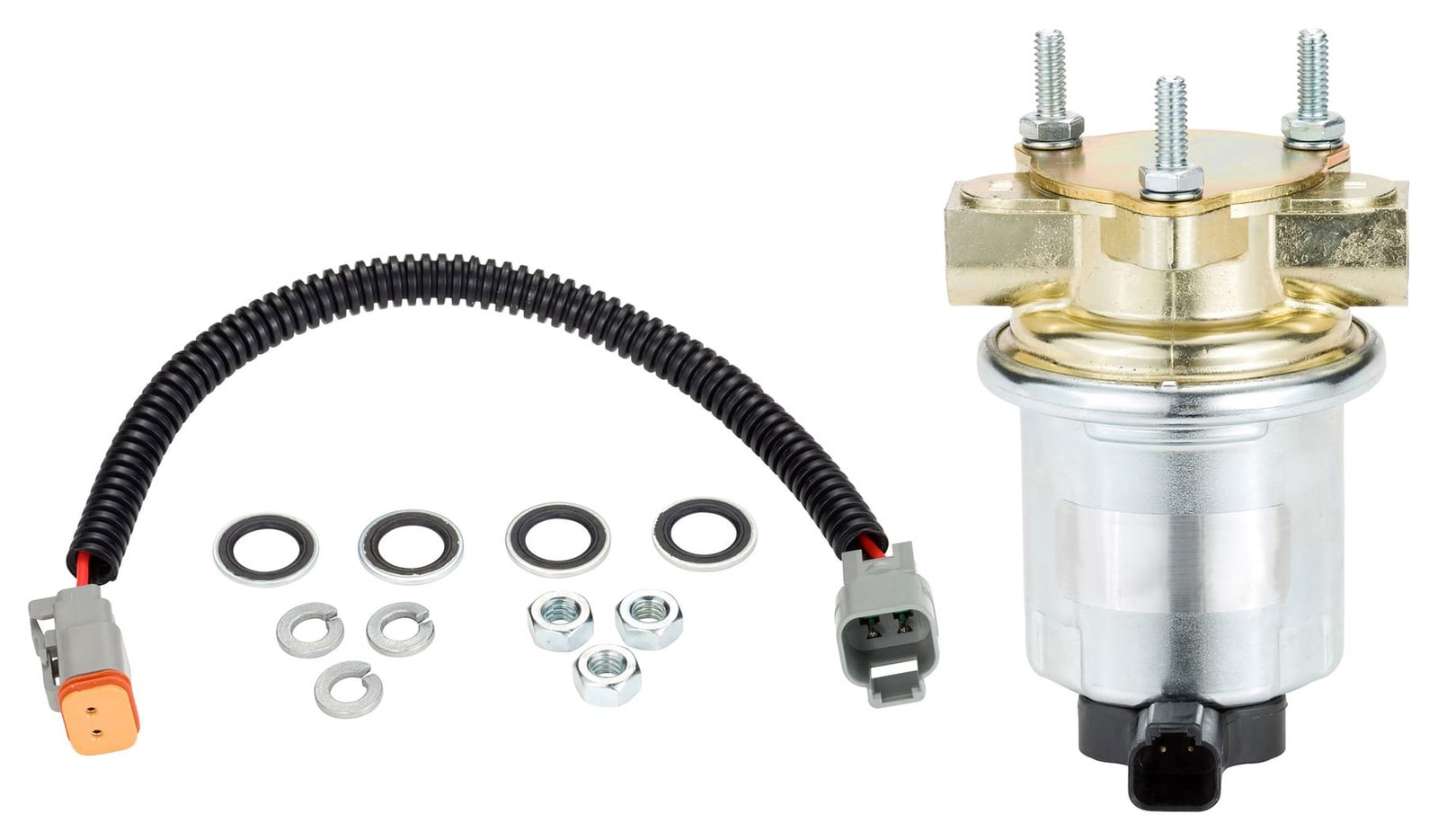
If the transfer pump failed, that does not prove the VP44 was damaged, and it does not prove it was not. Record what you can: what failed, the supply readings with test point and condition, any air found, filter condition, and the codes. Fix the supply side, then recheck the symptoms. If the complaint stays, the pump needs testing, not a guess.
Interpret the Codes in Context
A code like P0216 is the controller reporting what it observed. It is a starting point, not proof that a particular part failed. The same symptoms can come from supply, air, electrical or timing faults, as the sections above show.
- Write down the exact code and whether it is active or stored.
- Get the definition and fault tree for that code from the service manual for your truck, engine and controller. Do not rely on a code list from a forum or another website.
- Follow the fault tree’s tests in order and record each result.
- Bring the codes and the results to the pump shop along with the complaint record above.
How to Diagnose a VP44 Problem
Before you commit to a pump, confirm the VP44 is actually the issue. This path follows the order of the Cummins checks: supply and air, electrical, timing, then a specialist.
Step 1: Supply and Air
Work through the supply list above. Take readings by your truck’s service procedure and record the instrument, test point and condition. Fix the supply side before you condemn the VP44.
Step 2: Read and Record the Codes
Use a scan tool that reads the engine controller, and write down every code and its status. Then follow the matching fault tree in the service manual for your truck.
Step 3: Mechanical Timing Checks
Cummins’ timing checks include gear alignment and confirming that the timing key matches the pump’s timing key identity (CFP6E, printed p. 7-105). After those mechanical checks, Cummins sends pump timing evaluation to an authorized Bosch service shop (same page). In other words, the pump’s own timing is a bench and specialist job, not something to settle from a code alone.
Step 4: Rule Out Other Causes
- Electrical supply: on Cummins’ no-start chart alongside fuel supply, air and timing.
- Wiring and connectors: inspect the pump connector and the engine harness.
- Fuel filter condition: a restricted filter is on Cummins’ supply check list.
- Injectors: if the pump and supply check out, consider having your injectors tested. Injector work can also introduce air (printed p. 7-97).
Choose Testing, Repair or Replacement
Some answers cannot come from a code or a roadside check. Pump timing evaluation is one: Cummins sends it to an authorized Bosch service shop. Bosch describes its diesel repair network as offering on-vehicle diagnosis and testing of individual components, and it names electronically controlled distributor pumps among the systems it services (Bosch Diesel Repair Network, Our Services). Bosch also describes repair or exchange as options to discuss with the workshop.
When you call a pump shop, bring:
- The complaint record above, with codes and their status
- Supply readings with instrument, test point and condition
- What has already been replaced or repaired
- Engine and vehicle identity, and the full tag on the pump
Bench testing is useful when the supply, air, electrical and mechanical timing checks have not settled it, or when you need to know whether the pump itself is the fault before paying for a replacement.
VP44 Repair Options
Once the VP44 is confirmed as the problem, you have these paths.
Option 1: Remanufactured VP44
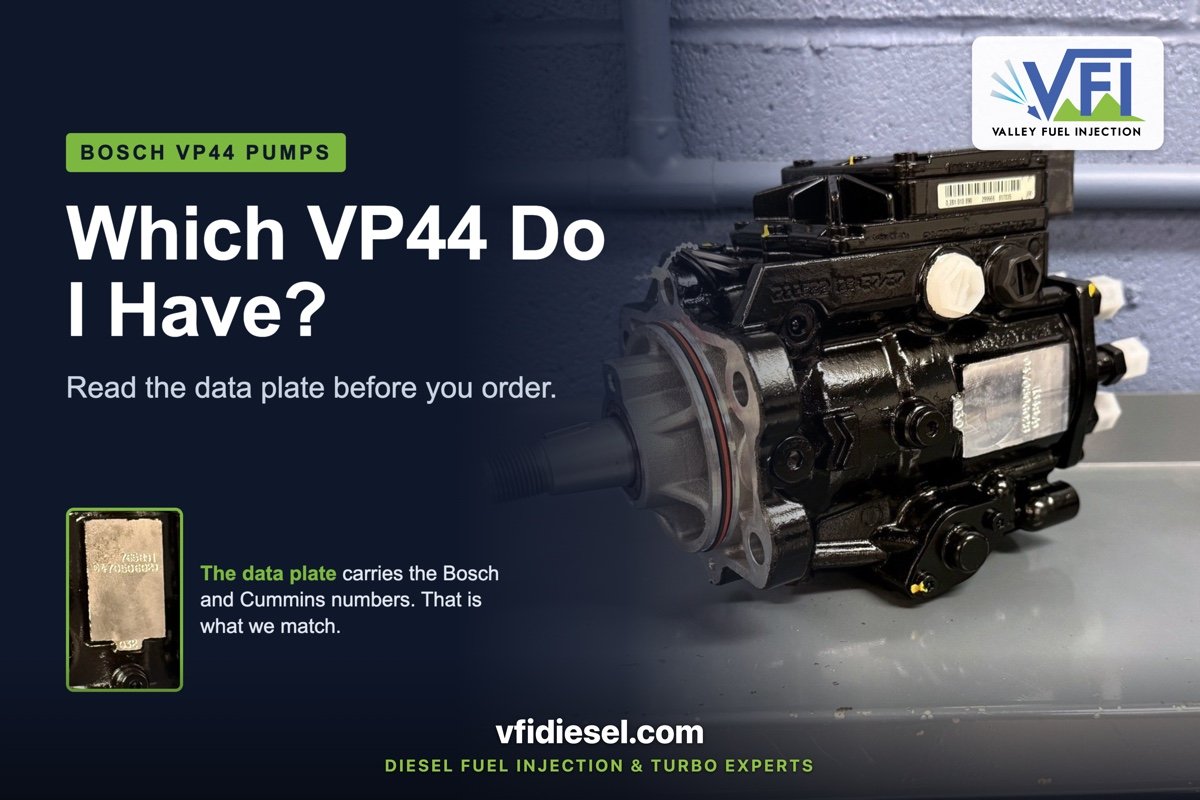
Our VP44 group lists the Bosch Authorized Remanufactured VP44 pumps we sell. For 1998.5 to 2002 Dodge Ram 2500 and 3500 pickups, the 15X (Bosch 0470506027) fits automatic and 5-speed manual trucks, and the 17X (Bosch 0470506028) fits 2001 to 2002 high-output trucks with the 6-speed manual. If you have a 1998.5 to 2000 6-speed truck, call 530-668-0818 with your engine serial number first. The current price, core charge and terms for each pump are on its listing. Call us with the numbers from your pump tag and we confirm the part before it ships. Not sure which pump you have? Our guide Which VP44 Injection Pump Do I Have? shows where the tag is and how to read it.
Option 2: Send Your Pump for Diagnosis and Rebuild
If you want to keep your own pump, you can ship it to us for diagnosis and a rebuild quote. Call first so we can tell you what to send. Packing, shipping and what happens once it arrives are covered on our mail-in injection pump rebuild service page.
Option 3: Repair or Exchange Through a Bosch Service Shop
Bosch describes repair or exchange as service options to discuss with the workshop. Whichever path you take, ask what condition the unit is in (new, remanufactured or rebuilt), what is included, and what the core terms are.

Talk to a Diesel Tech Not sure it’s the VP44? Call before you buy a pump Give us the codes, the symptoms and your supply readings with where they were taken. We’ll help you work out what to check next, then match the VP44 to your pump tag. Two ways in: drive it into our Woodland shop near Sacramento, or ship it to us from anywhere in the country. ☎︎ Call 530-668-0818Out of the area? Start a mail-in rebuild → |
After a Replacement Will Not Start
A new or rebuilt pump that will not start the engine sends you back to the same list Cummins uses for any no-start. Check these before you blame the replacement:
- Air. The pump swap itself opened the fuel system, and pump and line service can introduce air (CFP6E, printed p. 7-97).
- Suction side leaks. Any fitting disturbed during the job can pull air before the transfer pump.
- Fuel supply. Filter, lines, tank pickup and transfer pump, as above.
- Electrical supply. Connectors and power to the pump, which are on the no-start chart.
- Timing. Gear alignment, and whether the timing key matches the pump’s key identity (printed p. 7-105).
Priming, bleeding, timing key, fastener torque and cranking limits all come from the installation procedure for your truck. Follow that procedure rather than a general recipe. If the mechanical timing checks pass and it still will not run, Cummins sends pump timing evaluation to an authorized Bosch service shop.
Order After Diagnosis
Order once the failed part is confirmed. Have the full pump tag and the engine and vehicle identity ready, plus the diagnosis record.
- Injection pump: our VP44 group
- Transfer pump: our Lift & Supply Pumps page
- Filters: our Fuel Filters page
Call 530-668-0818 with those details. We match the part to your record and confirm it before it ships.
Protecting Your Replacement Pump
- Keep the supply side healthy. Filters, lines, tank pickup, tank vent and the transfer pump are the path every drop of fuel takes to the VP44.
- Change fuel filters on the schedule in your maintenance manual, and sooner if the filter is restricted.
- Fix air leaks right away. Suction side leaks pull air into the fuel, and air causes hard starts, rough running and low power.
- Choose fuel treatments by your engine maker’s guidance. Our diesel fuel additive guide covers how to choose.
- Don’t ignore warning signs. Record the complaint and get it diagnosed early.
Out of state? We ship VP44 pumps nationwide. Utah, Idaho and Wyoming customers can read how mail-in service works on our Utah VP44 and diesel injection page.
Frequently Asked Questions
Does a stored code prove the VP44 is bad?
No. A code is what the controller observed. Supply problems, air in the fuel, electrical faults and timing can produce the same symptoms. Get the code’s definition and fault tree from the service manual for your truck and controller, and follow its tests before you replace the pump.
What information matters after a lift pump failure?
What failed, supply readings with the instrument, test point and condition, any air found, filter condition, the codes and their status, and whether the symptom stays once the supply side is fixed. A failed transfer pump alone does not tell you whether the VP44 was damaged.
What should be checked after a replacement will not start?
Air introduced during the job, suction side leaks at disturbed fittings, the fuel supply, the electrical supply, and timing: gear alignment and whether the timing key matches the pump. Priming and other steps come from the installation procedure for your truck.
When is bench testing useful?
When the supply, air, electrical and mechanical timing checks have not settled the question. Cummins sends pump timing evaluation to an authorized Bosch service shop, and Bosch’s diesel network offers component testing for electronically controlled distributor pumps.
Can a VP44 be repaired, or does it need to be replaced?
Bosch describes repair or exchange as service options to discuss with the workshop. We sell remanufactured VP44 pumps and offer rebuild service for customer pumps. Call 530-668-0818 with your pump tag and diagnosis.
Need VP44 Help? Call Us.
Whether you need a remanufactured VP44 pump shipped to you, want to send your pump in for diagnosis and rebuild, or want the job done in our Woodland, CA shop, start with a call. We’re a Bosch authorized diesel shop and we ship nationwide.
Call us: 530-668-0818
Email: info@vfidiesel.com
Visit: 1243 E Beamer St, Suite C, Woodland, CA 95776
Shop VP44 Pumps: vfidiesel.com/product-category/diesel-injection-pumps/vp44/
Valley Fuel Injection & Turbo, Inc. is a Bosch authorized diesel shop and an authorized Kubota engine dealer in Woodland, CA, working on diesel fuel injection since 1993. We serve diesel owners and fleets throughout Northern California and nationwide through our mail-in repair and parts shipping services.