

OEM Diagnostic Software Diesel: Why Generic Scanners Fail
04/16/2026
Stanadyne Performance Formula Review: The Ultimate Diesel Additive
04/21/2026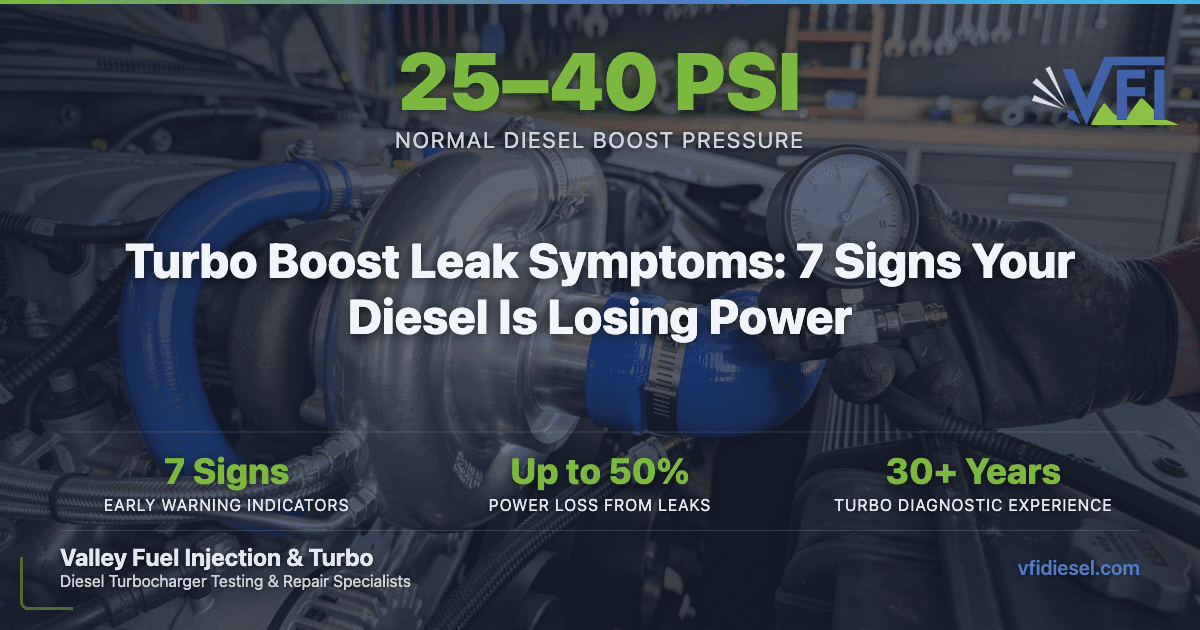
Turbo Boost Leak Symptoms: 7 Signs Your Diesel Is Losing Power
When your diesel truck starts losing power and the turbo sounds different, you’re likely dealing with turbo boost leak symptoms that need immediate attention. A boost leak occurs when pressurized air escapes from your turbocharger system before reaching the engine, causing reduced performance, increased fuel consumption, and potential engine damage if left unchecked.
The most common turbo boost leak symptoms include sudden power loss, excessive black smoke, unusual turbo whistling sounds, higher EGTs, poor fuel economy, sluggish acceleration, and visible oil leaks around turbo components. Early detection prevents catastrophic turbo failure and expensive engine damage.
What Are the Most Common Turbo Boost Leak Symptoms?
The seven most recognizable turbo boost leak symptoms appear gradually but become unmistakable once you know what to look for. After rebuilding thousands of turbochargers over 30 years, we’ve seen these warning signs countless times.
1. Sudden Loss of Power and Acceleration
The most obvious symptom is a dramatic drop in engine power, especially under load. Your truck feels sluggish when pulling hills, accelerating onto highways, or carrying heavy loads. This happens because boost leaks prevent your engine from receiving the compressed air it needs for optimal combustion.
2. Excessive Black Smoke from Exhaust
When boost pressure drops, there is less air for the fuel. Older and modified trucks blow black smoke, most under acceleration or load. On newer trucks the ECM limits fuel to the air it measures and the DPF traps the soot, so you may only feel the power loss.
Heavy black smoke means more fuel than the air can burn. It loads the DPF, adds soot to the oil and builds carbon. Don’t ignore it.
3. Unusual Turbocharger Whistling or Squealing
Boost leaks often create distinctive sounds as pressurized air escapes through cracks or loose connections. You might hear high-pitched whistling, squealing, or hissing sounds that weren’t present before, especially during acceleration.
4. Higher Exhaust Gas Temperatures (EGTs)
Boost leaks force your engine to work harder to produce the same power, resulting in elevated exhaust gas temperatures. If you monitor EGTs, you’ll notice readings climbing higher than normal during typical driving conditions.
5. Poor Fuel Economy
Reduced boost pressure means your engine operates less efficiently, burning more fuel to maintain performance. Many truck owners first notice boost leak symptoms through declining fuel economy before recognizing other warning signs.
6. Sluggish Turbo Spool-Up
A healthy turbocharger spools up quickly when you accelerate. Boost leaks create a noticeable delay in turbo response, making acceleration feel lazy and unresponsive compared to normal operation.
7. Visible Oil Leaks Around Turbo Components
Oily residue at a boost hose joint, clamp or intercooler pipe often marks the spot where charged air, which carries a little oil mist, is escaping.
How Do You Diagnose a Boost Leak vs Other Turbo Problems?
Proper diagnosis separates boost leaks from other turbocharger problems like bearing failure, compressor wheel damage, or wastegate issues. The diagnostic approach determines whether you need simple hose replacement or complete turbo rebuild.
Visual Inspection Method
Start with a thorough visual inspection of all boost system components. Check intercooler pipes, hoses, clamps, and connections for obvious damage, loose fittings, or oil residue that indicates leakage points. Oil pooled inside the boots or intercooler is a different problem: it is usually coming past the turbo’s compressor seal, or from blowby on engines whose crankcase breather feeds the intake. Our guide to telling a turbo seal leak from worn rings shows how to sort out which.
Pressure Testing
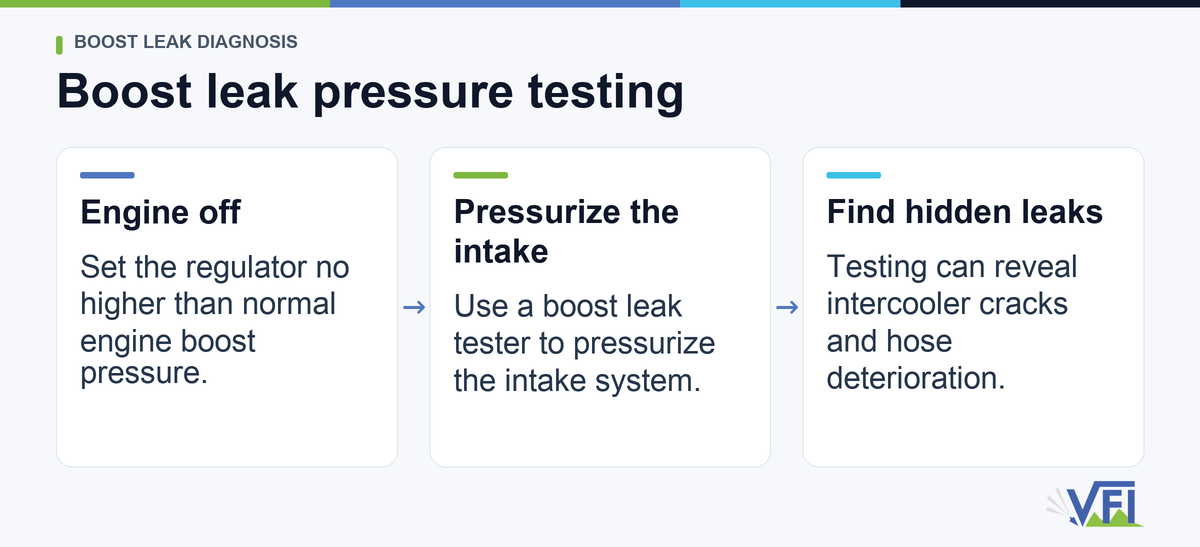
Professional boost leak testing involves pressurizing the intake system with the engine off, using a boost leak tester and a regulator set no higher than the engine’s normal boost pressure. This method reveals leaks that might not be obvious during visual inspection, especially small cracks in intercooler cores or subtle hose deterioration.
Distinguishing Boost Leaks from Turbo Bearing Problems
Unlike boost leaks, turbo bearing problems create metallic grinding sounds, excessive oil consumption, and blue smoke from the exhaust. Turbo bearing failure symptoms typically worsen rapidly and require immediate attention to prevent catastrophic damage.
Boost Leak vs Wastegate Issues
Wastegate problems often cause overboost or erratic boost (a wastegate stuck open causes underboost too), while a boost leak shows as boost falling short of what is commanded under load. Wastegate issues might trigger overboost codes, whereas boost leaks typically cause underboost conditions.
Where Do Boost Leaks Usually Occur?
Understanding where leaks commonly occur helps prioritize repairs and prevent secondary damage to expensive components.
Intercooler and Compressor Housing Leaks
Intercooler core leaks are often internal and hard to find without a pressure test.
A cracked compressor housing calls for a close look at the whole turbo, since it often goes with a wheel that hit the housing after bearing wear. The housing has to be replaced, and the turbo inspected before it goes back in service.
Can You Drive With a Turbo Boost Leak?
While you can technically drive with minor boost leaks, continuing to operate your diesel truck with significant boost leak symptoms risks expensive engine damage and complete turbocharger failure.
Short-Term Driving Risks
Small boost leaks might not cause immediate catastrophic failure, but they force your engine to work harder to maintain performance. This raises exhaust temperatures and puts extra heat into the turbo, pistons and exhaust parts.
Long-Term Consequences
Driving with boost leaks long-term can cause:
- Engine carbon buildup from rich combustion
- Exhaust system damage from elevated temperatures
- Complete engine failure in extreme cases
If you must drive with suspected boost leaks, avoid heavy loads, steep grades, and high-speed operation. Monitor exhaust gas temperatures closely and schedule a diagnostic appointment as soon as possible.
How Much Does Turbo Boost Leak Repair Cost?
Turbo boost leak repair costs vary dramatically depending on the leak location, underlying damage, and whether you need simple hose replacement or complete turbocharger rebuild.
Simple boost hose replacement: typically $250–$600. Intercooler replacement: typically $1,200–$3,500. Complete turbocharger rebuild or replacement: typically $2,800–$5,500 depending on your specific turbo model and damage extent.
Simple Repair Costs
Basic boost leak repairs like hose replacement, clamp tightening, or gasket replacement typically cost $250–$700 depending on accessibility and parts availability. These repairs often resolve boost leak symptoms completely when caught early.
Intermediate Repair Costs
Intercooler replacement, intake manifold gasket replacement, or turbo outlet pipe repair generally ranges from $1,200–$3,500. These repairs require more labor and expensive components but prevent further damage when performed promptly.
Major Repair Costs
Complete turbocharger replacement or rebuild typically ranges from $2,800–$5,500 or more for light-to-medium duty applications, and $3,500–$7,500+ for heavy-duty applications. However, addressing boost leak symptoms early often prevents the need for these expensive repairs.
At our Woodland turbocharger service center, we provide detailed diagnostic assessments to determine the most cost-effective repair approach for your specific situation.
When Should You Replace vs Repair a Leaking Turbocharger?
The decision between turbocharger repair and replacement depends on the leak’s root cause, the turbo’s overall condition, and cost-effectiveness of each option.
Repair Scenarios
Turbocharger repair makes sense when:
- Boost leaks stem from external components (hoses, pipes, gaskets)
- The turbo shows no signs of bearing wear or internal damage
- Compressor and turbine wheels remain undamaged
- The vehicle has high mileage but the turbo is relatively new
Replacement Scenarios
Complete turbocharger replacement becomes necessary when:
- The compressor housing is cracked (air leak) or the turbine housing is cracked (exhaust leak)
- Bearing damage accompanies the boost leak symptoms
- Compressor surge has damaged internal components
- Multiple previous repairs have failed to resolve the issue
Age and Mileage Considerations
Newer vehicles with isolated boost leak symptoms typically benefit from targeted repairs that address the specific failure point.
Our experienced team evaluates each case individually, considering your truck’s age, condition, usage patterns, and budget to recommend the most appropriate solution. Whether you need simple boost leak repair or complete turbocharger replacement, we provide honest assessments and quality workmanship backed by our decades of diesel expertise.
For diesel truck owners in Sacramento and throughout Northern California, recognizing these turbo boost leak symptoms early can save thousands in repair costs and prevent roadside breakdowns.
Frequently Asked Questions
What does a turbo boost leak sound like?
A turbo boost leak typically creates a high-pitched whistling, hissing, or squealing sound, especially during acceleration. The sound occurs as pressurized air escapes through cracks or loose connections in the boost system. Unlike normal turbo whistle, boost leak sounds are usually irregular and may change pitch with engine load.
Can a boost leak damage my diesel engine?
Yes, boost leaks can cause significant engine damage if left unrepaired. They force your engine to run rich, creating excess heat and carbon buildup. Boost leaks also cause the turbocharger to work harder.
How do I test for boost leaks at home?
Soapy water sprayed on the connections at idle finds little, because a diesel makes almost no boost at idle. The better test is to pressurize the intake system with the engine off, using a boost leak tester and a regulator set no higher than the engine’s normal boost pressure. Professional pressure testing with specialized equipment provides more accurate results and can detect internal intercooler leaks that a visual check might miss.
Will a boost leak throw a check engine light?
Boost leaks may trigger check engine lights, particularly codes related to underboost conditions (P0299) or fuel trim issues. However, many boost leaks don’t immediately trigger codes, especially if they develop gradually. Don’t rely solely on check engine lights to detect boost leak problems.
How long can I drive with a small boost leak?
While small boost leaks might not cause immediate failure, continuing to drive risks progressive damage to your turbocharger and engine. If you must drive with a suspected boost leak, avoid heavy loads and high speeds, monitor temperatures closely, and schedule repairs as soon as possible to prevent expensive secondary damage.
Don’t let turbo boost leak symptoms compromise your diesel truck’s performance and reliability. Our experienced team at Valley Fuel Injection has been diagnosing and repairing turbocharger problems for over 30 years, serving diesel owners throughout Northern California and Nevada.
If you’re experiencing any of these boost leak symptoms, call us at 530-668-0818 or visit our Woodland, CA facility for professional diagnosis and repair. We also provide nationwide shipping for turbocharger rebuilds and can handle mail-in diagnostic services for customers outside our service area.