Diesel Engine Losing Power Under Load: 8 Causes & Solutions
03/26/2026
Diesel Technician Career Guide: Training & Job Outlook 2026
04/05/2026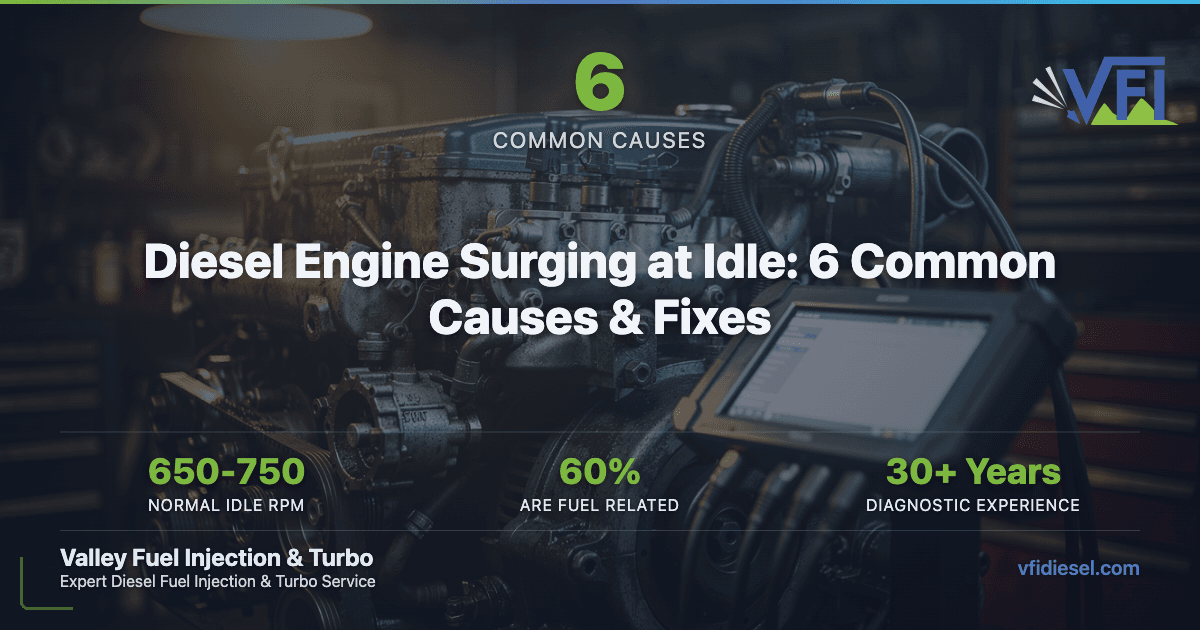
A diesel engine surging at idle is one of the most frustrating problems diesel owners face, that erratic RPM hunting where your engine can’t maintain a steady idle speed. After rebuilding thousands of diesel fuel systems over the past 30+ years, we’ve seen this issue traced back to six primary causes, most of which involve the fuel delivery system that’s at the heart of what we do here at Valley Fuel Injection.
Diesel engine surging at idle is typically caused by inconsistent fuel delivery, from contaminated fuel and failing lift pumps to worn injection components and air leaks in the fuel system. Professional diagnosis is crucial since multiple causes often occur simultaneously.
What Does Diesel Engine Surging at Idle Look and Sound Like?
Diesel engine surging at idle manifests as an RPM fluctuation where your engine speed rises and falls rhythmically, typically between 600-1000 RPM instead of holding steady at your normal idle speed. You’ll hear the engine “hunting”, accelerating and decelerating in a cycle that can last anywhere from 2-10 seconds between peaks.
Talk to a Diesel Tech Idle hunting up and down on its own? A diesel that surges at idle is getting inconsistent fuel: air pulled in through a leak on the supply side, or a worn governor or delivery valve inside the injection pump. We bench-test and rebuild the rotary and inline pumps where that wear hides, and the bench is the only place it shows up. Two ways in: drive it into our Woodland shop near Sacramento, or ship it to us from anywhere in the country. ☎︎ Call 530-668-0818Out of the area? Start a mail-in rebuild → |
The sound is unmistakable: a rhythmic “vroom-down-vroom-down” pattern that’s different from the steady rumble of a healthy diesel at idle. Your truck might shake slightly as the RPMs fluctuate, and you may notice the exhaust note changing pitch with each surge cycle.
Modern common rail diesel engines are more sensitive to fuel system inconsistencies than older mechanical systems. Even minor air intrusion or fuel contamination can trigger surging that older diesels might have tolerated.
Some diesel owners describe the sensation as the engine “trying to find its idle” or “searching for the right RPM.” Unlike a rough idle where the engine shakes but maintains consistent speed, surging involves actual speed variations that you can see on your tachometer.
The surging typically becomes more pronounced when the engine is warm and under no load, exactly when you’d expect smooth operation. This symptom often worsens over time and may eventually affect performance under load as well, similar to the issues we discuss in our guide on diesel engines losing power under load.
Is a Contaminated Fuel System Causing Your Diesel to Surge?
Contaminated fuel is the most common cause of diesel engine surging at idle that we see in our shop. When fuel contains water, debris, or microbial growth, it creates inconsistent fuel delivery that manifests as RPM fluctuations.
Water contamination is particularly problematic because it can freeze in cold weather, creating intermittent blockages, or support bacterial and fungal growth that forms sludge in your fuel system. We’ve pulled apart injection pumps where the internal components were coated with a black, tar-like substance that started as minor water contamination.
| Contamination Type | Symptoms | Typical Repair |
|---|---|---|
| Water in fuel | Intermittent surging, white exhaust | Fuel system flush, filter replacement |
| Microbial growth | Progressive surging, fuel smell | Biocide treatment, tank cleaning |
| Sediment/debris | Consistent surging, power loss | Filter replacement, system cleaning |
Poor fuel quality from contaminated storage tanks or degraded fuel can also trigger surging. Diesel fuel has a limited shelf life, typically 6-12 months depending on storage conditions, and degraded fuel loses its combustion consistency, leading to uneven power delivery that shows up as idle surging.
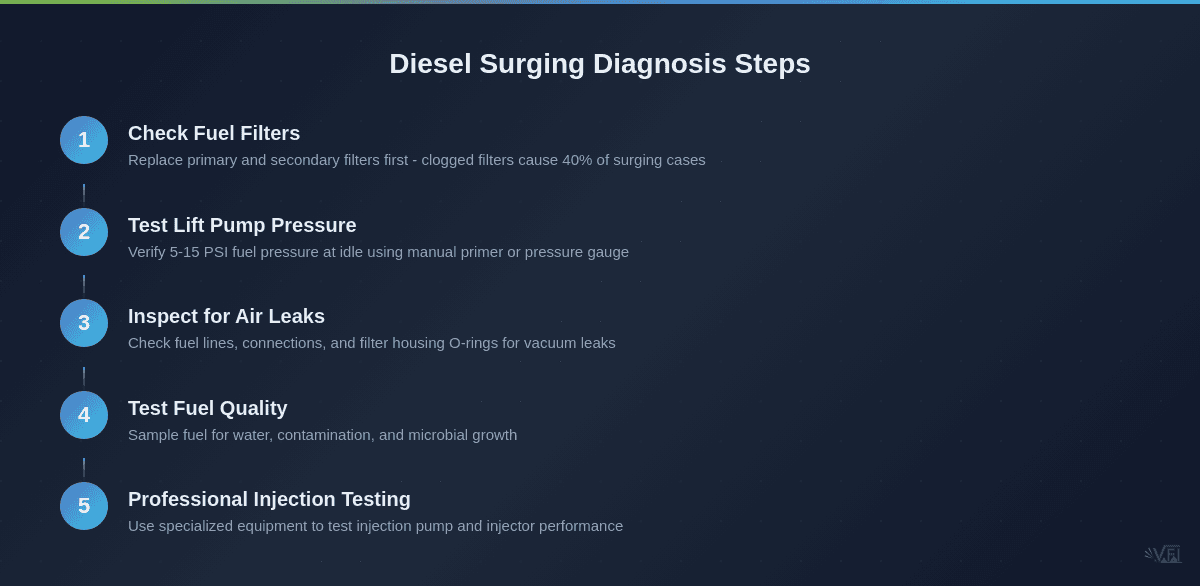
Always check your fuel filters first when diagnosing surging. A partially clogged primary filter can cause intermittent fuel starvation that creates the perfect conditions for idle surging. We’ve seen $50 in filters solve problems that owners thought required thousands in injection pump work.
The fix for contaminated fuel starts with identifying the contamination source. If it’s in your tank, you’ll need professional fuel polishing or tank cleaning. If it’s from bad fuel, drain the system and refill with quality diesel fuel, then replace all fuel filters. According to the EPA’s diesel fuel standards, modern ultra-low sulfur diesel requires cleaner handling practices than older fuel formulations.
Could a Failing Lift Pump Be the Culprit Behind Your Surging Diesel?
A failing lift pump (also called a feed pump or transfer pump) creates inconsistent fuel pressure that directly causes diesel engine surging at idle. The lift pump’s job is to maintain steady fuel pressure to your injection pump, and when it starts failing, you get pressure fluctuations that translate to RPM fluctuations.
We see lift pump failures most commonly in high-mileage trucks where the pump has been working against dirty fuel filters for years. The pump diaphragm or internal seals wear out, creating intermittent pressure drops that are most noticeable at idle when fuel demand is lowest.
Here’s how to diagnose a failing lift pump: with the engine running and surging, try manually priming the fuel system using your lift pump primer (if equipped). If the surging temporarily stops or improves during priming, your lift pump isn’t maintaining adequate pressure.
Never ignore lift pump problems, they can lead to injection pump damage. Your high-pressure injection pump relies on consistent fuel supply from the lift pump. Cavitation from low fuel pressure can destroy expensive injection pump components.
Common signs of lift pump failure beyond surging include:
- Hard starting, especially when warm
- Loss of power under acceleration
- Air bubbles visible in fuel lines (if you have clear return lines)
- Excessive noise from the fuel tank area
Lift pump replacement is typically straightforward on most diesel engines, though some require dropping the fuel tank. The pump itself typically costs $180–$450 depending on your engine, with installation bringing the total to $500–$900, making it one of the more cost-effective fixes for surging issues.
For fleet operators dealing with multiple vehicles experiencing similar symptoms, we recommend checking lift pump specifications across your fleet, many OEM pumps have known failure patterns at certain mileage intervals, as detailed in our fleet safety guide.
Are Worn Injection Components Making Your Engine Hunt for RPM?
Worn injection components, particularly injection pumps and injectors, are a leading cause of diesel engine surging at idle, especially in higher-mileage engines. When internal pump components wear beyond specification, they can’t maintain consistent fuel delivery, creating the pressure variations that cause RPM hunting.
In mechanical injection pumps, wear in the governor mechanism is often the culprit. The governor’s job is to maintain steady RPM by adjusting fuel delivery, but worn governor components can create a feedback loop where the pump overcorrects, causing the characteristic surging pattern.
Common rail systems have their own set of wear-related issues. We frequently see problems with:
- Pressure regulator valves that can’t maintain steady rail pressure
- High-pressure pump wear causing pressure fluctuations
- Injector internal leakage affecting fuel balance between cylinders
Injection pump rebuilds typically range from $1,800–$3,200 for electronic pumps (e.g., VP44) up to $2,800–$6,500+ for heavy-duty or high-pressure systems, depending on pump type and condition. Individual injector bench/pop testing runs $50–$100 per injector, with reman common rail injectors ranging from $300–$550 each. However, catching wear early through professional testing can often identify which specific components need attention, potentially saving thousands over complete system replacement.
VP44 pumps, which we specialize in rebuilding, are particularly prone to internal wear that causes surging. The pump’s internal timing piston can wear, creating erratic fuel delivery timing that manifests as idle surging long before it affects full-load performance.
Professional injection system testing is crucial for diagnosing worn components because multiple issues often occur simultaneously. Our Bosch-certified testing equipment can pinpoint exactly which components are out of specification, helping you make informed repair decisions.
The decision between rebuild and replacement depends on component condition and cost analysis, which we cover in detail in our pump rebuild cost guide. Often, a professional rebuild of worn components costs significantly less than replacement while restoring original performance specifications.
How Do Air Leaks in the Fuel System Cause Idle Surging?
Air leaks in the fuel system are a sneaky cause of diesel engine surging at idle because they create intermittent fuel delivery problems that can be difficult to diagnose. Unlike a major air leak that would cause obvious running problems, small leaks allow just enough air into the system to disrupt the smooth fuel flow needed for steady idle.
The most common air leak locations we find include:
- Fuel line connections, especially where rubber lines connect to metal fittings
- Lift pump seals, allowing air to enter the suction side
- Fuel filter housing O-rings, deteriorated seals around filter heads
- Fuel tank pickup tubes, cracked or loose connections inside the tank
Air leaks are particularly problematic because diesel fuel systems operate under vacuum on the suction side (from tank to injection pump). Any leak allows air to enter, and that air gets compressed and decompressed as the system operates, creating pressure pulses that translate to RPM variations.
To test for air leaks, look for bubbles in your fuel return line (if visible) or listen for a “sucking” sound near fuel connections when the engine is running. Many air leaks only occur when the system is under vacuum, so static pressure tests won’t find them.
Temperature changes make air leaks worse because they affect seal flexibility and fuel line expansion. This is why some diesels surge more when cold or after sitting overnight, the seals contract and allow more air intrusion until they warm up and expand.
Diagnosing air leaks requires systematic testing of the entire suction side of the fuel system. We use smoke testing and vacuum testing to identify leak locations, but even simple visual inspection can reveal obvious problems like cracked fuel lines or loose connections.
Fixing air leaks is usually straightforward and inexpensive, replacing O-rings, tightening connections, or replacing deteriorated fuel lines. However, some leaks, particularly those in the fuel tank pickup assembly, require more extensive work to access and repair.
For diesel owners in Sacramento and surrounding areas, we recommend annual fuel system inspections to catch air leaks before they cause performance problems. Our Sacramento-area customers often bring vehicles in for preventive checks that identify minor leaks before they worsen.
When Should You Take Your Surging Diesel to a Professional Shop?
You should take your diesel engine surging at idle to a professional shop when basic troubleshooting steps don’t resolve the issue, or when you suspect injection system problems that require specialized equipment to diagnose properly. After 30+ years of diesel fuel injection work, we’ve learned that surging problems often involve multiple contributing factors that DIY diagnosis can miss.
Bring your surging diesel to a professional immediately if you notice:
- Surging that worsens over time, indicates progressive component wear
- Surging combined with power loss, suggests injection system problems
- Multiple fuel system warning lights, modern diesels with complex electronics need professional diagnosis
- Recent injection system work that didn’t solve the problem, may indicate incomplete diagnosis
Professional diesel shops have specialized test equipment that can measure fuel pressure, injection timing, and individual injector performance while the engine is running. This real-time data is crucial for identifying intermittent problems that cause surging.
Professional diagnosis becomes essential when dealing with common rail systems, VP44 pumps, or any electronically controlled injection system.
These systems require scan tools and specialized test equipment to access the data needed for proper diagnosis, equipment that’s not practical for most diesel owners to purchase.
At our Woodland shop, we start every surging diagnosis with a comprehensive fuel system test that includes pressure testing, electronic system scanning, and visual inspection of all fuel system components. This systematic approach helps us identify all contributing factors, not just the most obvious ones.
The cost of professional diagnosis, typically $150–$300 for a computer diagnostic scan, or $300–$700 for a full diagnostic with bench testing, depending on system complexity, often saves money in the long run by preventing unnecessary parts replacement and identifying problems before they cause expensive damage to injection components.
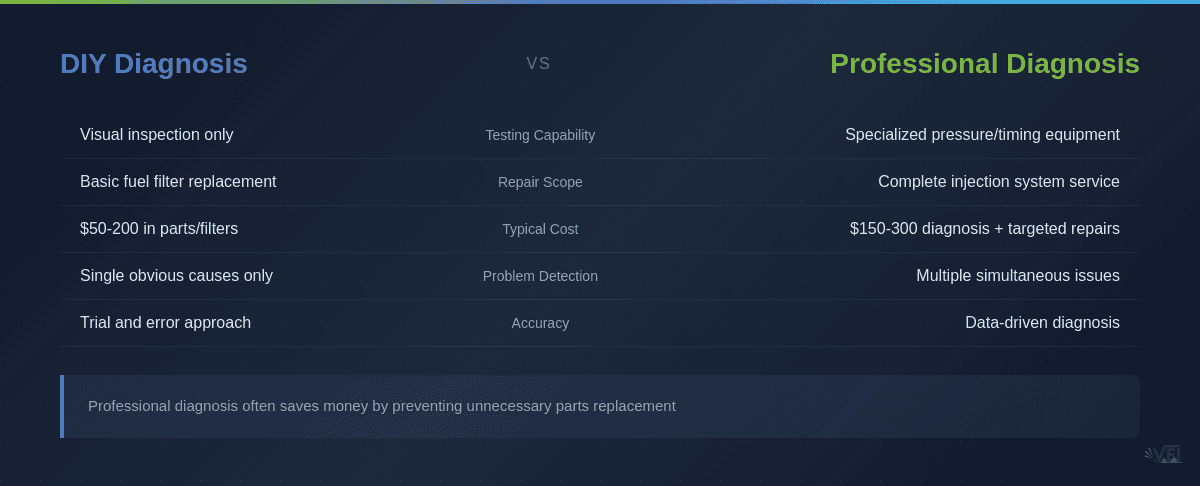
For complex injection systems, we also offer our comprehensive injection service that addresses multiple potential causes simultaneously, ensuring your surging problem is resolved completely rather than just temporarily improved.
Don’t wait if your diesel’s surging is affecting drivability or getting worse, early intervention prevents minor problems from becoming major repairs. According to SAE International standards, diesel engines should maintain idle speed within ±25 RPM under normal operating conditions.
Professional Help for Persistent Surging Issues
If you’ve worked through the common causes and your diesel engine is still surging at idle, it’s time for professional diagnosis. Complex fuel injection systems require specialized knowledge and equipment to diagnose properly, and attempting repairs without proper testing can lead to expensive mistakes.
Here at Valley Fuel Injection, we’ve diagnosed and repaired thousands of surging diesels over our 30+ years in business. Our comprehensive fuel injection services include everything from basic system cleaning to complete injection pump rebuilds, all backed by our Bosch certification and factory training.
Whether you’re dealing with a stubborn VP44 pump, a finicky common rail system, or an older mechanical injection setup, we have the expertise and equipment to get your diesel running smoothly again. Call us at 530-668-0818 to schedule a diagnostic, or visit our Woodland, CA location. We also provide mail-in services for customers nationwide who need injection components tested and rebuilt.
Don’t let idle surging turn into expensive injection system damage. Our certified technicians can diagnose the root cause and get your diesel running smoothly again. Schedule your diagnostic today or call 530-668-0818.