
Diesel Fuel Injection Pump Rebuild Cost vs Replace: 2026 Guide
03/03/2026
Authorized Diesel Parts Sourcing: Bosch vs Compatible Parts
03/08/2026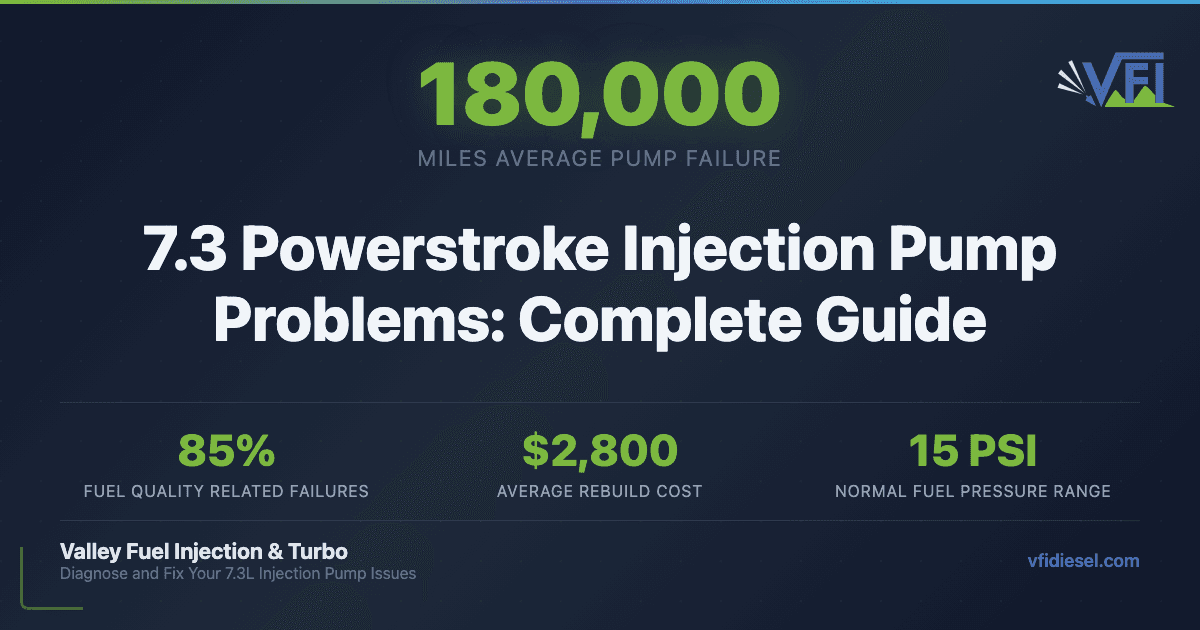
The 7.3 Powerstroke injection pump is the heart of Ford’s legendary diesel engine, but when it fails, your truck isn’t going anywhere. Common symptoms include hard starting, rough idle, loss of power, and fuel in the oil — all signs that your injection pump needs immediate attention from a qualified diesel technician.
7.3 Powerstroke injection pump problems typically manifest as starting issues, power loss, and fuel contamination. Early diagnosis and professional service can prevent catastrophic engine damage and costly repairs.
We’ve serviced hundreds of 7.3 Powerstroke injection systems over our 30+ years in business, and we see the same failure patterns repeatedly. This guide covers everything you need to know about diagnosing, testing, and solving 7.3 injection pump problems based on real-world experience in our Woodland, CA shop.
What Are the Most Common 7.3 Powerstroke Injection Pump Failure Symptoms?
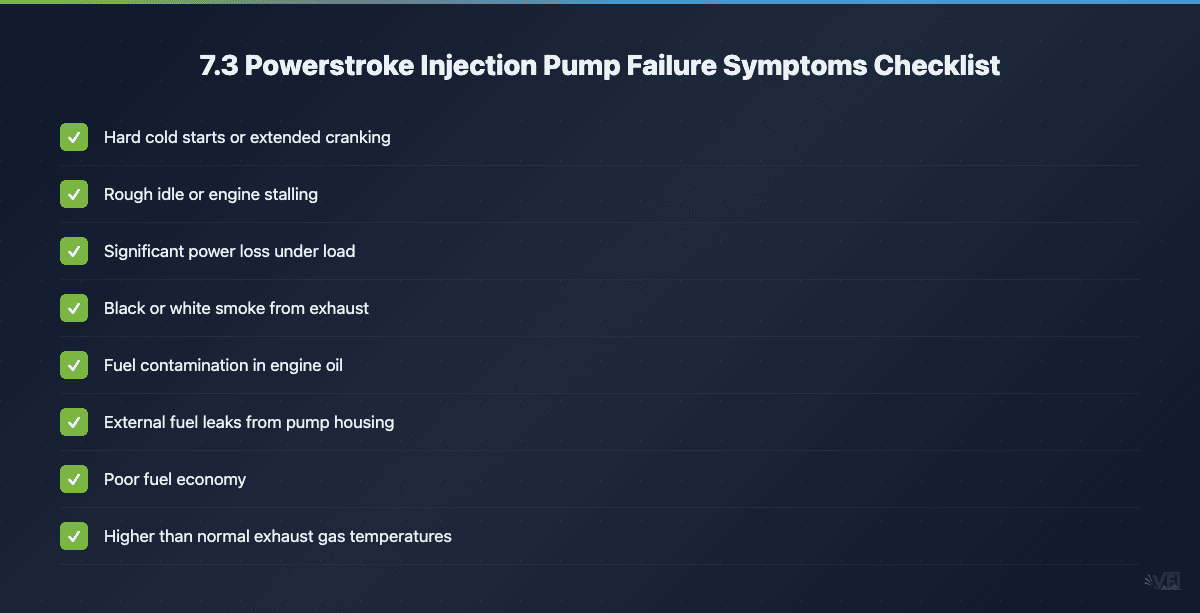
The most common 7.3 Powerstroke injection pump failure symptoms include hard starting (especially when cold), rough idle, significant power loss, black or white smoke, and fuel dilution in the engine oil.
Here’s what we see most often when a 7.3 injection pump starts failing:
Starting Problems
- Hard cold starts: Takes extended cranking or won’t start without ether
- Long crank times: Engine cranks longer than normal before firing
- No-start condition: Complete failure to start, even with good batteries and glow plugs
Performance Issues
- Power loss: Noticeable reduction in pulling power, especially under load
- Rough idle: Engine runs unevenly at idle, may stall
- Poor acceleration: Sluggish response when you press the throttle
- High EGTs: Exhaust gas temperatures higher than normal
Fuel in the engine oil is a critical symptom that requires immediate attention. This indicates internal pump seal failure and can cause catastrophic engine damage if not addressed quickly.
Fuel System Symptoms
- Fuel in oil: Oil level rises, oil smells like diesel, milky appearance
- External fuel leaks: Visible diesel leaking from the pump housing
- Poor fuel economy: Significant increase in fuel consumption
- Smoke issues: Black smoke (overfueling) or white smoke (incomplete combustion)
The 7.3 Powerstroke uses a Navistar T444E engine with a rotary injection pump system, a design that shares DNA with Bosch’s distribution pump technology. Unlike the later VP44 pumps found on Cummins engines, the 7.3’s mechanical pump is generally more reliable but still susceptible to specific failure modes.
How Do You Test a 7.3 Powerstroke Injection Pump?
Testing a 7.3 Powerstroke injection pump requires specialized diesel injection equipment to measure fuel pressure, timing, and delivery rates — testing that should only be performed by certified diesel technicians with proper tools.
Professional injection pump testing involves several critical measurements:
Fuel Pressure Testing
We use calibrated pressure gauges following Bosch diagnostic protocols to test:
- Supply pressure: Should maintain 6-8 PSI to the injection pump
- Return pressure: Measures internal pump wear and seal condition
- Pop-off pressure: Tests the pump’s internal pressure relief system
Injection Timing Verification
Proper injection timing is critical for 7.3 performance. We check:
- Static timing: Pump position relative to engine timing marks
- Dynamic timing: Actual injection timing under running conditions
- Timing advance: Mechanical advance mechanism operation
DIY testing is limited on 7.3 injection pumps. While you can check fuel supply pressure and look for obvious leaks, proper pump testing requires specialized diesel injection test equipment that most shops don’t have.
Flow Rate and Pattern Testing
Using our Bosch injection testing equipment, we measure:
- Fuel delivery volume: Each pump outlet should deliver equal amounts
- Spray pattern: Fuel should atomize properly at each injector line
- Cutoff characteristics: Clean fuel cutoff when throttle is released
Internal Leak Testing
Internal seal failure is common in high-mileage 7.3 pumps. We test for:
- Cross-leakage: Fuel bleeding between pump chambers
- Case pressure: Excessive pressure indicates internal seal failure
- Governor response: Mechanical governor should respond smoothly
If you’re experiencing 7.3 injection pump problems and need professional testing, schedule a diagnostic at our shop. We can also provide testing services for diesel truck owners in Sacramento and throughout Northern California.
Why Do 7.3 Powerstroke Injection Pumps Fail Prematurely?
7.3 Powerstroke injection pumps fail prematurely due to fuel contamination, inadequate maintenance, internal seal deterioration, and mechanical wear from high mileage — with fuel quality being the number one cause we see in our shop.
Fuel Quality Issues
Poor fuel quality — fuel that doesn’t meet EPA ultra-low sulfur diesel standards — is the leading cause of 7.3 injection pump failure:
- Water contamination: Causes internal corrosion and seal swelling
- Dirty fuel: Abrasive particles wear internal components
- Fuel additives: Some aftermarket additives can damage seals
- Biodiesel issues: Higher biodiesel blends can cause seal deterioration
Maintenance-Related Failures
Neglected maintenance accelerates pump wear:
- Dirty fuel filters: Restricted flow causes pump to work harder
- Contaminated fuel tanks: Algae and debris damage internal components
- Incorrect fuel additives: Using wrong additives can cause seal failure
The 7.3 Powerstroke injection pump lubricates itself with diesel fuel. Poor fuel quality directly impacts pump longevity, which is why we always recommend premium fuel and regular filter changes.
Age and Wear Factors
Even well-maintained 7.3 pumps eventually wear out:
- Internal seals: Rubber components deteriorate over time
- Plunger wear: Precision components lose tolerances
- Governor issues: Mechanical governor components wear
- Housing cracks: Thermal cycling can crack pump housings
Operating Conditions
Harsh operating conditions accelerate wear:
- High-idle operation: Extended idling increases wear
- Extreme temperatures: Very hot or cold conditions stress seals
- Heavy loads: Constant heavy hauling increases pump stress
- Poor air filtration: Dirty air can affect fuel system operation
Understanding these failure modes helps us provide better service recommendations. Similar patterns occur in other injection systems, like the Stanadyne DB2 and DB4 pumps we rebuild for agricultural equipment.
Should You Rebuild or Replace a Failed 7.3 Injection Pump?
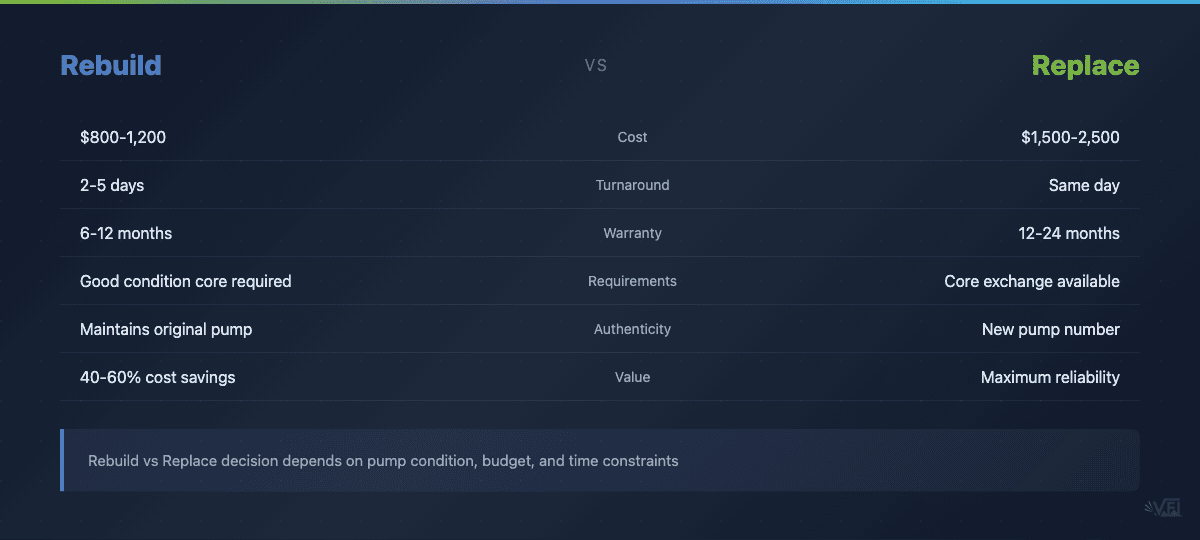
Rebuilding a 7.3 Powerstroke injection pump is typically more cost-effective than replacement, especially when performed by a certified diesel injection shop with proper tooling and genuine parts — but the decision depends on pump condition and your budget.
When Rebuilding Makes Sense
We recommend rebuilding when:
- Core condition is good: Housing is crack-free with minimal wear
- Cost considerations: Rebuild costs 40-60% less than new replacement
- Availability issues: New pumps may have long lead times
- Matching numbers: Keeping original pump maintains vehicle authenticity
Replacement Scenarios
We recommend replacement when:
- Severe damage: Cracked housing or catastrophic internal failure
- Multiple rebuilds: Pump has been rebuilt before with poor results
- Time constraints: Need immediate return to service
- Warranty concerns: New pump provides longer warranty coverage
Professional 7.3 injection pump rebuilds typically cost $800-1,200, while new pumps range from $1,500-2,500. Rebuild quality varies significantly between shops, so choose a certified facility.
Quality Rebuild Requirements
A proper 7.3 pump rebuild includes:
- Complete disassembly: All internal components removed and inspected
- Precision machining: Worn surfaces restored to specification
- Genuine seals and gaskets: OEM-quality rubber components
- Calibration testing: Pump tested and calibrated on injection test stand
Remanufactured Options
Quality remanufactured pumps offer a middle ground:
- Factory rebuilds: OEM remanufactured pumps with warranty
- Certified rebuilders: Reputable shops with proven track records
- Core exchange: Trade your old pump for credit toward rebuilt unit
Our diesel fuel injection services include complete 7.3 pump rebuilds using genuine Bosch components and factory-approved procedures. We also service diesel owners throughout Reno, Nevada and surrounding areas.
What Does Professional 7.3 Powerstroke Pump Service Cost?
Professional 7.3 Powerstroke pump service costs range from $150-300 for diagnostic testing, $800-1,200 for complete rebuilds, and $1,500-2,500 for new pump replacement, depending on pump condition and service requirements.
Diagnostic and Testing Costs
- Basic diagnosis: $150-200 for initial problem assessment
- Comprehensive testing: $250-300 for complete pump evaluation
- Injection timing check: $100-150 as part of diagnostic service
- Flow testing: $200-250 for detailed pump performance analysis
Rebuild Service Pricing
- Standard rebuild: $800-1,000 with basic seal kit
- Premium rebuild: $1,000-1,200 with upgraded components
- Governor rebuild: $200-300 additional if governor needs service
- Housing repair: $150-250 if minor machining is required
Replacement Options
- Remanufactured pump: $1,200-1,800 with core exchange
- New OEM pump: $1,800-2,500 depending on specifications
- Installation labor: $300-500 for pump replacement
- Timing setup: $150-200 for injection timing adjustment
Always get written estimates that include testing, parts, labor, and warranty coverage. Cheap rebuilds often use inferior parts and lack proper calibration, leading to repeat failures.
Factors Affecting Cost
Several factors influence final service costs:
- Pump condition: Severely damaged pumps cost more to rebuild
- Parts availability: Rare or discontinued components increase costs
- Shop certification: Authorized dealers may charge premium rates
- Warranty coverage: Longer warranties typically cost more upfront
- Turnaround time: Rush service usually includes expedite fees
Hidden Costs to Consider
- Injector service: May need cleaning or replacement ($50-150 each)
- Fuel line replacement: Old lines may need replacement ($200-400)
- Fuel filter service: Always change filters with pump service ($50-100)
- Diagnostic time: Additional troubleshooting if other issues exist
For accurate pricing on your specific 7.3 injection pump problem, call us at 530-668-0818 for a detailed estimate. We provide transparent pricing and detailed explanations of all recommended services.
How to Prevent Future 7.3 Injection Pump Problems?
Preventing future 7.3 injection pump problems requires consistent fuel quality management, regular filter changes, proper fuel additives, and routine system maintenance — simple steps that can extend pump life by years.
Fuel Quality Management
Fuel quality is the most critical factor in pump longevity:
- Buy quality fuel: Purchase from high-turnover stations with good fuel quality
- Avoid water contamination: Keep fuel tanks full to minimize condensation
- Use fuel additives: Quality diesel additives prevent algae and improve lubricity
- Test fuel quality: Periodic fuel testing identifies problems early
Filter Maintenance Schedule
Regular filter changes are essential:
- Primary fuel filter: Change every 10,000-15,000 miles
- Secondary fuel filter: Replace with primary filter
- Water separator: Drain regularly, replace element as needed
- Emergency changes: Change immediately if contaminated fuel is suspected
The 7.3 Powerstroke injection pump can last 300,000+ miles with proper maintenance. We’ve seen original pumps still running strong on well-maintained trucks with over 400,000 miles.
Operating Best Practices
- Warm-up periods: Allow engine to warm before heavy loads
- Cool-down periods: Let turbo cool before shutdown
- Avoid extended idling: Long idle periods increase wear
- Regular driving: Occasional highway driving helps clean the system
Preventive Inspections
Regular inspections catch problems early:
- Visual leak checks: Look for fuel leaks around pump and lines
- Oil analysis: Test engine oil for fuel contamination
- Performance monitoring: Watch for changes in power or fuel economy
- Professional inspections: Annual injection system checkups
Fuel System Upgrades
Consider these upgrades for better reliability:
- Fuel pressure gauge: Monitor supply pressure continuously
- Water-in-fuel alarm: Early warning of contamination
- Auxiliary fuel filtration: Additional filtration for severe conditions
- Fuel tank cleaning: Professional tank cleaning every few years
Similar maintenance principles apply to other diesel injection systems we service, including John Deere injection pumps and agricultural equipment pumps.
For comprehensive diesel engine maintenance services and injection pump care, visit our facility or call for expert advice on keeping your 7.3 Powerstroke running reliably for years to come.
Frequently Asked Questions
How long do 7.3 Powerstroke injection pumps typically last?
With proper maintenance and quality fuel, 7.3 Powerstroke injection pumps typically last 200,000-300,000 miles. We’ve seen well-maintained pumps exceed 400,000 miles, while neglected pumps may fail before 150,000 miles. Fuel quality is the biggest factor affecting pump longevity.
Can you drive with a failing 7.3 injection pump?
Driving with a failing 7.3 injection pump is not recommended, especially if fuel is getting into the engine oil. This can cause catastrophic engine damage. If you notice symptoms like hard starting, power loss, or fuel in the oil, have the pump diagnosed immediately by a qualified diesel technician.
What’s the difference between 7.3 early and late injection pumps?
Early 7.3 Powerstroke engines (1994-1997) used different injection pump specifications than late models (1998-2003). Late pumps have improved sealing and slightly different fuel delivery characteristics. Both use similar mechanical designs but aren’t directly interchangeable without modifications.
How much does it cost to rebuild a 7.3 injection pump?
Professional 7.3 injection pump rebuilds typically cost $800-1,200, depending on pump condition and parts needed. This includes complete disassembly, new seals, calibration testing, and warranty coverage. Quality rebuilds using genuine parts cost more but provide better reliability than cheap alternatives.
Can 7.3 injection pump problems cause engine damage?
Yes, 7.3 injection pump problems can cause serious engine damage if not addressed promptly. Fuel dilution in the engine oil reduces lubrication, potentially causing bearing failure. Incorrect fuel delivery can also cause piston damage or cylinder scoring. Early diagnosis prevents costly engine repairs.
If you’re dealing with 7.3 Powerstroke injection pump problems, don’t wait for catastrophic failure. Call us at 530-668-0818 or visit our Woodland, CA shop for professional diagnosis and repair. We also provide mail-in services for customers nationwide who need expert 7.3 injection pump rebuilding and testing.