High-Pressure Fuel Rail Failure: Symptoms & Causes
06/27/2026
7.3 Power Stroke Fuel Bowl Problems & Fixes
07/10/2026
DPF and SCR Aftertreatment Impact on Diesel Fuel Injection: What Fleet Operators Need to Know
The DPF effect on diesel injectors is one of the most expensive and least understood relationships in modern fleet maintenance. Most operators know a clogged diesel particulate filter hurts fuel economy. Far fewer realize that a degraded aftertreatment system is quietly destroying injector tips, diluting crankcase oil, and accelerating pump wear, often months before a fault code ever appears. By the time the repair bill arrives, the damage has already compounded into a five-figure problem. This guide explains exactly how DPF and SCR system health connects to your fuel injection system, and what you can do to break the cycle before it breaks your budget.
A degraded DPF or SCR system doesn’t just waste fuel, it forces your injection system into abnormal operating conditions that shorten injector life, contaminate engine oil, and can turn a $700 DPF cleaning into a $9,500 injector replacement. Treating aftertreatment and fuel injection as separate maintenance categories is the most expensive mistake a fleet operator can make.
How Does a Clogged or Degraded DPF Actually Affect Your Diesel Fuel Injection System?
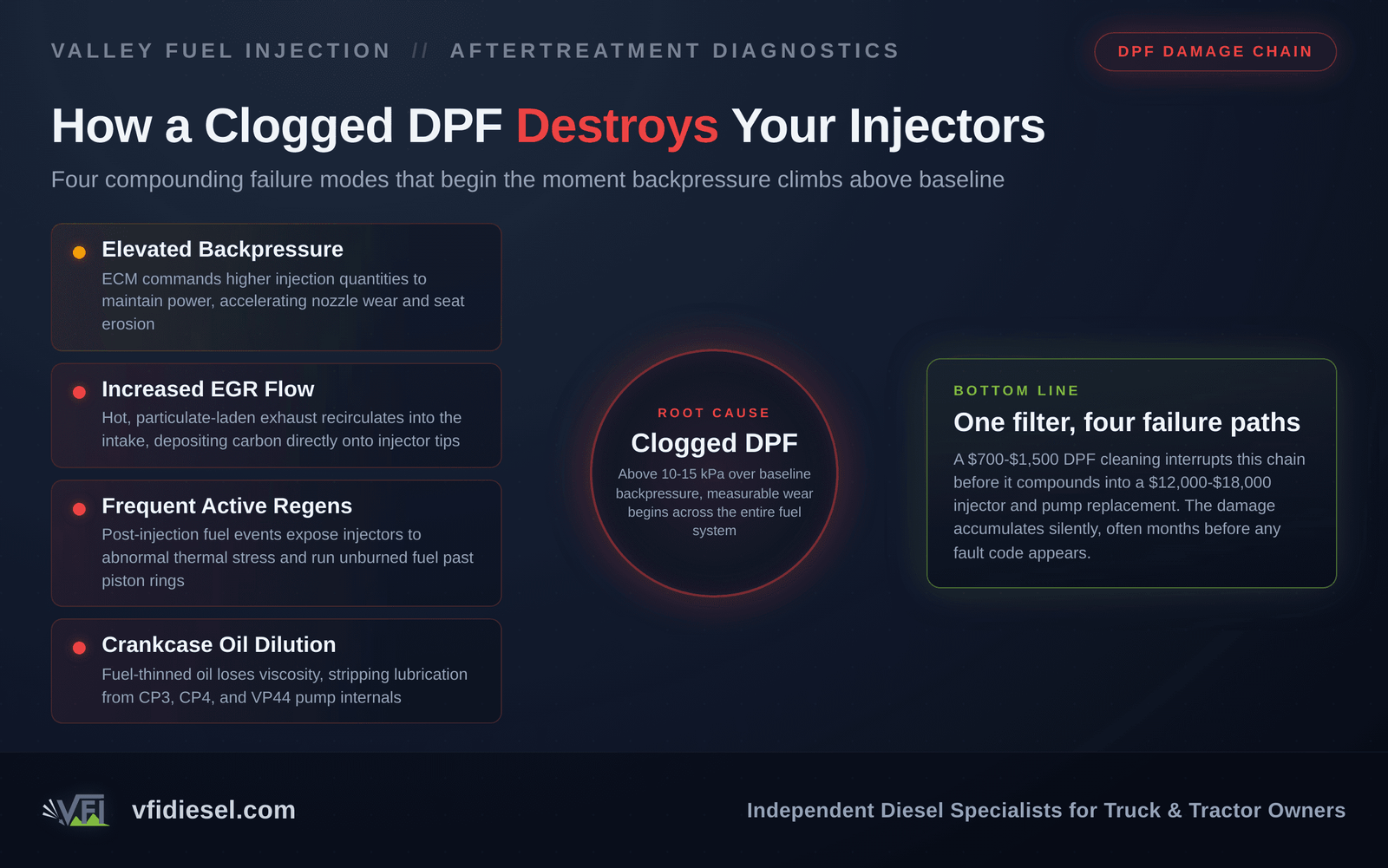
A clogged DPF raises exhaust backpressure, and that backpressure cascades upstream into every system that touches combustion, including your fuel injection system. When exhaust cannot exit the engine efficiently, combustion chamber pressure rises, exhaust gas recirculation (EGR) rates increase, and the engine control module (ECM) compensates by adjusting fueling. That compensation is where injector damage begins.
Here is the chain of events most fleet operators never see documented in one place:
- Elevated backpressure reduces volumetric efficiency, forcing the ECM to command higher injection quantities to maintain power output.
- Higher injection quantities mean injectors are held open longer and cycle more frequently, accelerating nozzle wear and seat erosion.
- Increased EGR flow (triggered by backpressure) deposits carbon and acidic combustion byproducts directly onto injector tips, accelerating coking and spray-pattern degradation.
- Active regeneration cycles, which become more frequent as the DPF loads up, require post-injection fuel events that expose injectors to abnormal thermal and mechanical stress.
Industry data from SAE International research on diesel aftertreatment interactions confirms that sustained elevated backpressure above 10–15 kPa above baseline measurably increases fuel consumption and accelerates component wear across the fuel system. For a fleet running vehicles in California under CARB’s Truck and Bus Regulation, that wear is happening in engines that are already running harder to meet tighter emissions thresholds.
If your DPF differential pressure sensor is reading higher than your OEM baseline at idle or cruise, your injectors are already working harder than they should be. Don’t wait for a regen fault. Schedule a fuel injection system evaluation alongside your next DPF service.
What Is Diesel Fuel Dilution and Why Do DPF Regeneration Cycles Cause It?
Diesel fuel dilution occurs when raw or partially burned fuel enters the engine crankcase and mixes with the motor oil, and active DPF regeneration is one of the primary causes in modern emissions-equipped diesels. This is a direct, measurable link between aftertreatment system health and injector longevity.
During an active regeneration, the ECM commands late post-injection, a small fuel shot fired after the main combustion event, to raise exhaust temperatures high enough to oxidize the soot trapped in the DPF (typically 550–650°C). When a DPF is heavily loaded and regeneration cycles become more frequent or prolonged, the engine fires more post-injection events. Some of that post-injection fuel does not fully combust. It runs down the cylinder walls and past the piston rings into the crankcase oil.
The consequences of fuel-diluted oil for your injection system are severe:
- Diluted oil loses viscosity, reducing the hydrodynamic film protecting high-pressure fuel pump internal components (CP3, CP4, VP44).
- Reduced lubrication at the injection pump accelerates cam lobe and plunger wear, the same wear mode that causes catastrophic CP4 failures.
- Fuel-contaminated oil circulating through the engine deposits varnish and lacquer on injector body surfaces, increasing the risk of injector sticking and seizure.
- Flash point depression in diluted oil increases fire risk and can trigger oil analysis alarms on well-managed fleets.
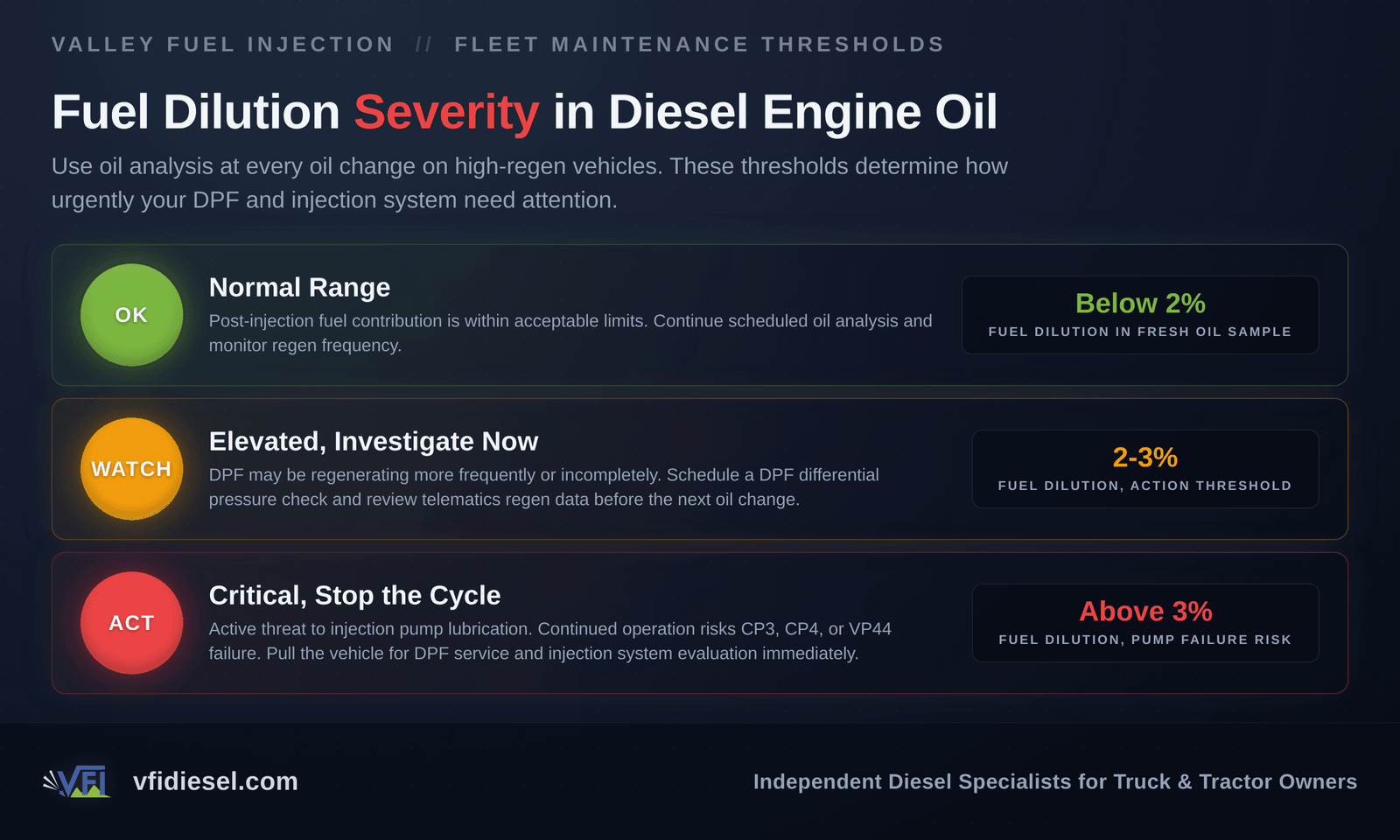
If your oil analysis is showing fuel dilution above 2–3%, your DPF is likely regenerating too frequently or incompletely. This is not just an emissions problem, it is an active threat to your injection pump and injectors. Continued operation without diagnosis can turn a $700–$1,500 DPF cleaning into a $10,000–$18,000 fuel system replacement. Stop the cycle early.
The relationship between regen frequency and injector wear is one reason we always ask fleet customers about their oil change interval and oil analysis history before we bench-test their injectors. An injector that looks like it failed on its own often has a fuel dilution story behind it. You can read more about how we evaluate injectors at the component level in our post on how common rail diesel injectors are tested on our Bosch-certified test bench.
How Does SCR System Degradation Lead to Increased Fueling Demands and Injector Wear?
SCR (selective catalytic reduction) system degradation forces the engine management system to compensate through fueling adjustments that accelerate injector wear in ways that are subtle but cumulative. Most fleet operators focus on DEF consumption and NOx compliance. The fuel injection angle rarely gets discussed, until injectors start failing prematurely.
Here is how a degraded SCR system reaches your injectors:
1. EGR rate increases as SCR efficiency drops. When the SCR catalyst can no longer reduce NOx efficiently, the ECM shifts more of the NOx reduction burden to EGR. Higher EGR rates mean more hot, particulate-laden exhaust gas recirculated into the intake, increasing carbon deposits on injector tips and accelerating nozzle coking.
2. Combustion tuning shifts toward lower NOx production. To protect against NOx exceedances when the SCR is underperforming, the ECM may retard injection timing or adjust rail pressure. Both changes affect combustion efficiency and increase the thermal load on injectors during the combustion event.
3. DEF doser failures force the engine into derate mode. When a DEF doser injector fails, the SCR system cannot inject reductant. On many platforms, the ECM enforces a progressive torque derate. Drivers compensate by pushing throttle harder, which increases fueling demand and injection frequency, exactly the operating condition that accelerates nozzle wear.
4. A contaminated SCR catalyst triggers extended regen events. Phosphorus and sulfur contamination from poor-quality DEF or oil consumption can poison the SCR catalyst, reducing its light-off efficiency. The system then requests more frequent or longer DPF regens to manage the overall aftertreatment temperature window, cycling back to the fuel dilution problem described above.
Analysis from fleet telematics providers has documented fuel waste exceeding $30 per vehicle per day in fleets running degraded DPF/SCR systems, not from the aftertreatment failure itself, but from the downstream fueling compensation the ECM makes to keep the engine running within emissions limits. Across a 20-truck fleet, that is $600/day or roughly $219,000 per year in avoidable fuel cost, before a single injector has been replaced.
What Are the Early Warning Signs That Aftertreatment Problems Are Damaging Your Injection System?
The early warning signs that aftertreatment degradation is affecting your fuel injection system often appear weeks or months before a fault code sets, if you know what to look for. Most of these signals are visible in data your fleet already collects.
| Warning Sign | What It Indicates | Injection System Risk |
|---|---|---|
| Regen frequency increasing (shorter intervals) | DPF loading faster than normal, combustion efficiency declining | Post-injection fuel dilution of crankcase oil |
| Regen cycles not completing (incomplete regens) | DPF approaching ash/soot capacity limit | Extended post-injection events, accelerated injector thermal stress |
| Fuel economy dropping 8–15% with no load change | ECM compensating for backpressure or SCR inefficiency | Higher injection quantities, increased nozzle wear rate |
| Oil analysis showing fuel dilution above 2% | Post-injection fuel bypassing rings into crankcase | High-pressure pump lubrication failure risk |
| Black smoke at idle or under light load | Injectors over-fueling or spray pattern degraded | Nozzle coking or tip erosion already underway |
| DEF consumption rising without load increase | SCR efficiency declining, system dosing more to compensate | Combustion tuning shifts increasing injector cycle count |
| DPF differential pressure elevated at cruise | Filter restriction above normal, backpressure building | Combustion efficiency loss forcing higher fueling commands |
If your fleet telematics or driver reports are showing two or more of these signals on the same vehicle, the aftertreatment system and injection system need to be evaluated together, not independently. Our common rail system repair team regularly works through exactly this diagnostic sequence for fleet customers throughout Northern California.
Fleet operators near Sacramento and the Central Valley can also reference our Sacramento diesel fuel injection service page for information on scheduling a systems-level evaluation.
How Much Does Running Degraded Aftertreatment Cost in Real Injector and Pump Damage?
The real cost of deferred aftertreatment maintenance is not the DPF cleaning you postponed. It is the injector set replacement that follows six months later, the high-pressure pump rebuild that follows that, and the lost revenue from a truck sitting in a shop bay for a week. Here is what those numbers actually look like in 2026 at a California specialty diesel shop.
- Professional DPF cleaning (before damage): typically $700–$1,500
- DPF differential pressure sensor replacement (during service): typically $450–$900 installed
- DPF replacement, light/medium-duty pickup (after failure to clean): typically $2,800–$5,500 installed
- DPF replacement: Class 8 commercial truck: typically $8,500–$14,000 installed
- SCR catalyst replacement (medium- to heavy-duty): typically $3,500–$10,000+ installed
- Full set of 6 common rail injectors, 6.7 Cummins (parts + labor): typically $5,500–$9,500 installed
- CP3 high-pressure pump rebuild: typically $1,200–$2,000 (pump only)
- Aftertreatment diagnostic scan + fault code analysis: typically $250–$500
Prices reflect typical California specialty-shop ranges as of 2026. Your actual quote depends on the condition of your specific components, parts availability, and current labor rates. Call VFI at 530-668-0818 for an accurate quote on your job.
To put it plainly: a DPF cleaning that costs $700–$1,500 and takes a few hours can prevent a fuel system repair that costs $12,000–$18,000 and takes several days. The math is not complicated, but it requires understanding that these systems are connected, which is exactly the gap this post is designed to close.

California fleet operators face an additional layer of cost pressure here. CARB’s regulations require that replacement DPF and SCR components meet CARB-executive-order certification standards. Many aftermarket parts that are legal in other states cannot legally be installed on California-registered vehicles, which compresses the market toward OEM and CARB-certified aftermarket options and drives costs toward the upper end of the ranges above. You can review current CARB aftertreatment requirements at the California Air Resources Board in-use diesel vehicle program page.
For fleets running Cummins-powered equipment, Cummins service documentation also provides guidance on aftertreatment maintenance intervals that align with fuel system protection, worth reviewing alongside your preventive maintenance schedule.
We also see this cost cascade play out in agricultural equipment. The same DPF-to-injector damage chain that affects on-highway trucks hits Tier 4 Kubota and Yanmar equipment hard, especially when machines are operated in short-cycle duty that makes passive regen impossible. Our posts on diesel fuel injector maintenance for Kubota equipment and our Kubota engine service page cover this in more depth for off-highway operators.
If you are evaluating whether to clean or replace a DPF, factor in the cost of the injector set that follows a deferred cleaning decision. In our experience, fleets that clean DPFs on a scheduled interval, rather than waiting for a fault code, spend significantly less on fuel system repairs over a 3-year period. A $1,200 annual DPF service budget can prevent a single $9,500 injector replacement.
Ready to get ahead of this? Call us at 530-668-0818 or schedule a diagnostic at our Woodland shop. We evaluate aftertreatment and fuel injection together, because that is the only way to get an accurate picture of what your system actually needs.
What’s the Right Maintenance Strategy to Protect Injection Components in Emissions-Equipped Diesels?
Protecting your injection system in an emissions-equipped diesel requires treating aftertreatment maintenance as a fuel system maintenance task, not a separate emissions compliance task. The two are inseparable in modern diesel architecture, and your maintenance intervals should reflect that.
Here is the framework we recommend to fleet operators and owner-operators who want to protect their injection investment:
1. Establish DPF Service Intervals Based on Duty Cycle, Not Just Miles
OEM-specified DPF cleaning intervals are typically based on ideal operating conditions. Short-haul fleets, urban delivery routes, and equipment that idles extensively will load DPFs far faster than the mileage interval suggests. Track regen frequency in your telematics data. If regens are happening more than once per day on a vehicle that previously regenerated every two to three days, the DPF needs service, regardless of mileage.
2. Run Oil Analysis at Every Oil Change on High-Regen Vehicles
Oil analysis is the earliest available indicator of post-injection fuel dilution. A fuel dilution reading above 2% on a fresh oil sample is a direct signal that the DPF is regenerating excessively and that your injection system is at risk. This is a $30–$50 test that can prevent a $9,500 repair. Use a certified laboratory and request fuel dilution, viscosity, and wear metal analysis together.
3. Use High-Quality DEF and Test It Regularly
Contaminated or degraded DEF is a leading cause of SCR catalyst poisoning and doser injector failure. The API DEF certification program provides a list of certified suppliers. Avoid bulk DEF from unverified sources, especially in warm climates where storage temperature affects DEF stability. A failed DEF doser (typically $600–$1,400 installed at a California shop) is a far smaller problem than the SCR catalyst damage that follows months of contaminated DEF exposure.
4. Inspect and Replace DPF Differential Pressure Sensors During DPF Service
A faulty differential pressure sensor gives the ECM incorrect data about DPF restriction. The ECM may delay regen when restriction is actually high, or trigger unnecessary regens when the filter is clean. Either scenario creates abnormal injection events. It is standard practice at our shop to inspect and often replace the differential pressure sensor during any DPF service, the typical cost is $450–$900 installed, and it eliminates a common source of false regen triggers.
5. Address Fuel Quality Issues That Accelerate DPF Loading
Poor fuel quality, including high-sulfur contamination and biodiesel blends above B5, accelerates DPF soot loading and increases the frequency and duration of regen cycles. California’s biodiesel blending practices have created real fuel quality issues for diesel operators in the region. Our post on biodiesel injector damage in California covers this in detail. Using a quality fuel additive with lubricity and detergency properties can reduce injector deposit formation between service intervals. Our post on diesel fuel injector cleaning covers what additives can and cannot do in practice.
6. Have Injection System Components Evaluated When Aftertreatment Is Serviced
When a DPF or SCR component is replaced or serviced, that is the right time to bench-test your injectors and evaluate high-pressure pump output, not after the next failure. At Valley Fuel Injection, we are a Bosch-certified testing and repair facility with the equipment to evaluate common rail injectors to OEM flow and balance specifications. If your injectors have been running through a degraded aftertreatment system, a bench test will tell you exactly where they stand before they fail in service. We also accept mail-in injectors and pumps for testing and rebuilding from fleets across the country, so distance is not a barrier to getting an accurate evaluation.
Fleet operators in the Reno and Northern Nevada area can learn more about our services on our Reno diesel fuel injection page. For those running equipment in the Central Valley, our Stockton service area page covers what we can do for your operation.
For a deeper look at how we evaluate injectors before they fail, rather than after, see our post on OEM vs. remanufactured diesel injectors, which covers the quality and performance differences that matter when you are replacing components in a high-regen fleet application.
Bosch’s own aftertreatment and fuel injection integration documentation notes that common rail injectors operating in high-backpressure conditions experience measurably higher nozzle erosion rates, particularly at the needle seat and spray hole inlet. This is not a theoretical concern. It is a documented wear mechanism that your maintenance strategy should account for. See Bosch Mobility’s diesel systems documentation for technical background on common rail component interaction.
Frequently Asked Questions
Does a clogged DPF directly damage diesel injectors?
Yes, in several ways. A clogged DPF raises exhaust backpressure, which forces the ECM to command higher injection quantities to maintain power output. It also triggers more frequent active regeneration cycles, which require post-injection fuel events that can cause fuel dilution of the crankcase oil. Diluted oil reduces lubrication at the high-pressure fuel pump, and the increased fueling demand accelerates nozzle wear on injectors. The damage is cumulative and often goes undetected until an injector or pump fails outright.
How do I know if my DPF is causing fuel dilution in my engine oil?
The most reliable method is oil analysis from a certified laboratory, requested at every oil change. Ask specifically for fuel dilution percentage, viscosity, and wear metals. A fuel dilution reading above 2% on a fresh oil sample is a strong indicator that post-injection fuel is bypassing the piston rings into the crankcase, typically caused by excessive or incomplete DPF regeneration cycles. You may also notice your oil level rising slightly between changes, or a faint fuel smell when checking the dipstick.
Can SCR system problems cause injector failure?
Indirectly, yes. When SCR efficiency drops, the ECM compensates by increasing EGR rates and adjusting combustion tuning to limit NOx production. Both adjustments increase carbon deposit formation on injector tips and alter the thermal environment around the nozzle. A failing DEF doser can also trigger engine derate, causing drivers to operate at higher throttle positions for longer periods, increasing injection frequency and nozzle wear rate. SCR catalyst contamination can also extend DPF regen events, cycling back to the fuel dilution problem.
How often should a DPF be professionally cleaned to protect fuel injection components?
Interval varies significantly by duty cycle. OEM recommendations typically range from 100,000–200,000 miles for on-highway applications, but short-haul, urban, and high-idle operations load DPFs much faster. A more reliable trigger is regen frequency: if your vehicle is regenerating more than once per day when it previously regenerated every two to three days, the DPF needs service regardless of mileage. Tracking regen frequency through telematics data is the most accurate way to set fleet-specific intervals. Professional DPF cleaning typically costs $700–$1,500 at a California specialty shop.
Should I have my injectors tested when I replace or service my DPF?
Yes, and most fleet operators do not do this until it is too late. If your DPF has been running in a degraded state, frequent regens, incomplete regens, elevated backpressure, your injectors have been operating under abnormal conditions for the same period. A bench test at a Bosch-certified facility can quantify exactly where your injectors stand: flow rate, balance, leak-down, and spray pattern. Catching injectors that are marginal but not yet failed allows you to plan a replacement on your schedule rather than in response to a breakdown. We test and rebuild injectors at our Woodland, CA facility and accept mail-in units from fleets nationwide.
At Valley Fuel Injection, we have been diagnosing the connection between aftertreatment systems and fuel injection health since emissions-equipped diesels first appeared in the field. We are a Bosch-certified testing and remanufacturing center with over 30 years of hands-on experience, and we evaluate your fuel system as a complete system, not a collection of individual parts.
Whether you are managing a California fleet under CARB scrutiny or running a single truck that is showing the early signs of aftertreatment-related injector wear, we can give you an accurate picture of what your system needs and what it will cost. Call us at 530-668-0818 or schedule a diagnostic online. We are located at 1243 E Beamer St, Suite C, Woodland, CA 95776, serving Northern California, Nevada, and fleets nationwide who ship injectors and pumps in for certified testing and rebuilding.
Related guides from Valley Fuel Injection
- 7 Diesel Injector Failure Symptoms to Watch For
- Biodiesel Injector Damage: California’s Hidden Fuel Crisis
- Diesel Fuel Injector Cleaning: DIY vs Professional
Emissions systems and regen cycles are hard on injectors. Valley Fuel Injection tests and rebuilds injectors for emissions-equipped diesels and fleets. Call 530-668-0818.